
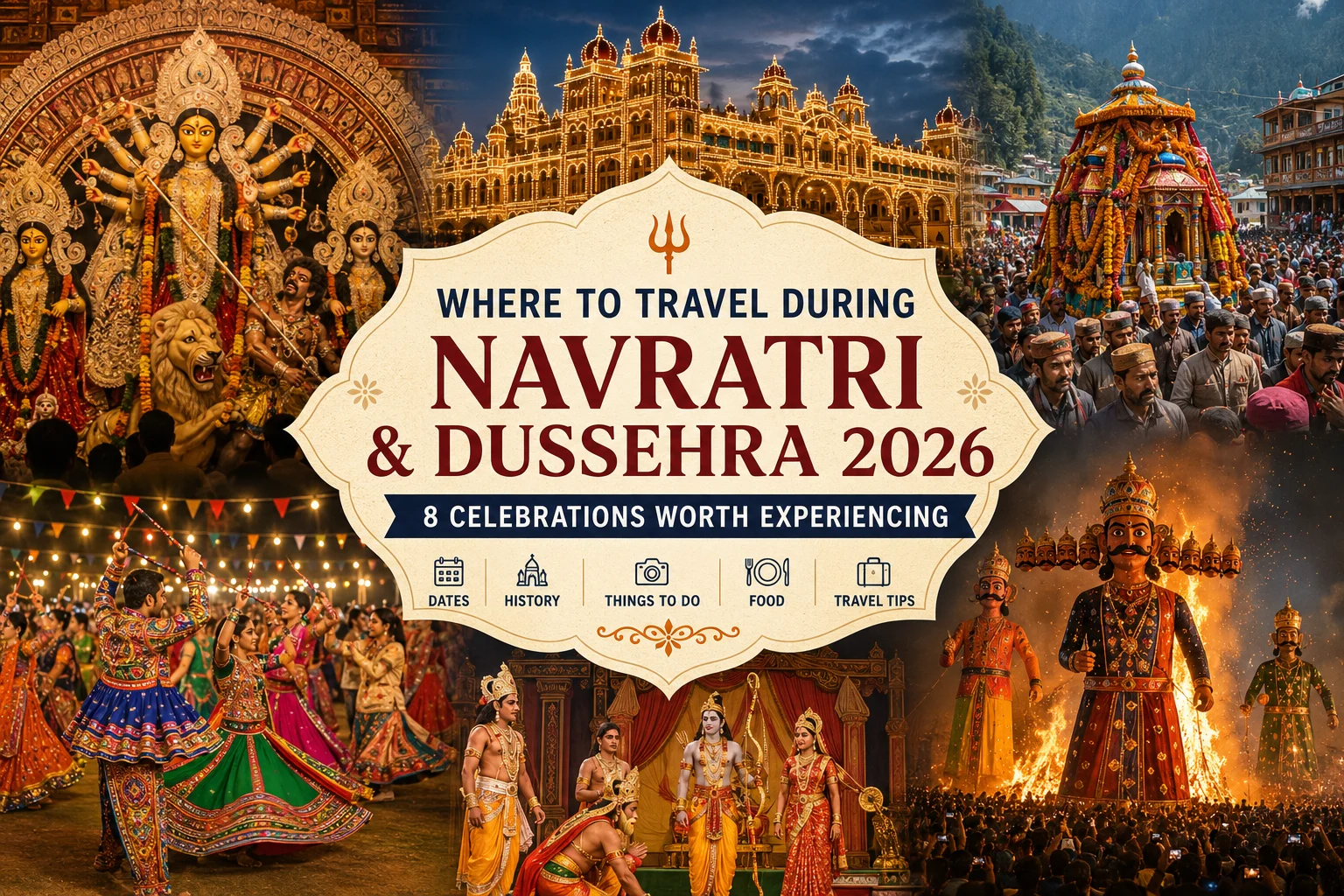
Navratri and Dussehra are not celebrated in one standard Indian way.
In Gujarat, people dance until their smartwatch starts asking serious questions. In Kolkata, entire neighbourhoods turn into open-air art galleries. Mysuru brings out royal processions and palace lights, while Kullu begins its main celebration just when many other cities are wrapping up.
Same festive season. Completely different travel experiences.
For 2026, Sharad Navratri is expected to run from 11 to 19 October, with Dussehra or Vijayadashami on Tuesday, 20 October. Kolkata's main Durga Puja period is listed for 17 to 21 October. Local programmes, procession routes, tickets and crowd rules can still change, so treat these dates as your planning window and confirm the final schedule before booking anything non-refundable. The national Dussehra date is also listed in the Government of India's 2026 holiday calendar.
If you want to plan a festive trip but cannot decide where to go, here are eight celebrations that offer much more than a quick Ravan-dahan photograph.
1. Kolkata, West Bengal: When the Whole City Becomes an Art Festival
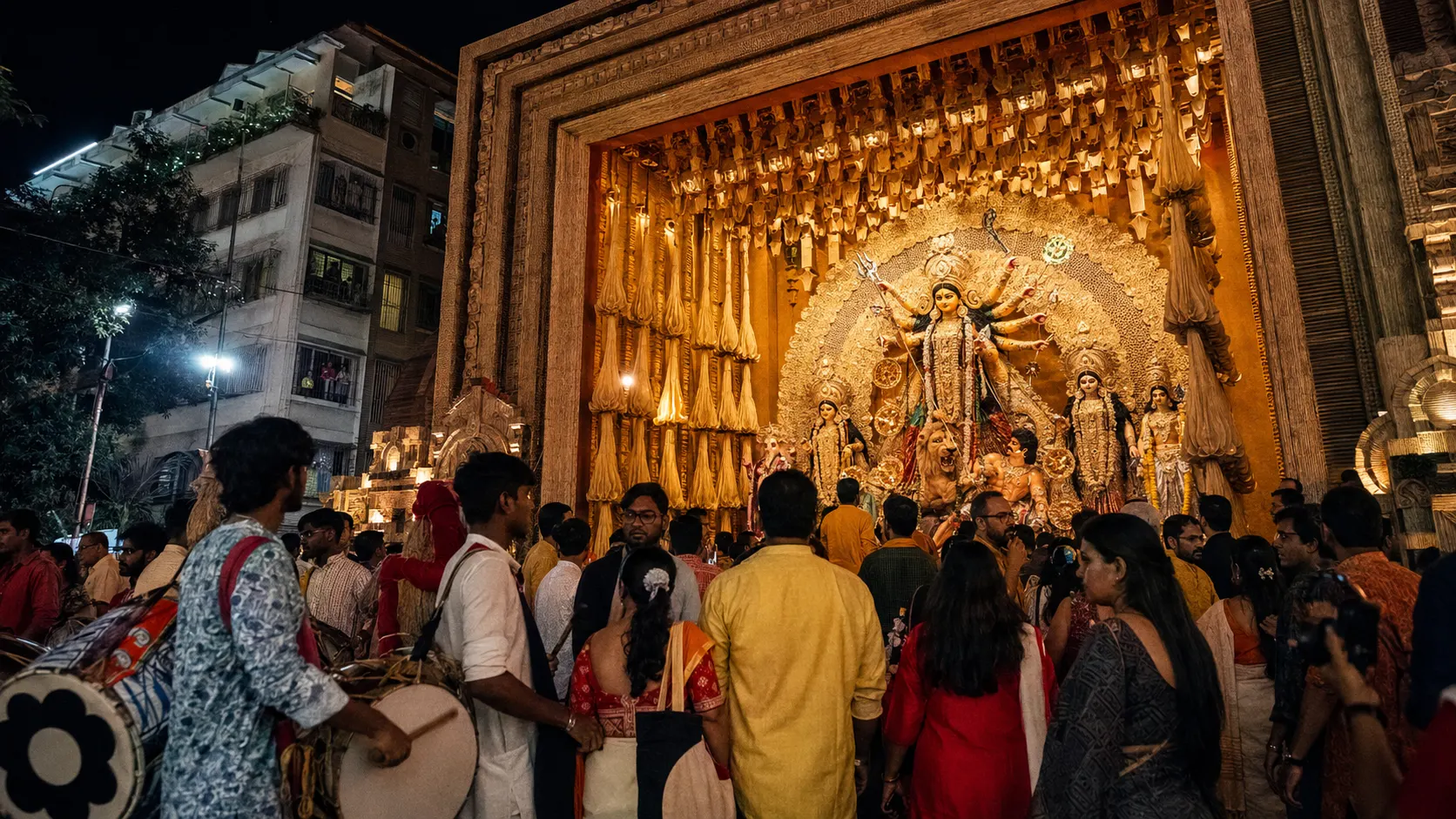
Kolkata during Durga Puja does not feel like a city hosting a festival. It feels like the city has temporarily become the festival.
Community pandals appear across neighbourhoods, each with its own theme, architecture and interpretation of Goddess Durga. One may resemble a historic palace; another may use recycled materials, folk art or a sharply contemporary idea. Months of work go into installations that visitors may see for only a few days.
Durga Puja celebrates the goddess's victory over Mahishasura and is also understood in Bengal as her annual homecoming with her children. What makes Kolkata special is the way devotion, public art, food, fashion and neighbourhood participation all occupy the same street. UNESCO inscribed Durga Puja in Kolkata on its Representative List of the Intangible Cultural Heritage of Humanity in 2021.
Do not miss
Evening and late-night pandal hopping
Kumartuli, where many clay idols are created
Traditional bonedi bari pujas in old family homes
Dhunuchi dance, drums and the atmosphere around evening aarti
Bengali festive food, from khichuri bhog to rolls, cutlets and sweets
Vijaya Dashami rituals and immersion processions, viewed from authorised public areas
The practical reality
You will walk a lot. Roads close, cabs get diverted and a distance that looks tiny on the map can become a full relationship with the crowd. Group pandals by neighbourhood, use the Metro where practical and do not attempt twenty famous pandals in one night unless your holiday goal is mainly queue management.
Kolkata is best for travellers who want art, food, photography and full-city festive energy. West Bengal Tourism has a dedicated Durga Puja guide for official information.
2. Ahmedabad, Gujarat: Nine Nights of Garba and Zero Quiet Evenings
If your idea of celebration involves music, colour and saying, “One last round” seven times, Ahmedabad is calling.
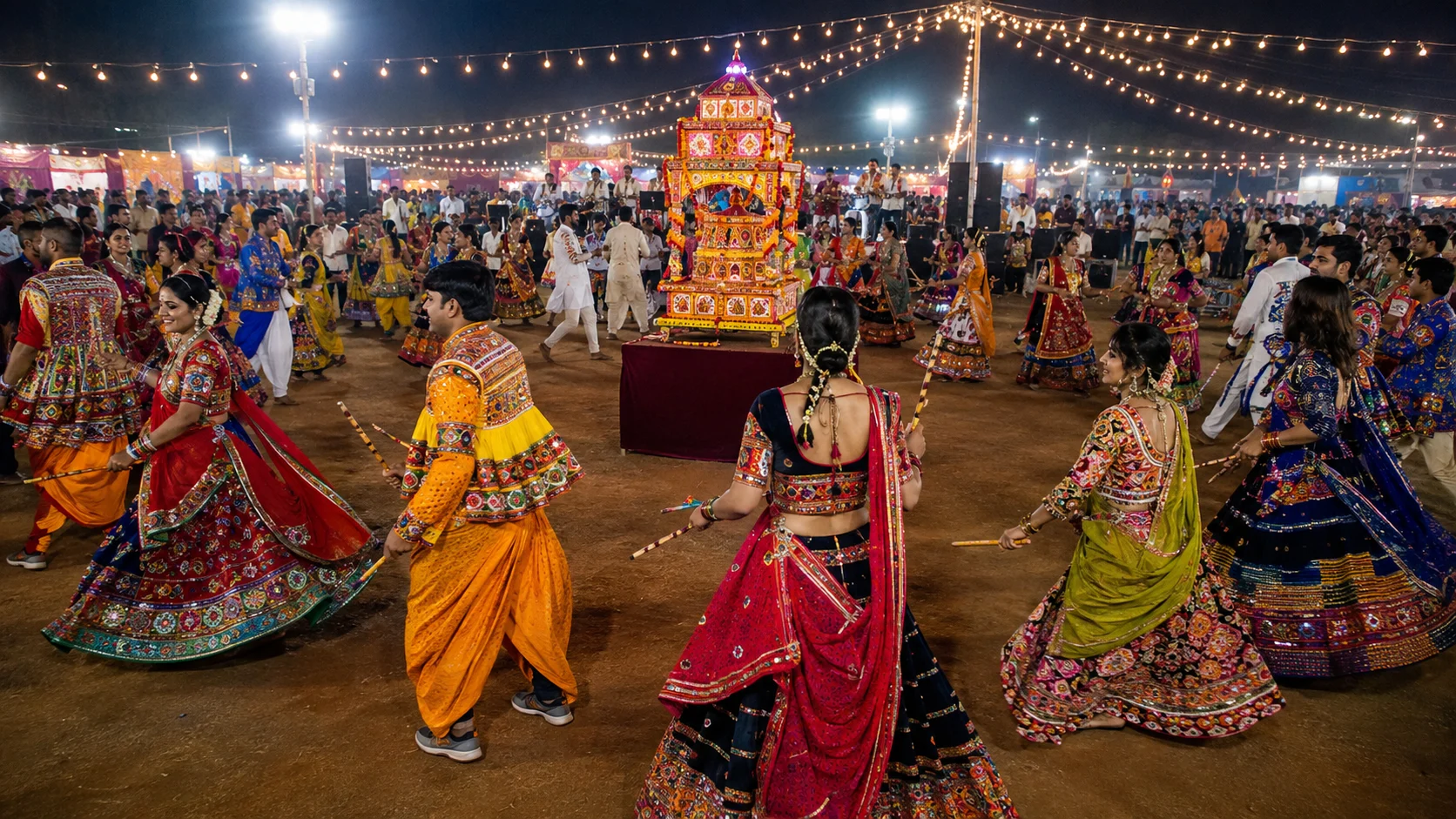
Navratri in Gujarat centres on worship of Shakti, followed by garba performed in circles around a symbolic shrine or garbo. Traditional songs and simple steps remain part of the celebration, but large urban events now also feature live bands, elaborate lighting and thousands of dancers in colourful chaniya cholis and kediyus.
The energy builds gradually through the night. You may begin with a basic two-step and, after watching the regulars, realise that several people around you have apparently been preparing since birth.
Do not miss
At least one large organised garba night
A smaller neighbourhood or sheri garba for a more local atmosphere
Traditional outfits from city markets
Fafda-jalebi on Dussehra morning
A daytime heritage walk through old Ahmedabad if your legs still cooperate
The practical reality
Popular garba venues may require advance passes, ID and dress-code compliance. Some grounds have separate entry or security rules, so check the organiser's instructions before arriving fully dressed and emotionally ready.
Wear footwear that stays secure while dancing, eat sensibly before the event and keep water nearby. Ahmedabad is best for travellers who want participation, nightlife and a festival they can dance inside, not merely watch. Gujarat Tourism's Navratri guide explains the history, rituals and range of garba traditions across the state.
3. Mysuru, Karnataka: The Royal Version of Dasara
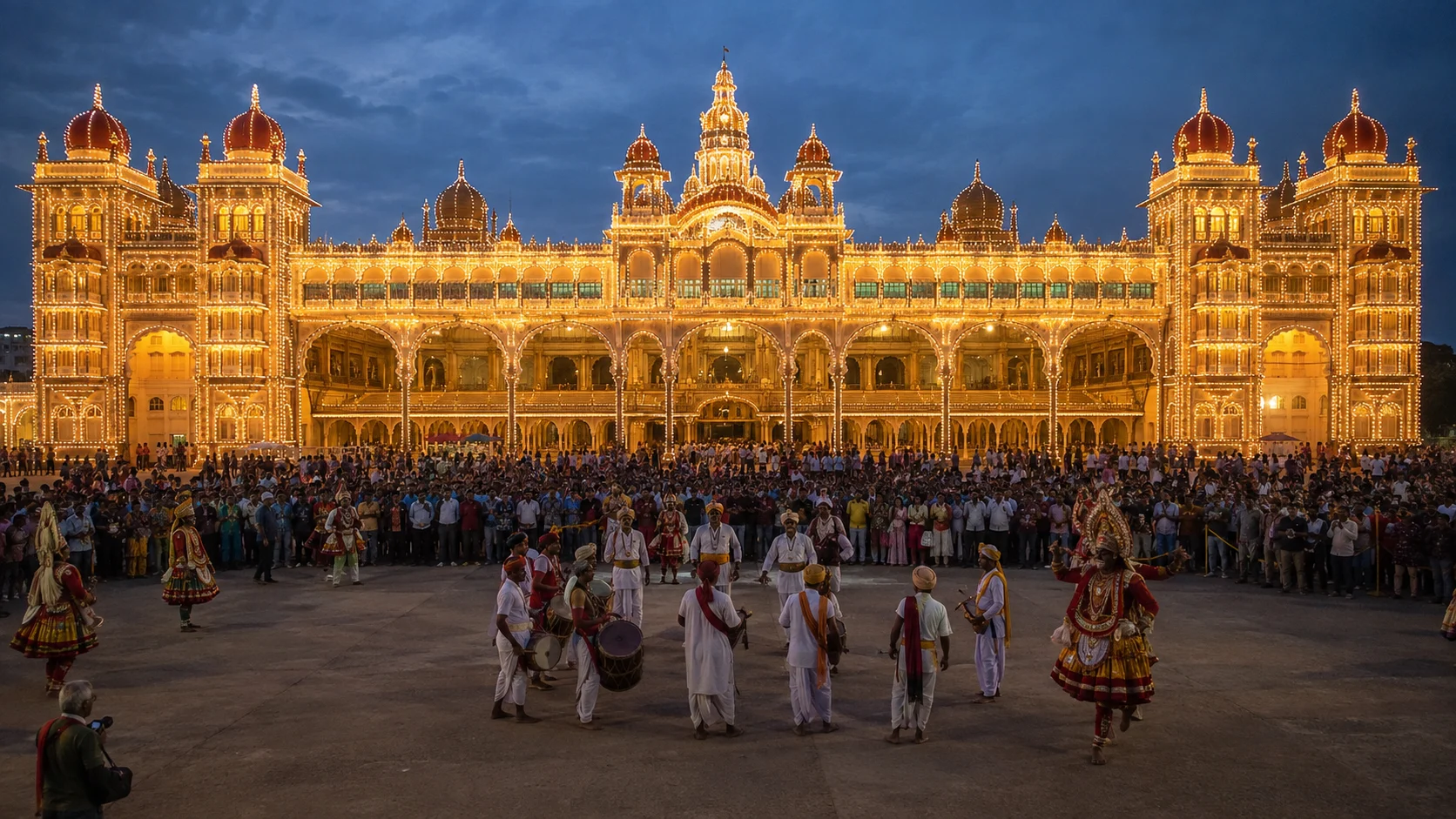
Mysuru Dasara has elegance, scale and enough lights to make your phone camera quietly surrender.
The celebration is associated with Goddess Chamundeshwari's victory over Mahishasura. Its royal tradition developed under the Vijayanagara rulers and was continued by the Wadiyars of Mysuru. Today, the festival combines religious ceremonies with public concerts, exhibitions, cultural performances, wrestling events and citywide illumination.
The visual centre is Mysuru Palace, glowing under thousands of bulbs. The major finale is the Jumbo Savari, a ceremonial procession in which the idol of Goddess Chamundeshwari is carried through the city, accompanied by cultural troupes and tableaux. The torchlight parade is another well-known finale event.
Do not miss
Mysuru Palace illumination
Cultural programmes staged during the festival
The Dasara exhibition and food stalls
Chamundi Hill, preferably outside peak crowd hours
The final procession and torchlight parade, if you can secure suitable access
The practical reality
Finale-day traffic restrictions are serious, accommodation fills early and the best viewing areas can become extremely crowded. Do not build a minute-by-minute plan that assumes your cab will float over barricades.
Stay within reasonable reach of the centre, arrive before the final day and confirm ticketed-event details through official channels. Mysuru is best for travellers who want heritage, grand visuals and a carefully staged cultural programme. Karnataka Tourism's Mysuru Dasara guide outlines the celebration's major attractions.
4. Kullu, Himachal Pradesh: The Dussehra That Starts When Others Finish
Kullu Dussehra follows its own rhythm.
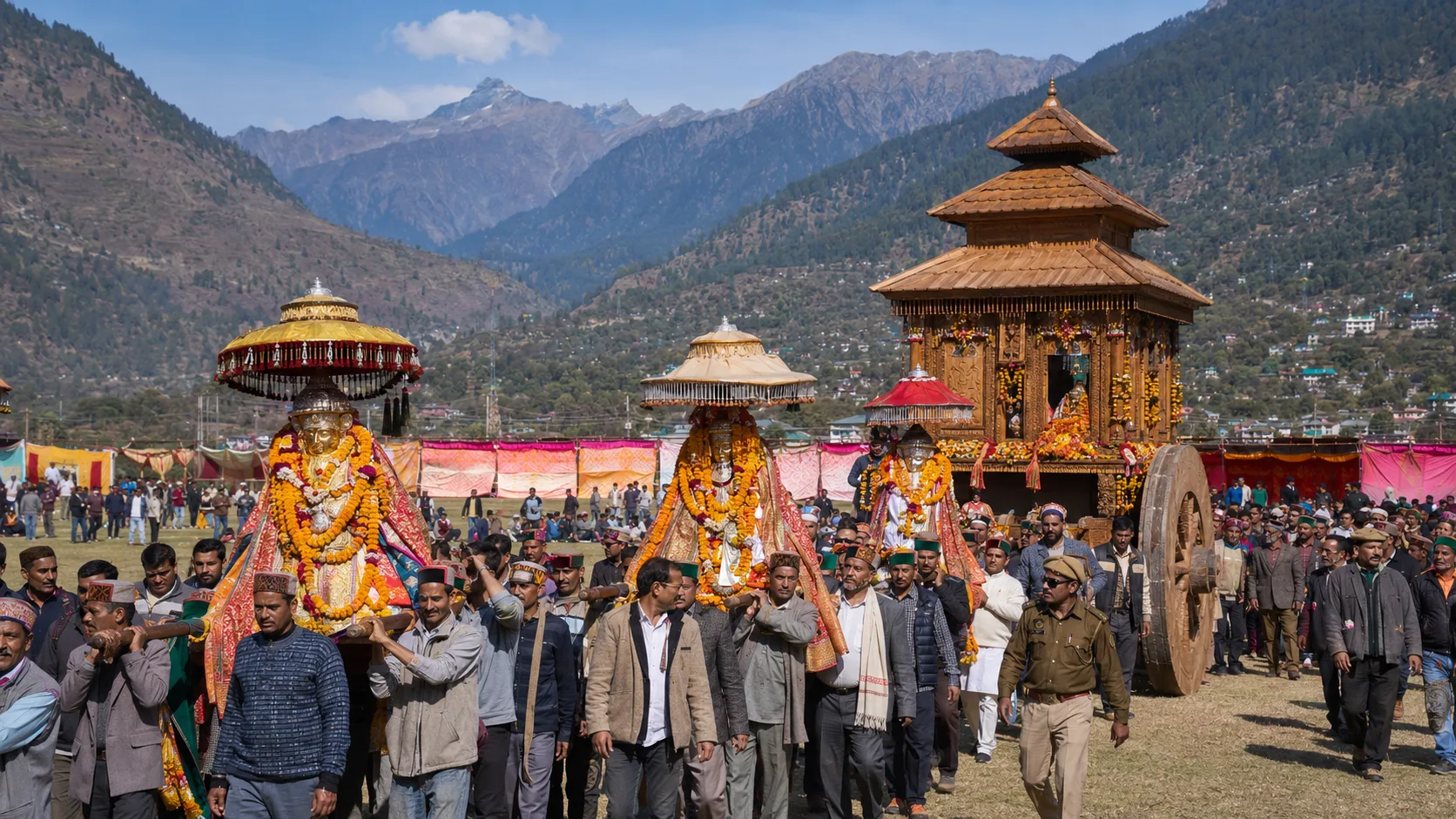
While many parts of India treat Vijayadashami as the climax, Kullu's main festival traditionally begins around that day and continues for about a week. Local deities from across the valley arrive in ceremonial palanquins and gather at Dhalpur Maidan to honour Lord Raghunath.
The tradition is linked to 17th-century King Jagat Singh, who installed an idol of Lord Raghunath as the ruling deity of the Kullu Valley. The Rath procession, gatherings of valley deities, folk performances and public fair make the experience feel deeply connected to the region rather than imported for tourists.
Do not miss
The arrival of local deities and their processions
Lord Raghunath's Rath procession
Himachali folk music and nati performances
Handloom, woollen and local-food stalls at the fair
An extra day to enjoy the valley after the largest crowds move on
The practical reality
October evenings in Kullu can be cold, road traffic can slow significantly and mountain weather deserves more respect than a city forecast. Carry proper layers and keep buffer time in your arrival plan.
Observe deity processions respectfully and do not block routes for close-up photographs. Kullu is best for travellers who want mountain culture, living local traditions and a slower festival journey. The history is explained by Incredible India's Kullu Dussehra guide, while programmes are published on the official Kullu Dussehra website.
5. Jagdalpur, Chhattisgarh: Bastar Dussehra Beyond the Usual Ramayana Story
Bastar Dussehra is the option for travellers who think they already know what Dussehra looks like.
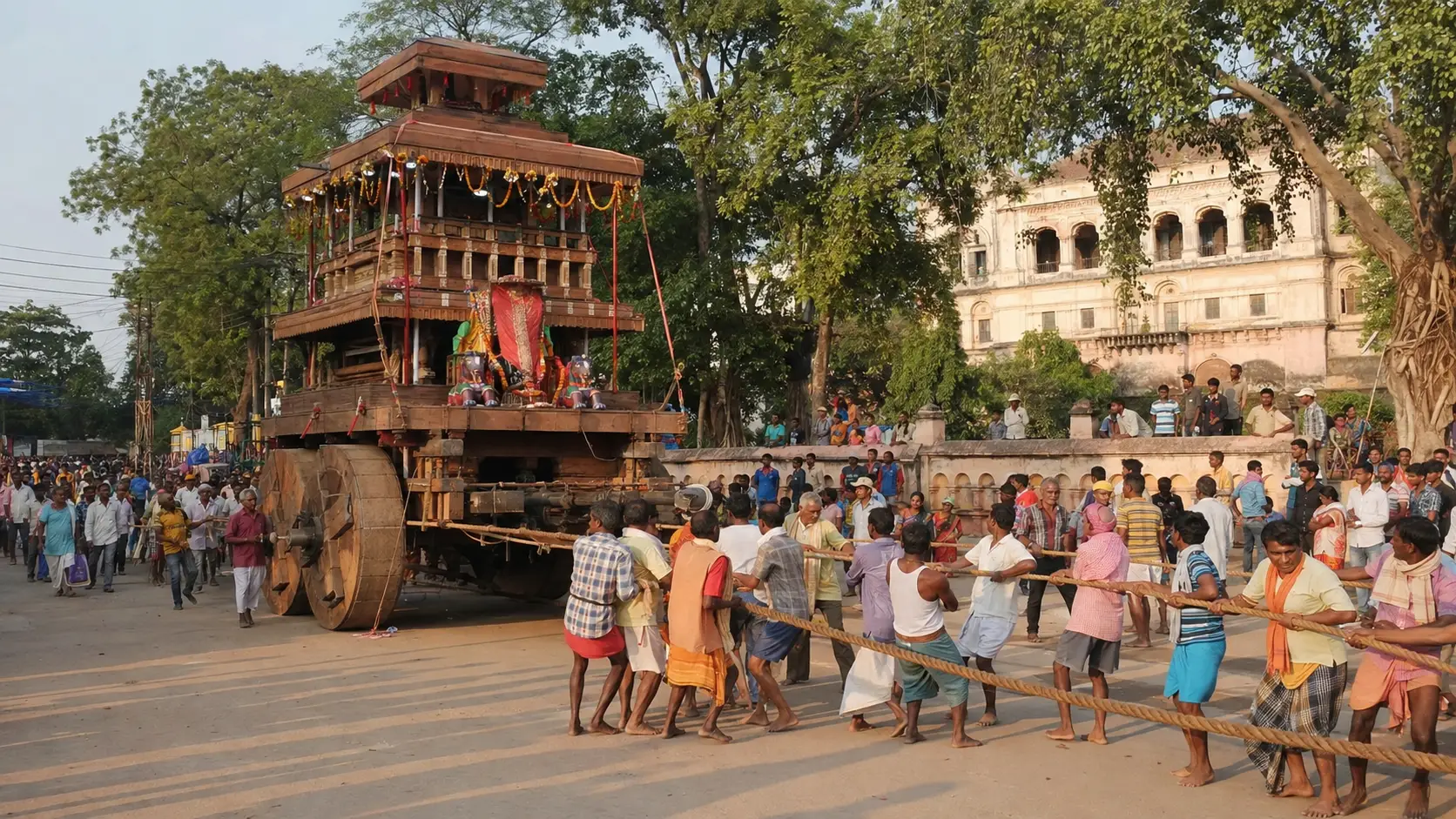
This festival lasts roughly 75 days and is centred on Goddess Danteshwari, not on the burning of Ravana. Communities from across the Bastar region participate in a long sequence of rituals, gatherings and chariot traditions. The result is not one giant evening event but a cultural cycle tied closely to Bastar's tribal communities and regional history.
Its beginning is marked by Pat Jatra, a ritual connected with the first wood used for the ceremonial chariot. Later events include permission rituals, chariot processions and the Muria Durbar. Government cultural sources trace the tradition to the reign of King Purushottam Dev, with later practices shaped by the communities of Bastar.
Do not miss
Major rituals in and around Jagdalpur during the final festive phase
The ceremonial chariot and community processions
Danteshwari Temple and the festival's spiritual connection to Dantewada
Bastar handicrafts, especially bell-metal, wrought-iron and traditional craftwork
A local-guided visit that explains what you are actually witnessing
The practical reality
This is the celebration where context matters most. Do not arrive expecting a conventional Ravan dahan, and do not treat community rituals like a costume show arranged for cameras. Travel with a knowledgeable local guide, ask before photographing people and follow district travel advice.
Jagdalpur is best for travellers who want deep regional culture, unusual ritual traditions and a less commercial festival experience. The Bastar district administration and Incredible India provide useful background.
6. Ramnagar and Varanasi, Uttar Pradesh: A Ramayana You Walk Through
Ramnagar Ramlila is not a two-hour stage show where everyone politely sits in Row G.
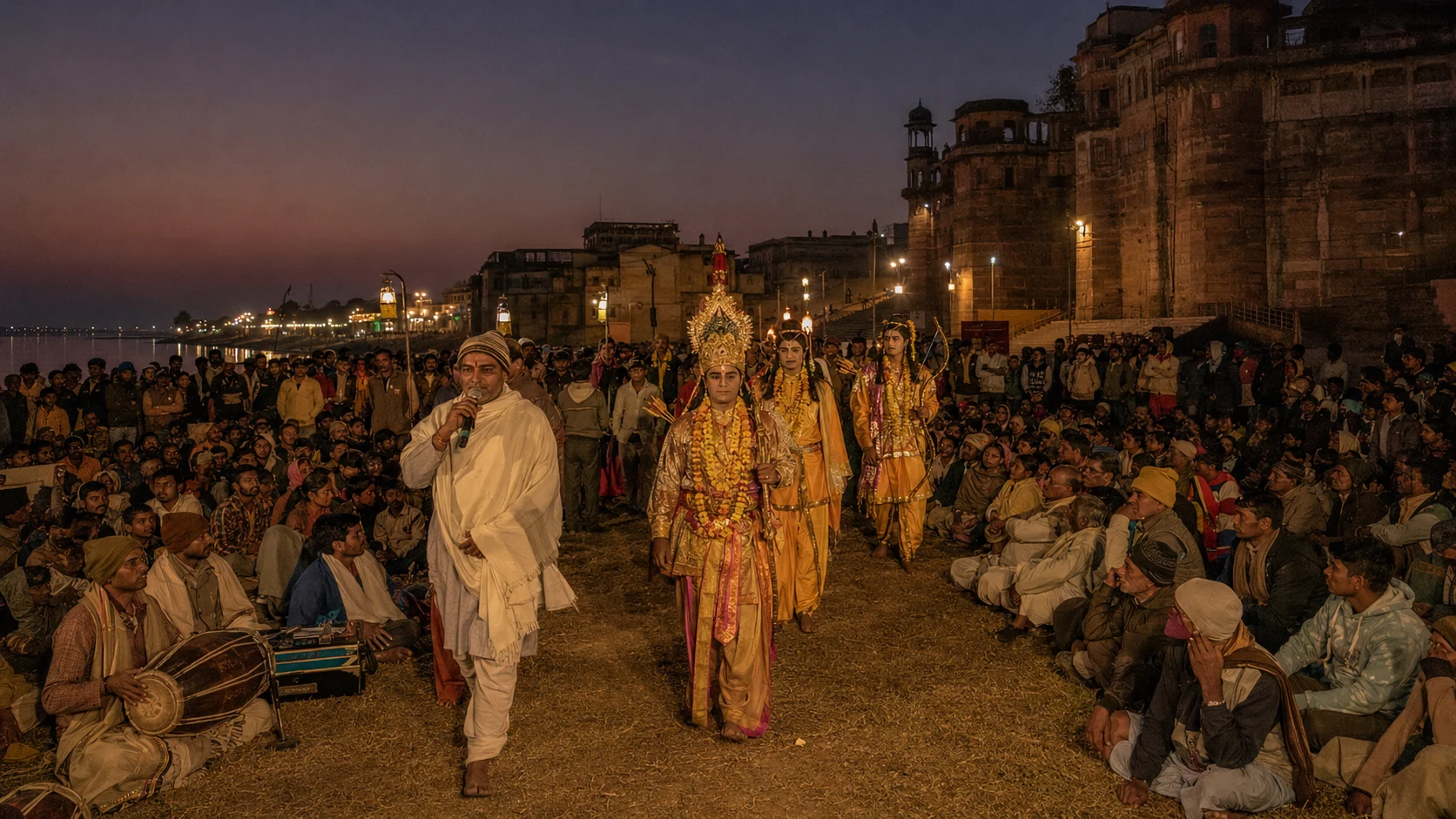
Performed across Ramnagar, on the opposite side of the Ganga from Varanasi, the tradition unfolds over roughly a month. Different parts of the town represent places in the Ramayana, and the audience moves with the performers as the story shifts from one location to another. It is theatre, pilgrimage and community memory happening together.
The present form developed under the patronage of the Kashi royal family in the 19th century. Ramlila as a wider Indian performance tradition was inscribed by UNESCO in 2008 and combines narration, dialogue, song and recitation.
Do not miss
One or more Ramnagar Ramlila episodes, chosen after checking the daily sequence
Ramnagar Fort and the riverfront surroundings
A sunrise boat ride in Varanasi on a separate morning
Evening time at the ghats without trying to combine every major ceremony at once
Local snacks, but in a quantity your stomach can also approve
The practical reality
The performance area is spread out, seating can be basic and the audience often moves between locations. Take a local guide or confirm the episode venue in advance. Wear simple, comfortable clothing and do not expect a polished auditorium production, that would miss the entire point.
Ramnagar is best for travellers who want storytelling, heritage and an immersive traditional performance. Read more through Incredible India's Ramnagar Ramlila guide and UNESCO's overview of Ramlila.
7. Delhi: Big Ramlilas, Bigger Effigies and Convenient Metro Escapes
Delhi gives you the classic North Indian Dussehra package at full volume.
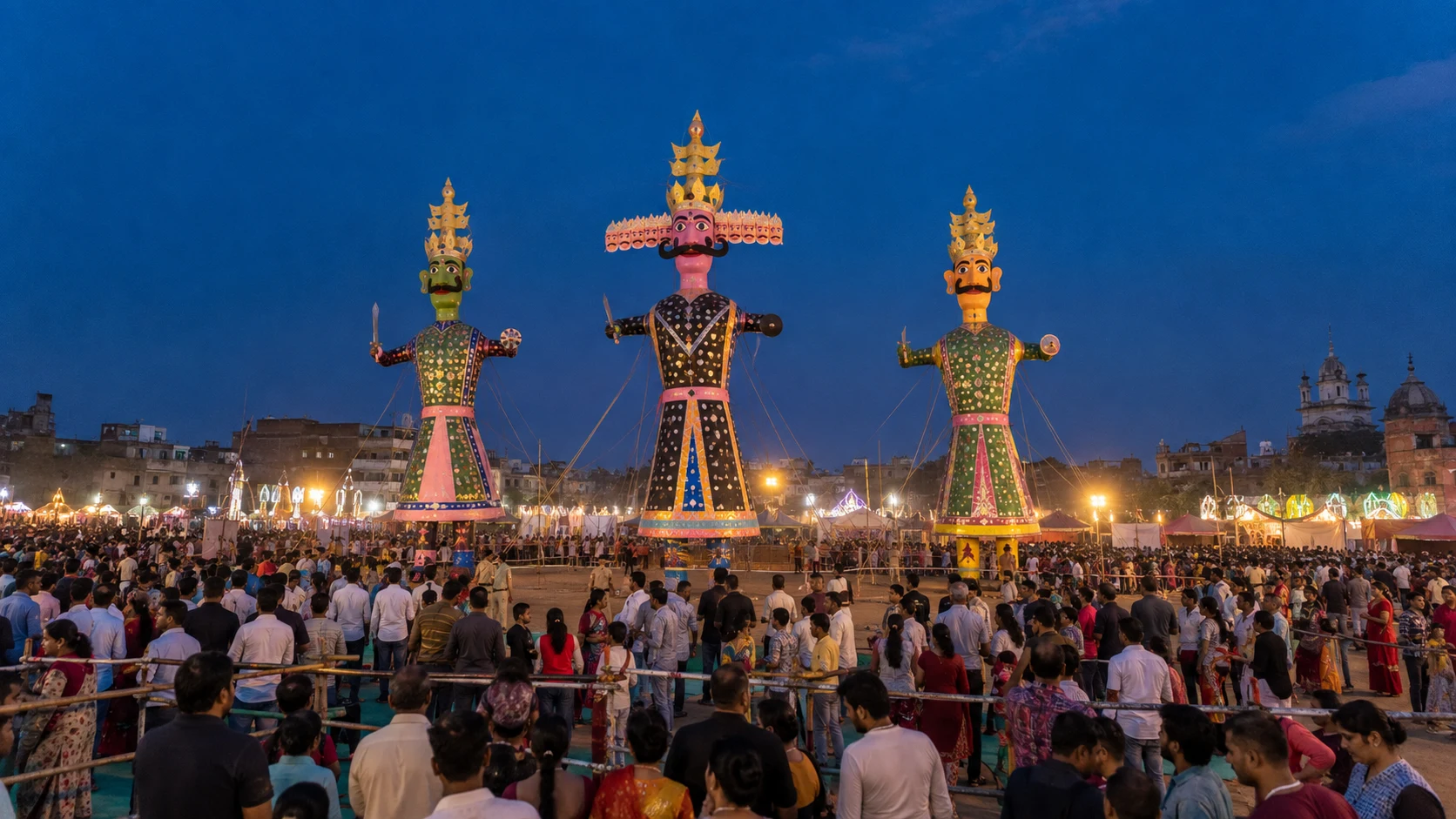
Ramlila performances take place across the city during Navratri, followed by large gatherings and Ravan dahan on Dussehra. Major grounds around Old Delhi and other neighbourhoods combine theatre, fairground rides, food stalls, lights and towering effigies of Ravana, Meghnad and Kumbhakarna.
It is dramatic, accessible and easy to add to a longer Delhi trip. You can visit a monument in the morning, eat chaat in the evening and watch an epic battle before dinner. Delhi believes in range.
Do not miss
A full Ramlila performance, not only the final ten minutes
The Dussehra mela atmosphere around a recognised venue
Ravan dahan from a safe, designated viewing zone
Old Delhi food, chosen with patience rather than panic-ordering everything
A quieter heritage or garden morning to balance the evening crowds
The practical reality
Event venues, security zones and traffic plans vary each year. Use the Metro where possible, keep children and group members close, agree on a meeting point and avoid positioning yourself near fireworks or crowd bottlenecks.
Delhi is best for travellers who want a familiar, high-energy Dussehra with easy transport and plenty to do beyond the festival. Delhi Tourism's Dussehra guide describes the city's major Ramlila tradition.
8. Kota, Rajasthan: A Proper Dussehra Mela With Full Fairground Energy
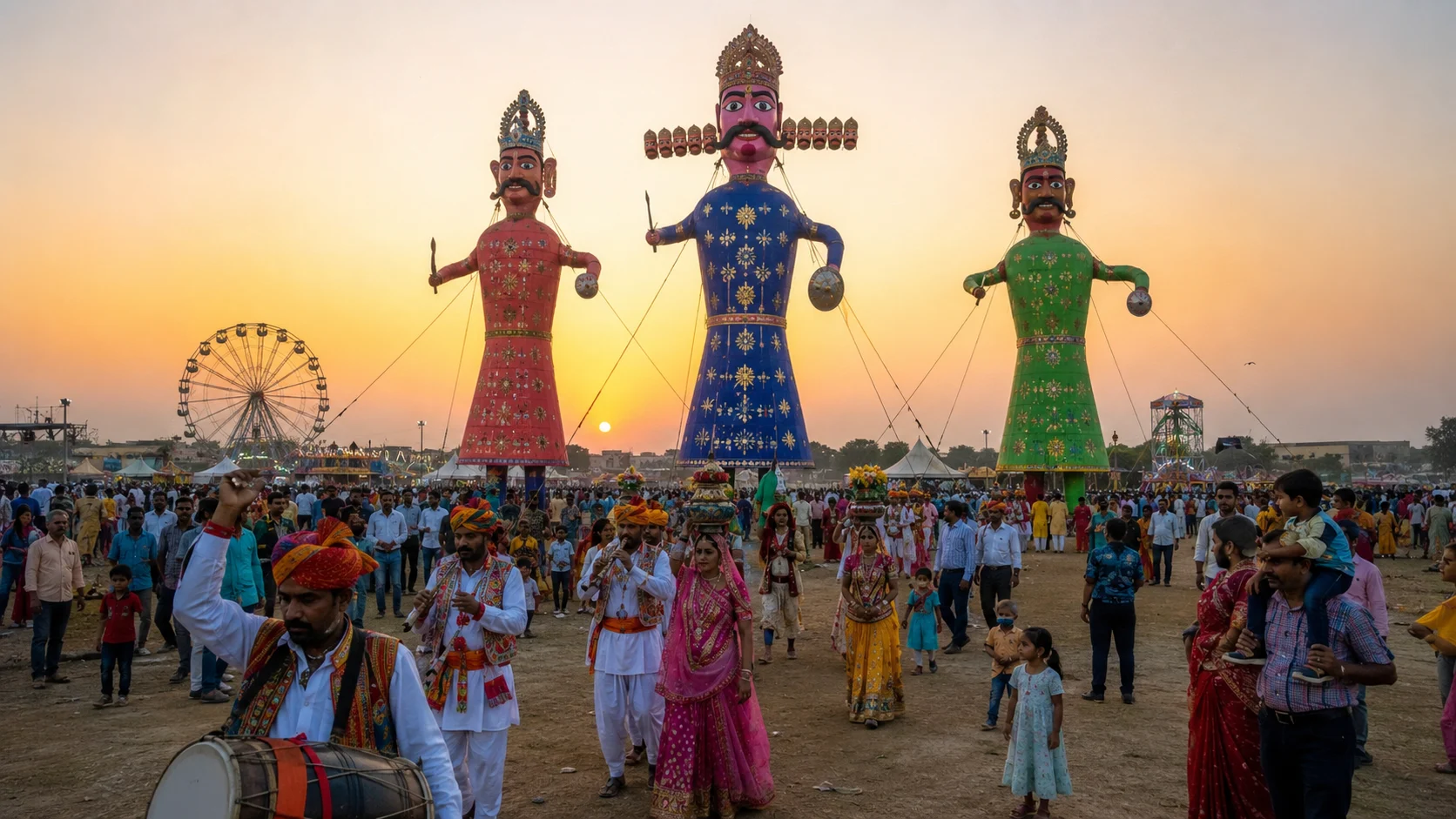
Kota's Dussehra is for people who want the fair, the procession, the giant effigies and snacks that were definitely not part of the original food plan.
The city's Dussehra fair dates back to the 18th century and is traditionally associated with the reign of Maharao Durjanshal Singh Hada. Villagers and performers arrive in colourful dress, processions move through the city and the main Ravan dahan becomes a large public spectacle.
The fair often continues beyond the main religious day, bringing together cultural programmes, rides, markets, crafts and food. In other words, you may visit for tradition and return carrying something brightly coloured that nobody planned to buy.
Do not miss
The main ceremonial procession and Ravan dahan
Folk performances and cultural evenings
The mela's craft, food and market sections
Kota's riverfront and heritage sights during quieter daytime hours
Enough unplanned time to walk through the fair properly
The practical reality
Crowds peak around the effigy-burning ceremony. Arrive early, follow the barricades and do not stand close to fireworks simply because somebody else is doing it. Final event duration, performance nights and traffic arrangements should be confirmed locally.
Kota is best for travellers who want a traditional Dussehra mela, family-friendly fairground energy and a Rajasthan trip beyond the usual Jaipur-Jodhpur route. Rajasthan Tourism includes Kota in its official fairs and festivals guide, and the Ministry of Tourism's Utsav portal covers the history of the Kota Dussehra fair.
Which Celebration Should You Choose?
Choose Kolkata if you love art, food and staying out late.
Choose Ahmedabad if you want to participate instead of standing at the side with your arms folded.
Choose Mysuru if royal heritage, palace lights and organised cultural events sound ideal.
Choose Kullu if you want mountain scenery and a festival shaped by local deity traditions.
Choose Jagdalpur if you are genuinely curious about regional culture and are willing to travel respectfully and slowly.
Choose Ramnagar if live storytelling and old performance traditions interest you more than flashy stage effects.
Choose Delhi if you want a convenient city break with a classic Ramlila and Ravan dahan.
Choose Kota if your heart says heritage but your stomach says mela food.
Practical Tips for Festival Travel in 2026
Book trains and centrally located accommodation early. Festival pricing has no emotional sympathy.
Verify the final 2026 programme directly with tourism departments or organisers before paying for passes.
Keep one flexible evening because rain, processions and traffic can rearrange your plan without requesting permission.
Wear comfortable shoes. Traditional outfits are wonderful; foot pain is not a cultural experience.
Carry only essentials in crowded areas: phone, ID, payment method, water and basic medication.
Ask before photographing performers, worshippers, artisans or local community members.
Follow temple, procession and security rules even when they interrupt the perfect camera angle.
Use designated viewing areas for immersion processions, chariot routes and effigy burning.
Fix a meeting point if travelling with a group. Mobile networks can become unreliable in dense crowds.
Avoid pushing children, older relatives or reluctant friends through the busiest event simply because it is “must-see.”
Check weather and local travel advisories again on the morning of each major event.
Final Thoughts
The best Navratri or Dussehra destination is not automatically the one with the largest crowd or tallest effigy.
It is the one whose celebration matches the way you like to travel.
Maybe you want to dance in Ahmedabad until your steps stop matching the music. Maybe you want to walk between Kolkata's extraordinary pandals, watch a centuries-old Ramlila in Ramnagar or stand in a cold Kullu evening as valley deities arrive at Dhalpur Maidan.
Each place tells a different story about devotion, victory, community and memory.
So choose one, learn a little before you go and leave enough space in the itinerary to experience the festival beyond the headline event. The best moments may be the ones between performances: a shared plate of food, a drummer warming up, an artisan making final adjustments or a local family explaining why one small ritual matters.
That is when festival travel stops feeling like sightseeing and starts feeling like you were actually there.

Conversation
0 comments