
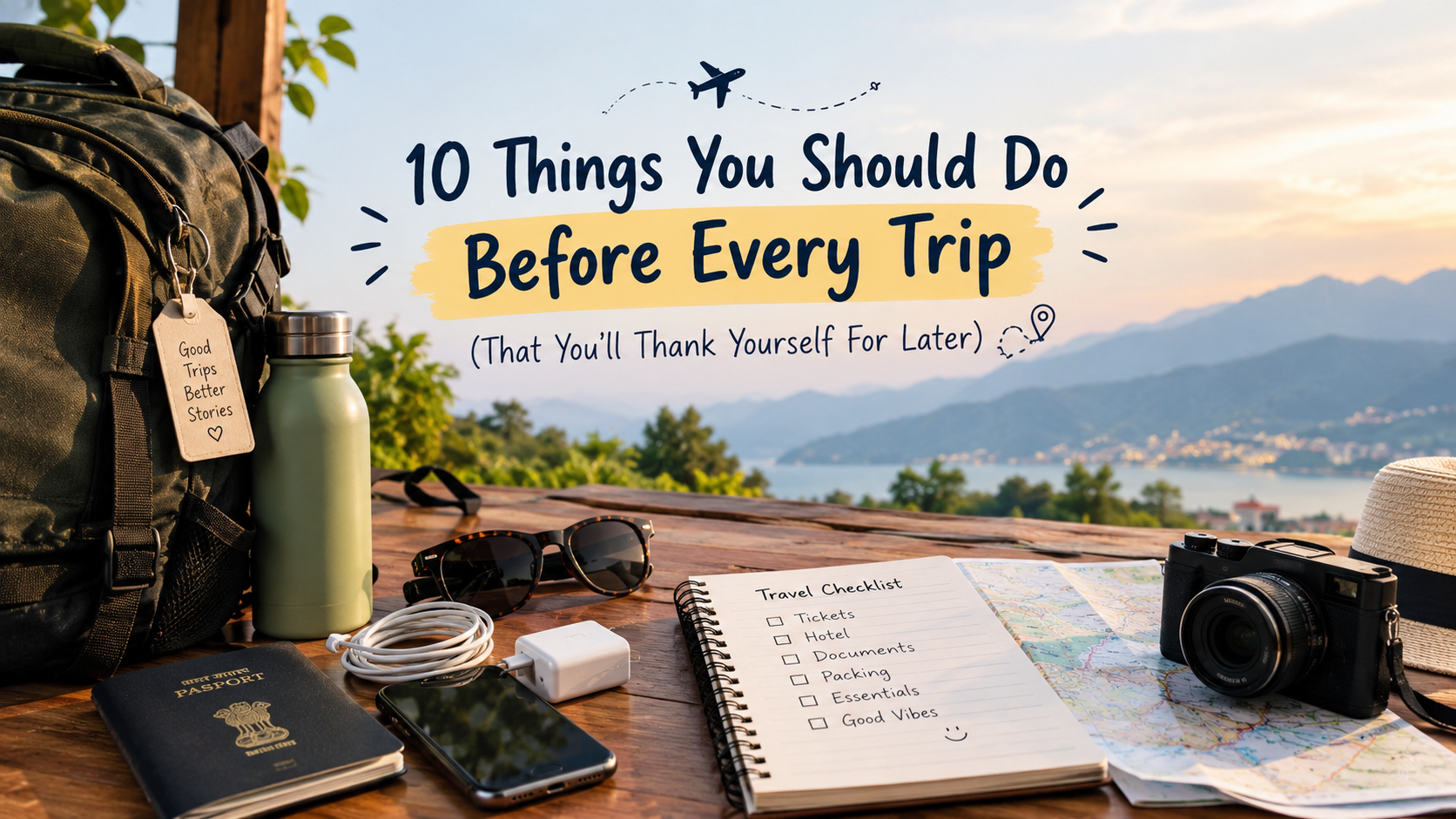
There are two kinds of travellers.
The first one has everything packed two days before the trip, has tickets saved in three different places, knows exactly where the hotel is and somehow even remembers to carry a power bank.
The second one is standing at the airport at 6 AM thinking, “Wait… did I actually pack my charger?”
Most of us are somewhere in between.
Planning a trip doesn't have to mean creating a 47-item spreadsheet. But there are a few small things worth doing before you leave that can save you from unnecessary stress once the journey begins.
Here are 10 things you should probably do before every trip.
1. Check Your Tickets One More Time
Yes, you checked them when you booked.
Check them again.
Flight or train timing, date, boarding point, terminal, seat and passenger details are all worth confirming before you leave.
Especially the boarding point.
Because discovering that your train leaves from a completely different station while you're sitting comfortably at the wrong one is not exactly the travel story you wanted.
Quick tip: Take screenshots of important tickets and booking confirmations. Internet has a funny habit of disappearing exactly when you need it.
2. Check the Weather, Not Just Instagram
Instagram will show you the beautiful side of a destination.
The weather forecast might show you what you're actually going to deal with.
Before packing, check the expected weather for the days you'll be there.
A sunny-looking destination can still surprise you with rain, cold evenings or strong winds depending on the season.
This helps you decide what clothes, footwear and other essentials actually make sense.
Because carrying three jackets to a hot destination isn't being prepared.
It's just making your bag heavier.
3. Save Your Important Addresses
Save the addresses of your hotel, railway station, airport and any important places you already know you'll be visiting.
You don't need to plan every minute of the trip.
Just make sure you know where you're staying and how to get there.
This becomes especially useful when you arrive somewhere late at night, have poor internet or simply don't feel like figuring everything out after a long journey.
A screenshot of the hotel address can sometimes be more useful than another 200 photos of your itinerary.
4. Download What You Might Need Offline
Internet isn't guaranteed everywhere.
Before leaving, download things you may need during the journey, such as:
Offline maps
Train or flight tickets
Hotel booking details
Important contact numbers
Travel itineraries
Any required documents
It takes only a few minutes at home.
Trying to load something important with 2% network coverage in the middle of nowhere is considerably less fun.
5. Make a Simple Packing Checklist
You don't need a complicated packing system.
Just make one simple checklist based on your trip.
For example:
Essentials
Phone
Charger
Power bank
Wallet
ID
Medicines or personal essentials
Earphones
Clothes
Outfits
Innerwear
Comfortable footwear
Something suitable for the weather
Travel extras
Sunglasses
Water bottle
Small backpack
Toiletries
Camera, if you're carrying one
The best part?
Once you've made a good checklist, you can reuse it for your future trips.
6. Don't Overpack "Just in Case"
Almost every traveller has done this.
"Maybe I'll need this."
So you pack it.
Then:
"What if it gets cold?"
Another jacket.
"What if I go somewhere fancy?"
Another outfit.
"What if I suddenly decide to trek?"
And suddenly your five-day trip requires a suitcase that looks ready for permanent relocation.
Pack for what you're realistically going to do.
Leave some space for the things you'll probably bring back.
Because somehow the return journey always has more luggage than the departure journey.
7. Keep Some Emergency Money Separately
It's always sensible to have a backup payment option.
Keep some emergency cash separately from your main wallet, and make sure you have access to another payment method if your primary one doesn't work.
You don't need to carry a huge amount.
The idea is simply to have a backup for unexpected situations.
Because your phone dying is inconvenient.
Your phone dying when your only payment method is on that phone is a different level of inconvenient.
8. Tell Someone Your Basic Travel Plan
If you're travelling alone or going somewhere unfamiliar, let a trusted person know your basic plan.
They don't need your minute-by-minute itinerary.
Just share useful information such as:
Where you're staying
Your travel dates
Your main transport details
When you expect to arrive
It's a small step, but it makes things easier if someone needs to reach you or check where you are.
9. Leave Some Space in Your Itinerary
This one is probably the hardest.
You see a destination with 25 things to do and immediately think:
"Challenge accepted."
But travelling isn't a race.
Leave some empty space in your plan.
You might discover a café you like, spend longer at a viewpoint, find a local market, meet someone interesting or simply decide that doing absolutely nothing for two hours is exactly what you needed.
Some of the best travel memories aren't the things you planned months ago.
They're the things that happened in between.
10. Start a Travel Log Before You Forget the Little Things
This is the one most people realise only after coming back.
You remember the big moments.
The destination.
The hotel.
The famous viewpoint.
The amazing food.
But after a few months, the small details start disappearing.
What time did you leave?
Which café did you randomly discover?
What was the funniest thing your friend said?
Which road did you take?
What was that one completely unexpected moment that made the trip memorable?
Start recording those things while they're still fresh.
That's where a travel log becomes more than a collection of photographs.
It becomes your version of the journey.
With Jyurniq, you can keep your journeys, moments and stories together instead of letting them disappear into your phone's camera roll.
Because years later, you probably won't remember every detail of the trip.
But you'll be glad you saved the ones that mattered.
The Best Trip Isn't Always the Most Planned One
Good preparation doesn't mean planning every second.
It simply means taking care of the boring stuff beforehand so you have more freedom to enjoy the interesting stuff once you're there.
Check your tickets.
Pack smart.
Keep your essentials ready.
Leave some room for unexpected plans.
And most importantly, remember to actually enjoy the journey.
Because the goal isn't to return home with a perfectly completed itinerary.
It's to return with a story worth remembering.



Conversation
0 comments