
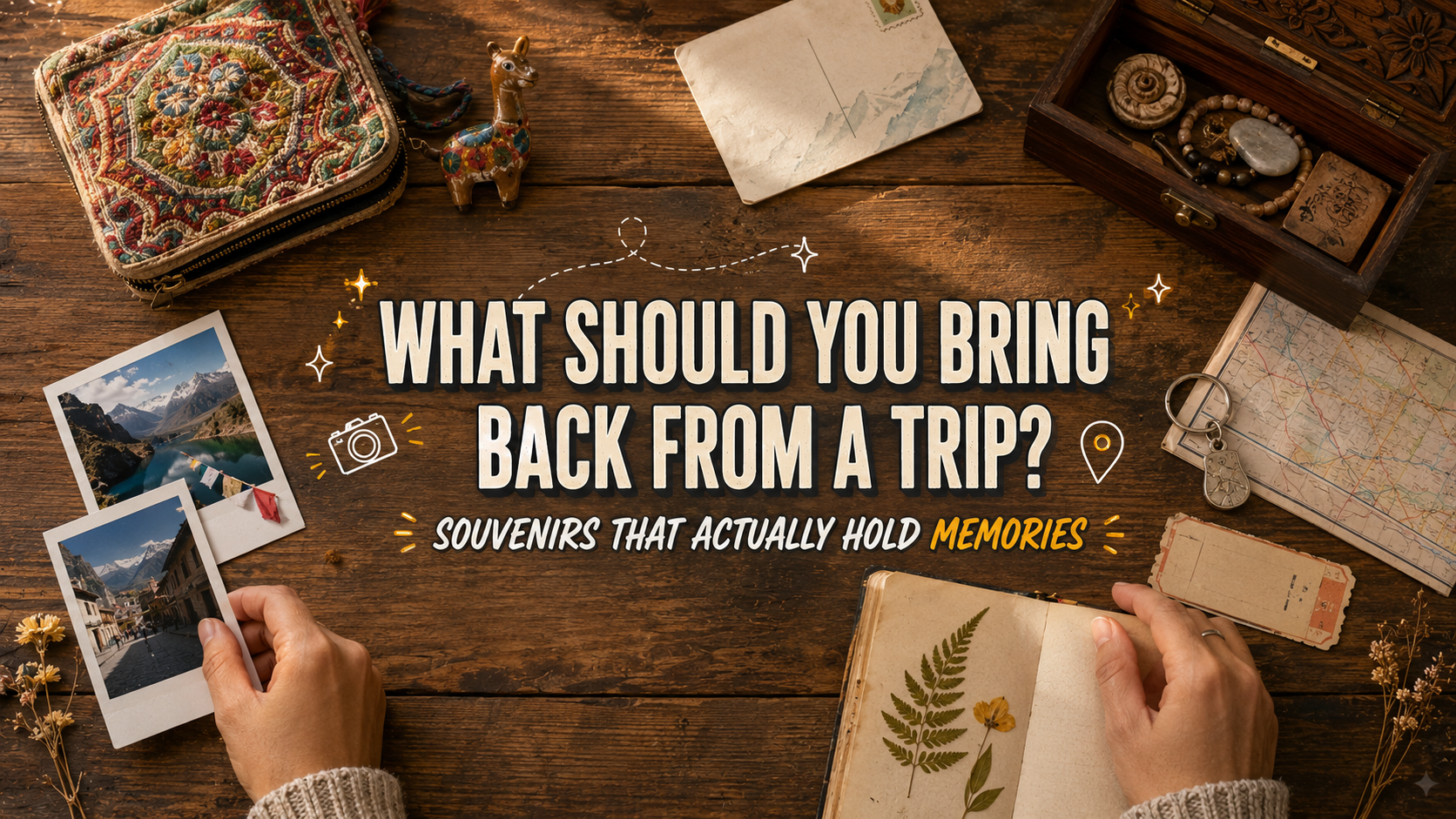
Every trip eventually reaches the souvenir-shopping stage.
You enter a market planning to “just look around” and come out carrying keychains, magnets, decorative elephants and one mysterious object that looked excellent under the shop lighting.
After reaching home, the fridge magnet survives. The rest quietly enters a drawer that nobody opens again.
Buying souvenirs is not a bad habit. Bringing something home can help you remember a place long after the trip ends.
The problem begins when we buy things simply because they have the destination’s name printed on them.
A meaningful souvenir does not need to be expensive or impressive. It only needs to remind you of a real moment from the journey.
The Souvenir Shop Trap
Tourist areas know exactly how we think.
You see a colourful shop filled with miniature monuments, printed mugs, T-shirts and keychains. Everything appears to be saying, “If you do not buy me, did you even visit?”
Five minutes later, you are negotiating for an item you never wanted before entering the shop.
Many souvenirs are mass-produced and sold in different cities with only the destination name changed. The same keychain may be waiting for you in Jaipur, Goa and Manali while wearing different clothes.
There is nothing wrong with buying one if you genuinely like it.
Just do not let travel excitement convert your luggage into a small gift shop.
Choose Something Connected to a Moment
The best souvenirs usually have a story attached to them.
Maybe you bought a scarf from a tiny market after getting caught in unexpected cold weather. Perhaps you found handmade pottery while exploring a village or purchased tea after visiting a plantation.
The object becomes meaningful because you remember where you found it, who was with you and what happened that day.
Before buying something, ask yourself:
“Will this remind me of a specific moment—or am I buying it because the shopkeeper called it a special final price?”
That one question can save both money and luggage space.
Buy Something You Will Actually Use
Useful souvenirs are less likely to disappear inside a cupboard.
Depending on the destination, you could consider:
A locally made scarf or stole
Handmade jewellery
A small piece of pottery
A notebook or journal
A cloth bag
Traditional home décor
A locally crafted wallet
Tea, coffee or spices
A printed textile or cushion cover
A small artwork from a local artist
Using the item later brings the trip back into everyday life.
A coffee mug may not look very exciting while shopping, but drinking from it months later can suddenly remind you of the café where you found it.
That is more meaningful than owning another plastic monument that keeps collecting dust.
Local Crafts Carry More of the Destination
India has an incredible variety of regional art, textiles and handicrafts.
Block printing, weaving, embroidery, pottery, woodwork, painting and metalwork can all tell you something about a place and its people.
If your budget allows, buy directly from artisans, cooperatives or trusted local stores. Ask how the item was made and where it comes from.
You do not need to become an art expert during one market visit. A few polite questions can still help you understand whether you are purchasing genuine local work or a factory-made item being presented as handmade.
Real craft may cost more because skill and time are involved.
Bargaining respectfully is fine in many markets. Offering ₹100 for something priced at ₹1,000 is not bargaining. It is an unexpected attack on the artist’s confidence.
Edible Souvenirs Are Usually a Safe Choice
Food makes an excellent souvenir because people actually enjoy receiving it.
Depending on where you travel, you might bring back:
Regional sweets
Locally grown tea or coffee
Packaged spices
Pickles or chutneys
Dry snacks
Chocolates
Biscuits from a well-known local bakery
Packaged speciality ingredients
Check the expiry date, packaging and storage requirements before buying. Avoid carrying anything that may leak, spoil quickly or create an exciting surprise inside your suitcase.
If you are flying, check the baggage rules for food and liquids too.
Edible gifts have another advantage: once everybody finishes them, you are not responsible for finding permanent storage space.
Keep the Small Paper Memories
Not every souvenir needs to be purchased.
A museum ticket, café bill, boarding pass, local postcard or handwritten note can hold more memories than an expensive decorative item.
Keep these small pieces inside a travel journal or memory box. Write one line explaining why you saved each item.
Months later, a plain restaurant receipt may remind you of the evening when your group ordered too much food, laughed for two hours and nearly missed the last cab.
To everyone else, it is only paper.
To you, it is part of the story.
Print One Photograph
We take hundreds of photographs during trips and then leave them inside our phones.
Choose one favourite picture and print it.
It does not need to be a perfectly posed photograph in front of a famous monument. A candid image from a tea stop, train journey or hotel balcony may carry more emotion.
You can frame it, add it to a scrapbook or place it on your desk.
A printed photograph feels different because it becomes part of your physical space instead of another file hidden between screenshots.
Ask Before Buying Gifts for Everybody
There is always a moment during the trip when you realise you may need to bring something for family, friends, colleagues and possibly one neighbour who somehow knows you travelled.
Before buying fifteen random keychains, make a short list.
Think about what each person would actually appreciate. One person may prefer sweets, another may like a small craft item and someone else may genuinely be happy with nothing.
You do not need to purchase a gift for every person you have ever met.
Your holiday is not a distribution campaign.
Be Careful With Fragile and Bulky Items
A beautiful ceramic vase looks like a wonderful idea until you have to carry it across two train stations and one flight.
Before buying anything large or fragile, consider:
Whether it will fit safely inside your luggage
How easily it may break
Whether the seller can pack it properly
Any airline baggage restrictions
Whether you have space at home
Whether the item is worth the effort of transporting it
If you still love it after answering these questions, buy it.
If not, take a photograph and appreciate it without beginning a complicated transportation project.
Avoid Items That Should Stay Where They Belong
Do not collect stones, shells, plants, sand or pieces from protected natural and heritage locations unless local rules clearly allow it.
Never remove anything from monuments, archaeological sites, forests or religious places.
A destination should not lose part of itself so that your shelf can gain decoration.
Choose legal, responsibly sourced souvenirs sold through proper channels.
The best memory is one that does not damage the place that gave it to you.
Set a Souvenir Budget
Markets are dangerous when you are carrying travel excitement and active digital payments.
Set a small shopping budget before entering. This helps you choose thoughtfully instead of purchasing five average items and later regretting all of them equally.
Walk through the market once before buying. Compare prices, quality and designs.
The first shopkeeper may say that their price is available “only right now,” but somehow the offer often remains available when you return twenty minutes later.
The Story Matters More Than the Object
A souvenir does not become special because it is expensive.
It becomes special because of what it brings back.
The smell of tea may remind you of a rainy morning in Munnar. A pair of mojari may bring back a crowded Jaipur market. A small shell-shaped pendant from a proper local store may remind you of a quiet Goa evening.
When you record your trip on Jyurniq, mention the things you brought home and the stories behind them.
Write where you found the item, who helped you choose it or why it mattered at that moment.
Years later, you may forget its price.
You will remember the day.
Bring Home Less, Remember More
You do not need a bag full of souvenirs to prove that a trip happened.
Choose one or two things that feel genuinely connected to the journey. Save a ticket, print a photograph or write down a small moment before you forget it.
The most valuable part of travelling cannot be packed anyway.
It is the memory of a place, the people you shared it with and the version of yourself who experienced it.
Everything else is extra luggage.


Conversation
0 comments