
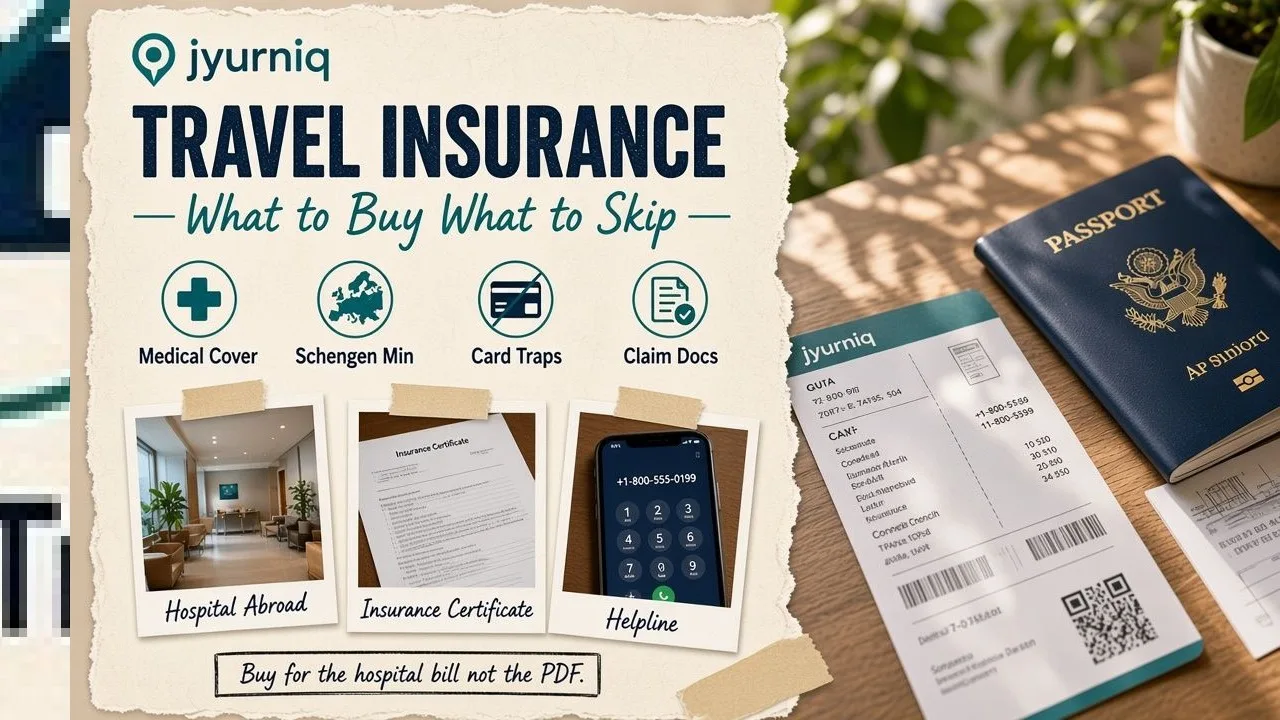
Travel insurance for Indians usually gets bought like airport water. Last minute. Cheapest PDF. Screenshot for the visa folder. Hope you never open it again.
Cute. Also how people discover that skiing, "mild" diabetes, or a credit card benefit was never going to pay the hospital.
This is the human version: what to buy, what to skip, and the boring checks that matter before you leave Indian WiFi.
Policy wordings change. Read your own certificate. Embassy and insurer rules beat any blog, including this one.
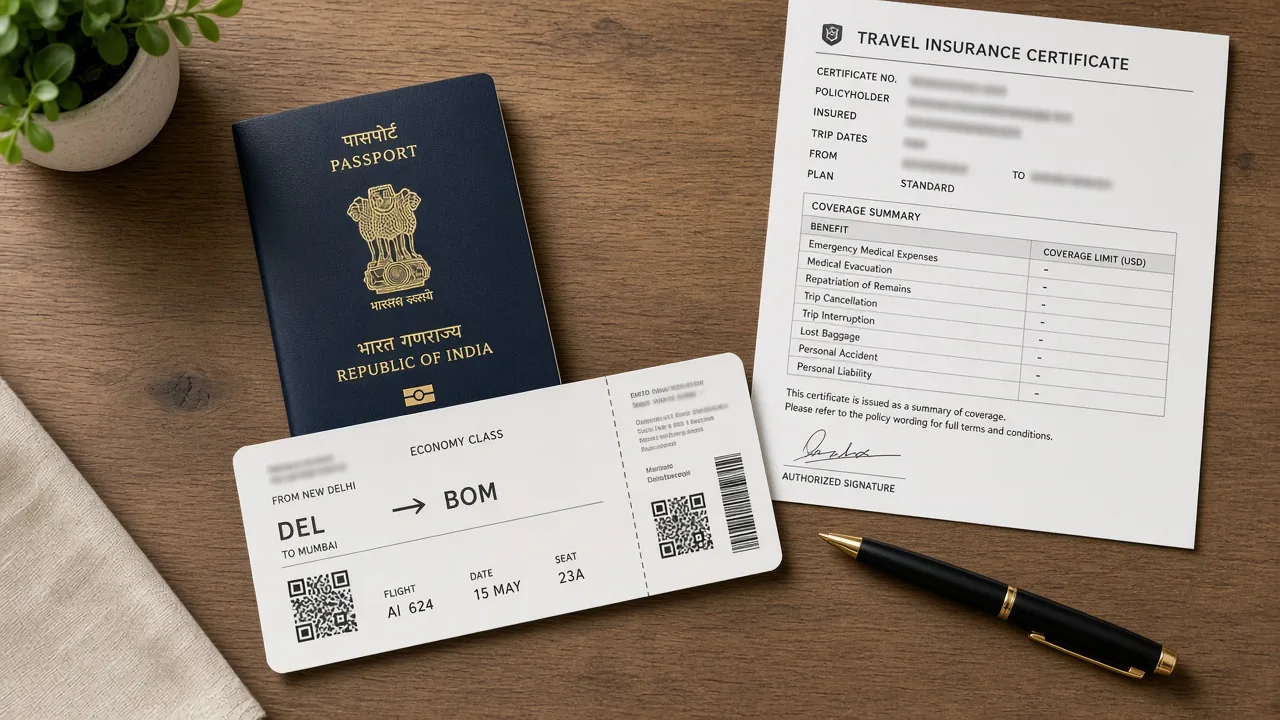
What travel insurance is actually for
Not vibes. Not "peace of mind" as a brand slogan.
The useful core is usually:
Emergency medical treatment abroad (hospital, doctor, urgent care)
Medical evacuation to a proper hospital if needed
Repatriation (getting you home medically, or remains in the worst case)
Optional extras: trip cancellation / delay, baggage, personal liability, adventure sports riders
Your India health policy does not magically become a Europe ER plan. Travel cover is the abroad layer.
Buy this first (almost every trip)
Medical + evacuation + repatriation from a real travel policy, not a random WhatsApp PDF.
Dates that cover every night abroad, including arrival and departure days. One missing day can sink a Schengen file.
A sum insured that matches where you are going. Schengen visa paperwork commonly needs at least €30,000 medical cover valid across Schengen for the full stay.
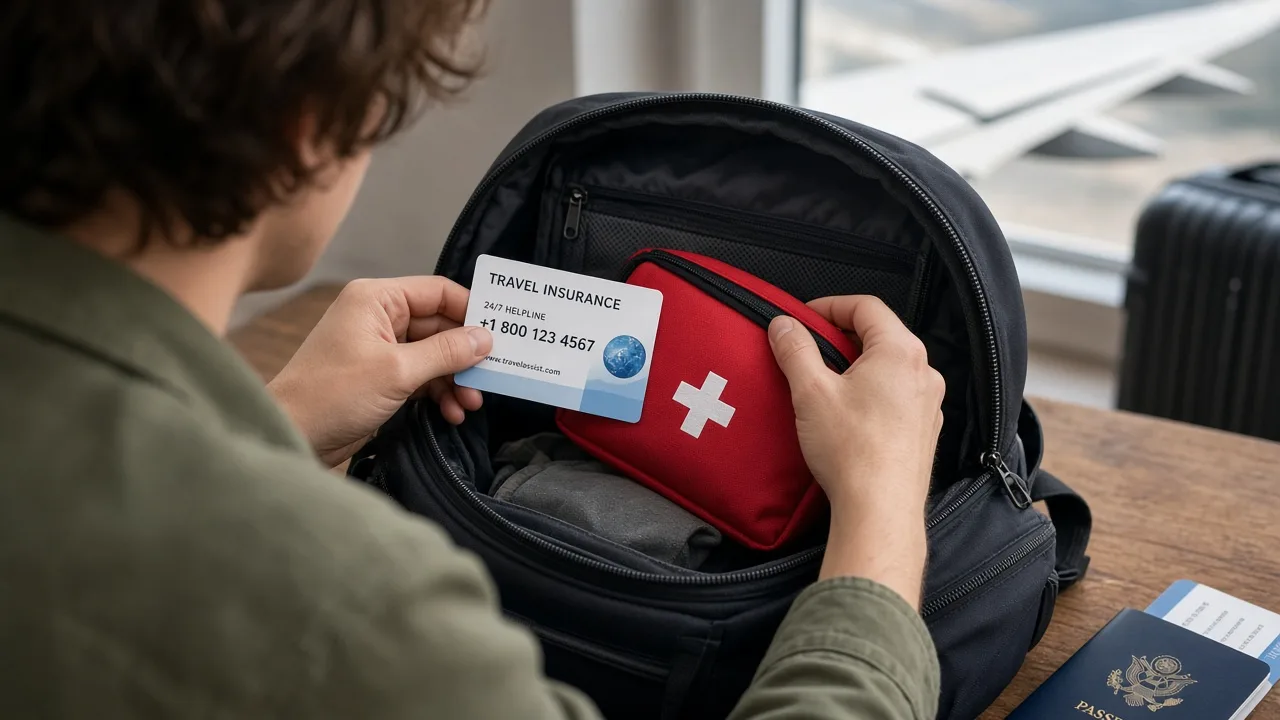
A 24/7 assistance number on the certificate, saved offline on your phone and in your bag.
For Schengen from India, many consulates only accept policies from an approved list of Indian insurers for the visa process. Buy the embassy-friendly certificate first. Then argue about add-ons.
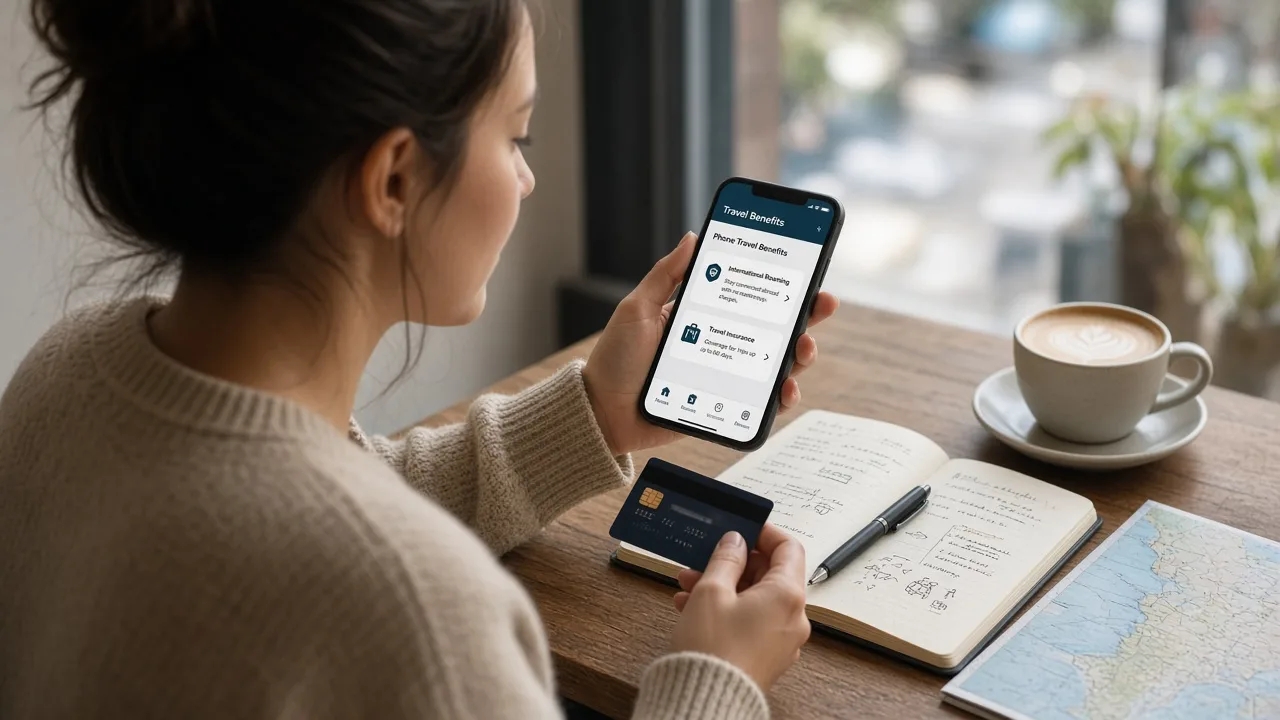
Credit card "free travel insurance": usually skip as your only plan
Premium cards love this bullet point. The fine print is less romantic.
Cover may sit below Schengen minimums
Repatriation / documentation may not match what a consulate wants
You may need to pay the full trip on that card, travel within a window, or register the trip online
Assistance partners and claim friction vary wildly
Treat card cover as a possible bonus, not your only hospital plan. If the card benefit is strong, still buy a clean standalone medical policy for visa and claims clarity.
What to buy by trip type
Schengen / Europe visa trip: approved Indian insurer, ≥ €30,000 medical, full date span, all Schengen states, evacuation + repatriation clearly stated. Certificate for VFS / embassy.
USA / Canada / high medical-cost countries: higher medical limits. Cheap "visa-looking" Europe minimums are not enough when a night in hospital can destroy a budget.
Asia beach / city week: still buy medical + evacuation. Add trip cancellation only if your flights and hotels are prepaid and non-flexible enough to hurt.
Ski / trek / adventure: standard plans often exclude hazardous sports or altitude above a limit. Buy the adventure rider or a plan that names your activity. Northern Lights glass igloos are cute. Ski injuries are not covered by vibes.
Parents / older travellers: check age bands and sub-limits. A cheap young-adult plan that quietly caps at 60 is not a family policy.
What you can usually skip (or buy last)
Tiny baggage cover that pays less than your deductible headache after a lost-bag circus
Flight delay cash that needs airline letters, exact hour thresholds, and a claim process longer than the delay
Stacked add-ons sold at checkout when your medical core is still weak
Buying two overlapping medical policies "just in case" without understanding which one is primary
Relying on India health insurance alone for overseas emergencies
If money is tight, protect the hospital bill first. Pretty cancellation riders after that.
The exclusions that quietly kill claims
Pre-existing conditions (diabetes, BP, thyroid, heart history, recent treatment). Declare what the form asks. Non-disclosure is how claims die.
Adventure / sports not listed on the policy
Alcohol / substance related incidents
Routine checkups, elective procedures, "I finally got this checked abroad"
Travel against medical advice, or for planned treatment
Illegal activity, and a long list of "we never covered that" sports
If you take daily meds, read the pre-existing section like it is the whole product. Because for many people, it is.
How to buy without getting sold
Start from the trip: country, dates, ages, activities.
For Schengen, filter for embassy-accepted Indian insurers and the €30,000 wording.
Compare medical limit, evacuation, repatriation, deductible, and assistance partner. Not only premium.
Add adventure / cancellation only if your itinerary actually needs it.
Download the full policy wording + certificate PDF. Screenshot the helpline.
Check names, passport numbers, and travel dates before you pay.
If something happens abroad
Call the assistance number before a non-emergency hospital hop when you can. Cashless / guarantee letters often need their approval.
Keep bills, reports, prescriptions, boarding passes, and police reports (for theft) as originals when possible.
Photo everything the same day. Phones die. Paper gets lost.
Do not invent a story to "help the claim." Inconsistent statements are catnip for rejection letters.
Must buy / must skip cheat sheet
Buy: medical + evacuation + repatriation matched to destination cost and visa rules
Buy: adventure rider if you ski, trek high, dive, or do named hazardous sports
Buy: honest disclosure of known conditions
Skip as primary: credit card brochure cover for Schengen / big medical trips
Skip first: glittery add-ons while medical cover is thin
Skip: the cheapest PDF that fails the embassy list or date span
Final verdict
For Indians abroad in 2026, travel insurance is not a personality. It is the hospital layer next to your card and eSIM stack.
Buy for the bill you cannot casually UPI. Skip the decorative extras until the medical core is solid. And if a seller cannot show evacuation, repatriation, and your activity in plain language, that is your answer already.



Conversation
0 comments