

Flying with parents is not hard because airports are complicated.
It is hard because you are managing three moods, two backpacks that somehow become five, and one uncle energy from your own dad who suddenly wants to "just ask the counter once more."
I have done Delhi T3 with my parents enough times to know the fight rarely starts on the plane. It starts at home, when someone packs three steel boxes "for the journey" and then asks why the bag is heavy.
This is the playbook I actually use. Pace. Food. Airports. And how to keep everyone speaking by the time the seatbelt sign goes off.
Decide the trip shape before you book
Parents are not your college friends. A 6 am departure after a 3 am Uber is not cute. It is how knees and patience both give up.
Pick flights with sane report times. Mid-morning beats red-eye unless there is a real reason.
Direct if you can. One connection with elderly parents is a whole second trip.
Sit together. Pay the seat fee. Arguing with a stranger for middle seats is not the savings you think it is.
Build buffer. If the airport is new to them, add 30 quiet minutes after security for water and toilet. Not shopping.
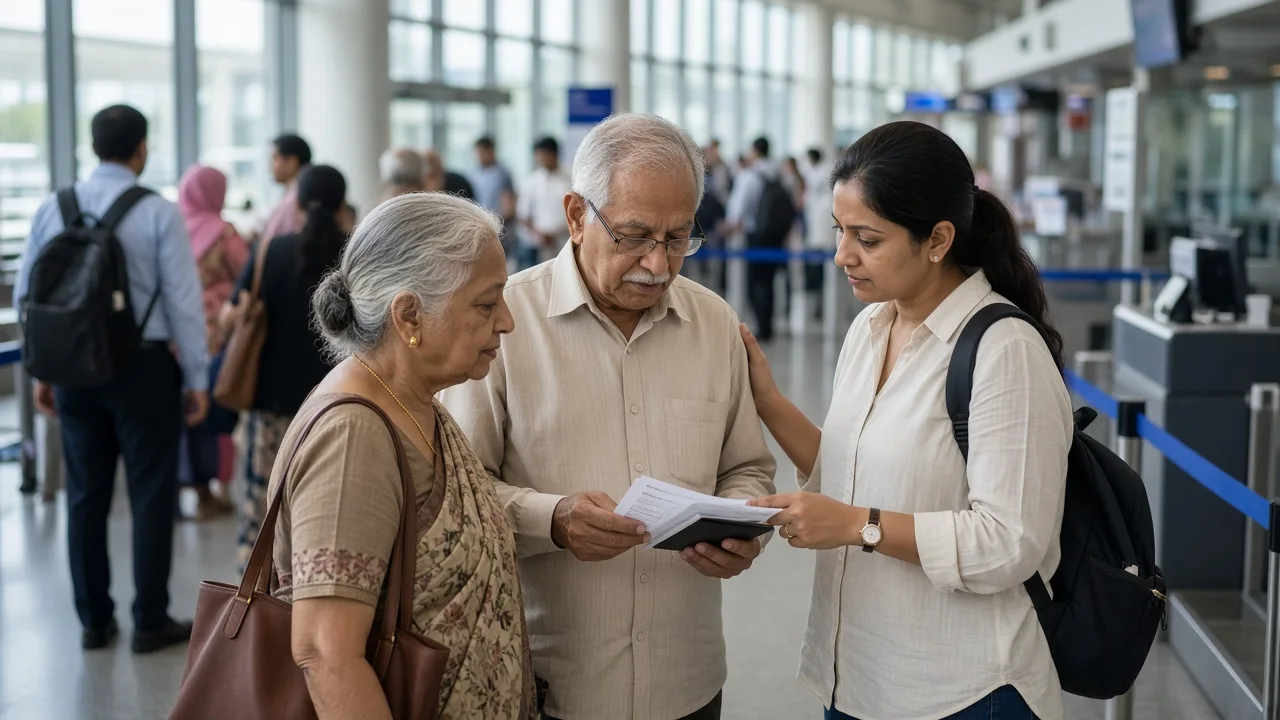
Documents: do this the night before
Do not discover at the door that Mum's Aadhaar name and the ticket name are in a creative relationship.
Domestic: government photo ID that matches the ticket spelling
International: passport validity, visa pages, return tickets, hotel proof if anyone asks
One folder or one phone album with everything screenshot-ed offline
Print one set anyway. Parents trust paper. Let them.
Also write emergency numbers on a card in Dad's wallet. Yes, even if he "remembers everything."
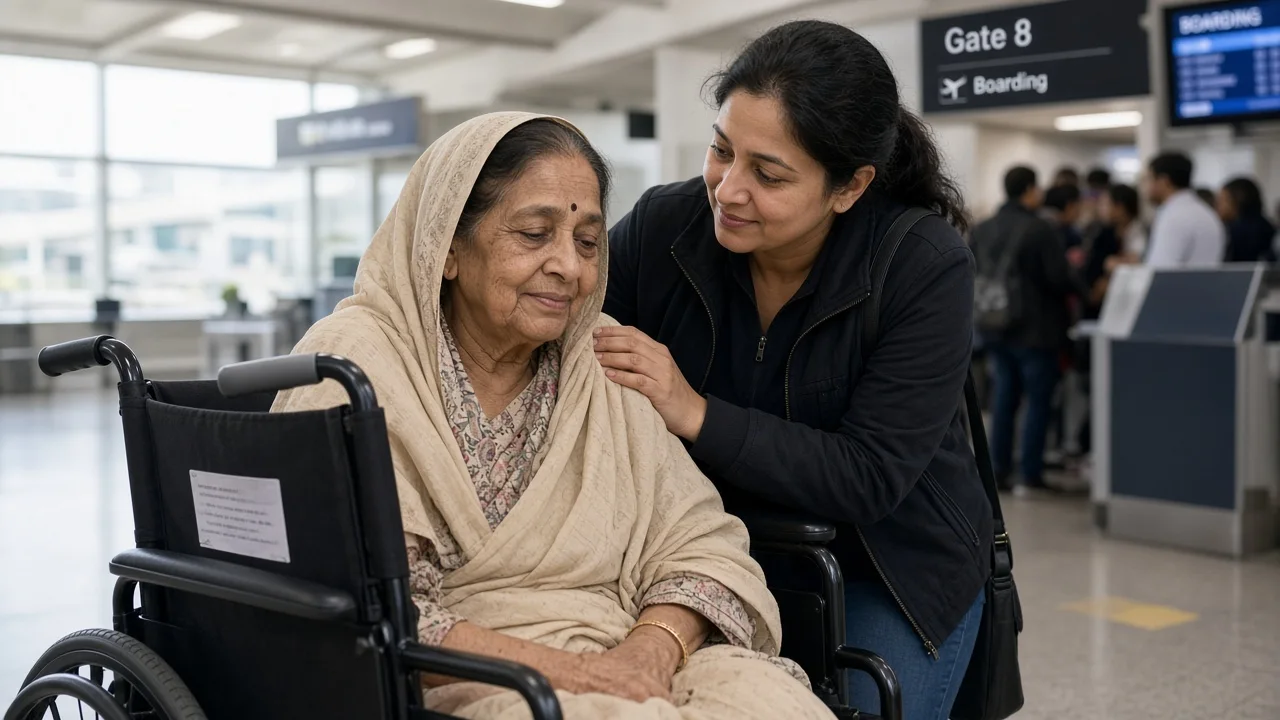
Wheelchair is not drama. Book it.
Indian airports are long. Home walking stamina is not terminal walking stamina.
If either parent gets tired in malls, just book wheelchair assistance. It is usually free. Request it while booking or at least 48 hours before, through the airline app / call centre, and keep the confirmation on the PNR.
Tell them what kind of help you need: long walk only, or help up to the seat. Show up early. Walk-up wheelchair on a busy morning is how you inherit a new personality.
And please: do not make your parent feel weak for using it. The flex is arriving calm, not proving toughness in a queue.
Bags: you are the logistics person now
One cabin bag rule for each parent if you can manage it. Extra tote "for fruits" becomes a security subplot.
Medicines in cabin, original strips, prescription copy. Never in the checked bag that might take a vacation of its own.
Pack a small "parent pouch": BP tablets, sugar tablets if needed, antacid, pain gel, spare glasses, earphones they actually understand.
Label the checked bags with a bright ribbon. Parents will stare at the belt like it is a mystery serial. Help them spot faster.
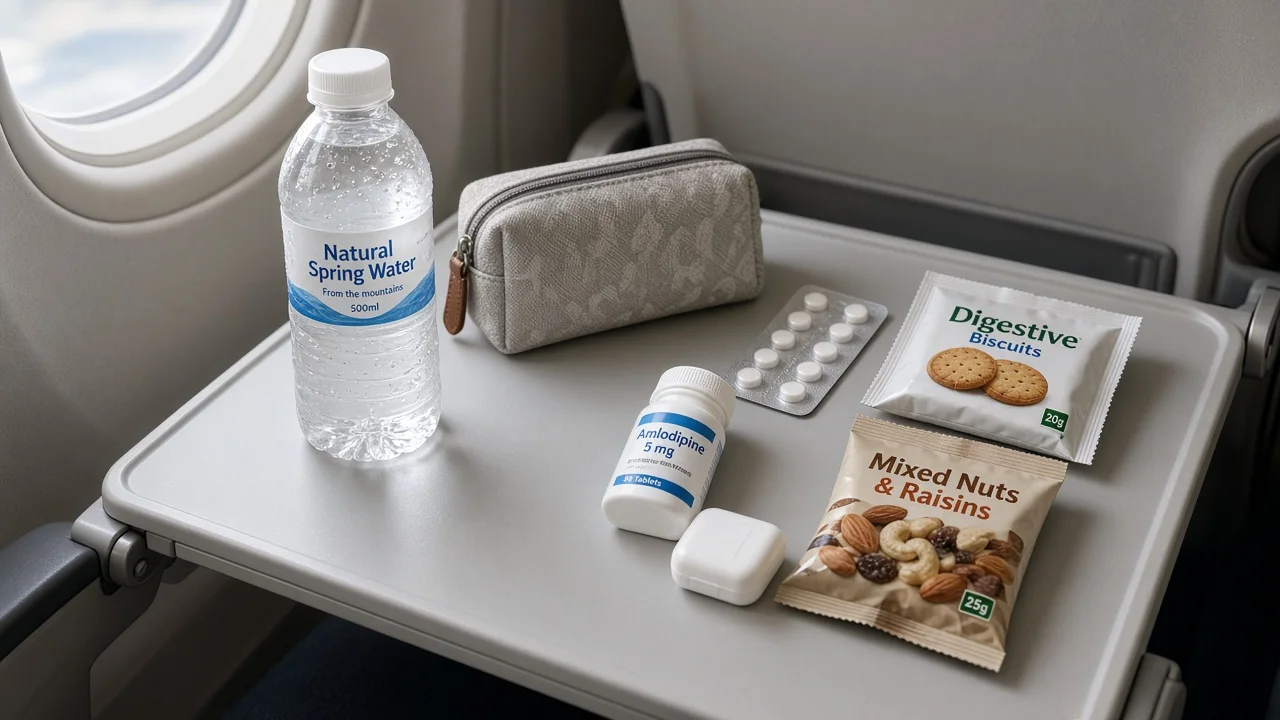
Food and water (the real peace treaty)
Hungry parents become different people. So do you.
Eat something normal before leaving home. Airport croissant is not breakfast for a diabetic dad.
Carry water bottles to refill after security.
Pack simple snacks they already like. Not a new "healthy bar" experiment at 35,000 feet.
If they need a special meal, request it early. Do not negotiate with the crew like it is a wedding buffet.
Onboard: help them with the tray, open the water, remind meds with food if that is their routine.
Airport pace that avoids fights
Your job is not to win. Your job is to move the group.
One person holds documents. One person holds parents. Do not rotate leadership every five minutes.
Tell them the plan in one sentence: "Check-in, security, gate, sit." Repeat as needed. Kindly.
No surprise duty-free detours if someone has knee pain.
Toilet stops before boarding, not after the last call announcement makes everyone spiritual.
If Dad wants to "just confirm with that uncle in uniform," go with him. Separating is how families invent missing-person lore.
On the flight
Help with seat belts without making a speech.
Show them the call button once. Then let them be.
Noise-cancelling for you is fine. Complete disappearance for four hours is how resentment books a return ticket.
If they are nervous flyers, narrate the boring parts. "This shake is normal." Do not narrate every weather map like National Geographic.
Walk them to the toilet if the aisle feels unstable. Pride can wait. A fall cannot.
The fights, translated
"Why so early?" Because security lines do not care about your optimism.
"I can walk." Okay. Wheelchair is still allowed. Use it for distance, walk at the gate if they want dignity points.
"I packed light." Open the bag. There will be a pressure cooker energy item. Remove it at home, not at CISF.
"You are always rushing." Slow the voice. Speed the plan. Rushing tone is what they hate, not the timeline.
If you feel yourself getting sharp, drink water and count to ten like you are the adult in the room. Because you are.
Landing is not the end
Parents get tired after landing in a way Instagram never shows.
Stay with them till bags arrive.
Have the pickup plan written. "Exit gate 4, white Innova, driver's number."
Do not schedule a museum two hours after a long flight "because we are already here."
Hotel check-in, meds, light food, sleep. Tourism can start tomorrow.
Quick checklist
□ IDs match ticket names
□ Wheelchair requested 48 hours ahead if needed
□ Seats together
□ Medicines + prescriptions in cabin
□ Snacks + water plan
□ Offline boarding passes + one printed set
□ Pickup details shared with parents and you
□ Buffer time, not hero timing
Final verdict
Flying with parents works when you stop treating it like your solo work trip with two guests.
You become the quiet operations person: early enough, fed enough, documented enough, and soft enough in the voice.
The win is not a perfect airport performance. The win is everyone still talking at baggage claim.



Conversation
0 comments