
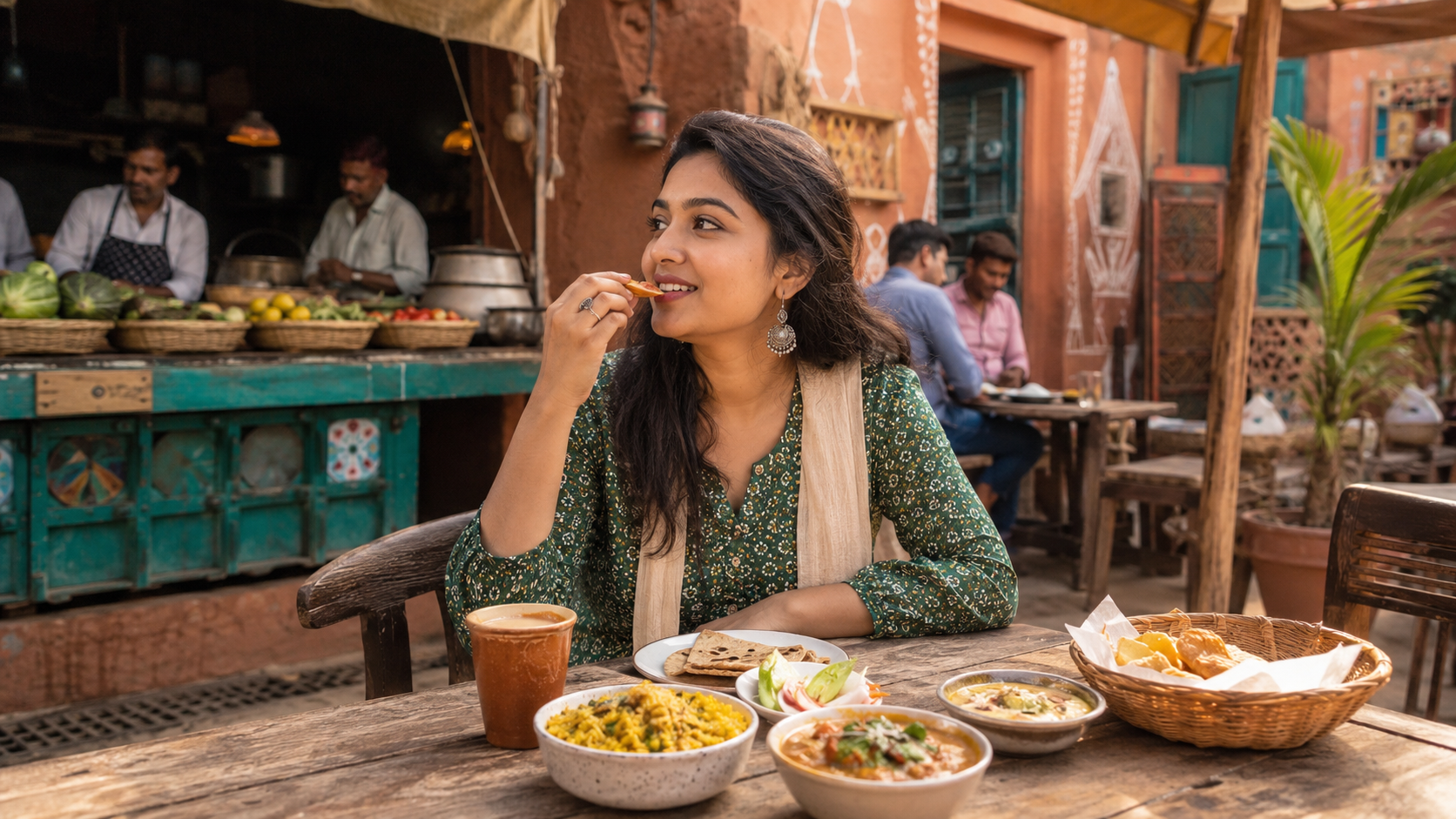
Some travel memories begin before the first bite.
They begin with the smell of spices drifting through a market, tea being poured at a roadside stall, bread cooking inside a small kitchen, or the sound of a busy restaurant preparing for lunch.
Food is not simply something we need while travelling. It carries stories about local weather, farming, history, migration, festivals, and family traditions.
You may forget the name of a street, but still remember the flavour of the meal you ate there.
Begin With a Local Breakfast
Breakfast is one of the easiest ways to understand the everyday rhythm of a destination.
Different regions begin their mornings differently. You might find poha and jalebi in parts of central India, idli and dosa across the south, parathas in the north, or fresh bread and regional curries in coastal towns.
Instead of ordering the same familiar breakfast available everywhere, ask what local people usually eat in the morning.
A simple breakfast at a busy neighbourhood shop may tell you more about the destination than an expensive restaurant designed mainly for visitors.
Visit the Places Where Local People Eat
Restaurants near major tourist attractions can be convenient, but they may not always offer the most authentic or affordable experience.
Walk a little beyond the main tourist area and look for clean restaurants that are popular with local families. Busy tables, freshly prepared food, and a steady flow of customers are often good signs.
You can also ask your hotel staff, homestay owner, guide, or driver where they personally enjoy eating.
The most useful recommendation is not always the most famous place. Sometimes it is a small shop known for preparing one dish exceptionally well.
Explore Regional Street Food Carefully
Street food brings together flavour, creativity, and the fast-moving energy of a destination.
From chaats and kebabs to momos, dosas, rolls, and regional sweets, every city seems to have something best enjoyed while standing beside a crowded stall.
Choose vendors that appear clean and have a regular flow of customers. Prefer food cooked fresh and served hot. Be careful with uncovered items, unsafe water, or ingredients that have been sitting outside for a long time.
Trying street food should feel exciting, but looking after your health helps ensure that one meal does not disrupt the rest of your journey.
Do Not Ignore Traditional Drinks
Regional drinks can be just as memorable as the food.
Depending on the destination and season, you may find:
Masala chai
Filter coffee
Lassi
Chaas
Kahwa
Aam panna
Jaljeera
Nimbu pani
Sugarcane juice
Tender coconut water
Fresh fruit drinks
These drinks often reflect the climate and locally available ingredients. A warm cup of tea feels different in the mountains, just as chilled buttermilk becomes especially refreshing during a hot afternoon.
When buying fresh drinks, choose hygienic vendors and confirm that safe water and clean utensils are being used.
Ask About the Story Behind a Dish
A dish becomes more meaningful when you understand where it came from.
Ask whether it is prepared during festivals, served at family gatherings, or connected to a particular community. Find out which ingredients are grown locally and whether the recipe changes from one household to another.
You do not need to turn every meal into an interview. A simple question such as “Is this a local dish?” can begin an interesting conversation.
Food carries memories for the people who prepare it. Listening to those stories helps you appreciate more than just the flavour.
Try Something New Without Wasting Food
Travelling is a good opportunity to try unfamiliar dishes, but you do not need to order a full plate of everything.
Share different dishes with your travel companions or ask whether smaller portions are available. Begin with flavours and ingredients that feel manageable before trying something completely unfamiliar.
If you have allergies, dietary restrictions, or religious preferences, communicate them clearly before ordering. Translation tools can help when there is a language difference.
Curiosity should never come at the cost of your health or personal boundaries.
Visit Local Food Markets
A food market shows you the ingredients behind a region’s cooking.
You may see seasonal fruits, vegetables, spices, grains, pickles, sweets, and snacks that are rarely available elsewhere. Markets also help you understand how local people shop and what they prepare at home.
Walk slowly, observe respectfully, and ask before photographing vendors closely.
If you buy packaged food to take home, check the ingredients, expiry date, storage requirements, and travel restrictions.
Experience a Home-Cooked Meal
A home-cooked meal can offer a completely different experience from restaurant food.
Some homestays, community kitchens, and cooking workshops allow travellers to learn how regional dishes are prepared. You may discover small details that would never appear on a restaurant menu.
Choose established and well-reviewed experiences, especially when visiting an unfamiliar area.
The purpose is not only to eat. It is to understand the care, time, and traditions involved in preparing the meal.
Leave Space for Simple Food
Not every meal needs to be a famous recommendation.
Sometimes the most comforting part of a long travel day is a simple plate of dal and rice, fresh fruit, a sandwich, or tea with biscuits.
Constantly searching for the “best” restaurant can become exhausting. Give yourself permission to eat something familiar when you need it.
A food journey should feel enjoyable, not like another checklist you have to complete.
Support Local and Family-Run Businesses
Eating at local cafés, bakeries, food stalls, and family-run restaurants helps your travel spending remain within the community.
This does not mean avoiding every popular chain or hotel restaurant. It simply means making space for independent businesses that represent the destination’s own flavours.
Purchase regional snacks, spices, sweets, or handmade food products when practical. These can become meaningful souvenirs and allow you to revisit the journey after returning home.
Record Your Food Memories
Food memories fade faster than we expect.
When documenting a trip, record:
The name of the dish or drink
Where you tried it
Who recommended it
The flavours you noticed
Whether you would order it again
A story connected to the meal
A photograph of the food
The approximate cost
Even a short note can bring back the atmosphere of the entire day years later.
Final Thoughts
Food allows us to experience a destination through more than its appearance.
It introduces us to local ingredients, family traditions, seasonal habits, and the people who keep regional recipes alive.
Visit the famous attractions, but also notice what is cooking around them. Try the breakfast, stop for tea, walk through a food market, and ask what the people living there would recommend.
Sometimes the most memorable part of a journey is not where you went, it is what you tasted along the way.
Conversation
0 comments