
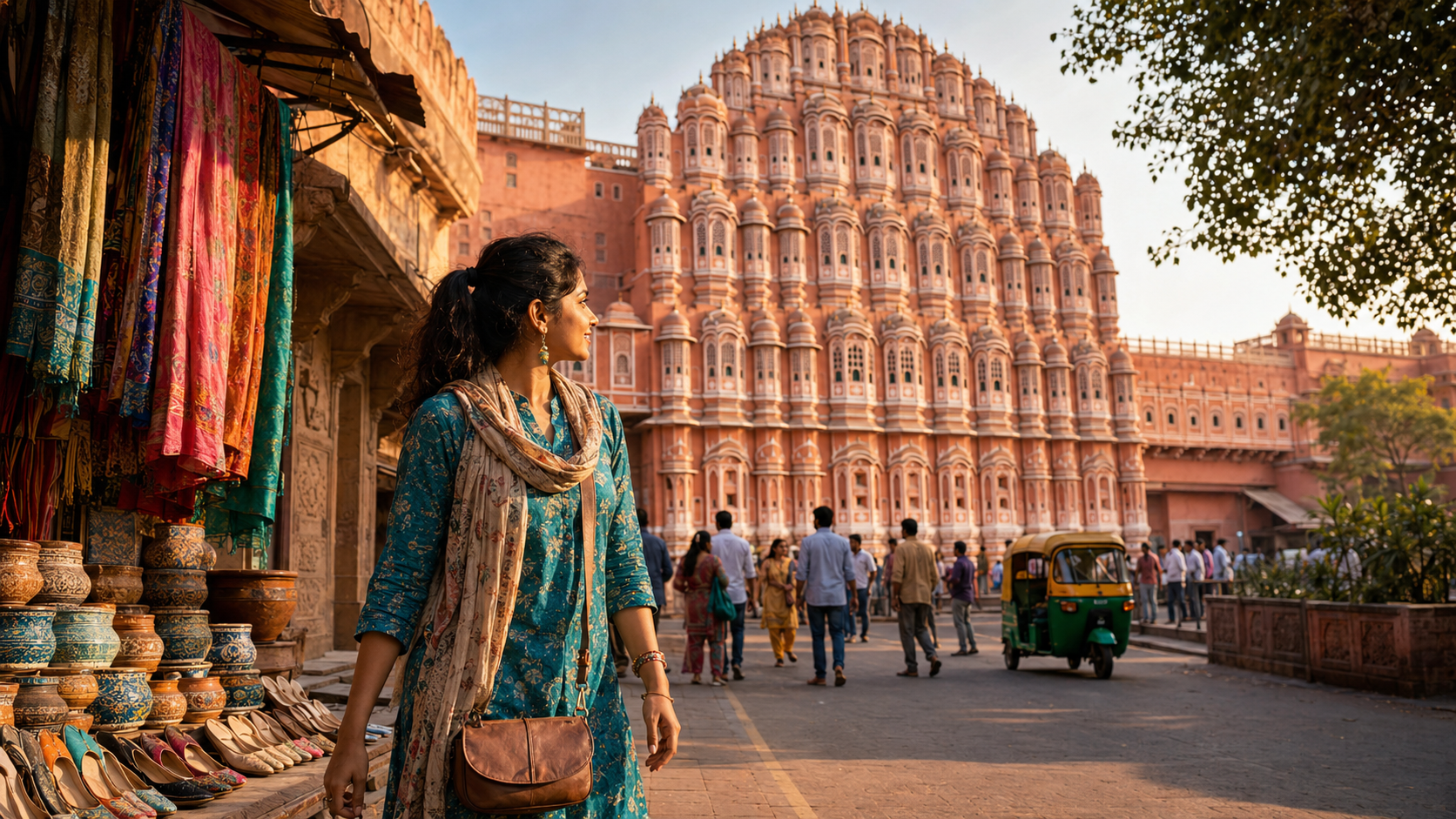
Jaipur is the kind of city where one side of the road has a grand royal palace, the other has a colourful market, and somewhere in between, you are eating pyaaz kachori while promising yourself that the diet will restart after the trip.
The Pink City is not limited to palaces and Instagram photographs. It offers history, shopping, traditional food, lively streets and sunsets that make you forget how much you walked during the day.
If you are visiting Jaipur for the first time, three days are enough for a memorable introduction, as long as you do not treat the entire city like a checklist.
Day 1: Begin With the Royal Side of Jaipur
Start Early at Amer Fort
Begin your Jaipur trip at Amer Fort. Reaching early gives you more comfortable weather and a little space before the larger crowds arrive.
The courtyards, sandstone walls, Sheesh Mahal and views of Maota Lake create the royal atmosphere people expect from Rajasthan. Amer Fort is around 11 kilometres from central Jaipur and forms part of a UNESCO World Heritage Site. Explore Amer Fort
The fort is large, so comfortable footwear is essential. Skip animal rides and use an authorised jeep, cab or walking route instead.
Stop at Panna Meena Ka Kund
Located close to Amer, Panna Meena Ka Kund is a historic stepwell known for its symmetrical arrangement of stairs.
It works well as a short stop rather than a major activity. Follow the signs and avoid entering restricted sections simply for a photograph. Heritage rules still apply even when the camera angle looks tempting.
Take a Break at Jal Mahal
While returning from Amer, stop beside Jal Mahal.
The palace stands in the middle of Man Sagar Lake and is generally viewed from the roadside because public entry to the building is not available. Jaipur destination guide
Have some tea, take a few photographs and enjoy the view. Not every stop needs to become a one-hour activity.
Watch the Sunset From Nahargarh
Reserve the evening for Nahargarh Fort. Its elevated position provides a panoramic view of Jaipur, especially around sunset when the city begins to glow.
Traffic can increase on weekends and holidays, so leave earlier than you think is necessary. Otherwise, there is a genuine possibility that you will watch the sunset through the car window while your map continues saying “twelve minutes away.”
Day 2: Hawa Mahal, History and Market Madness
Begin the Morning at Hawa Mahal
Visit Hawa Mahal early in the morning, when soft sunlight falls on its pink façade and the road is not yet at its busiest.
Constructed in 1799, Hawa Mahal is known for its 953 small windows or jharokhas. They helped circulate air through the building and allowed royal women to observe street life without being seen. Discover Hawa Mahal
Several cafés across the road offer views of the façade, but do not take one photograph and immediately leave. If time permits, explore the building from the inside too.
Explore City Palace
Walk towards City Palace after visiting Hawa Mahal.
Its courtyards, decorated gateways, textiles, weapons and royal artefacts provide an interesting introduction to Jaipur’s history. The Peacock Gate is especially beautiful, but remember to look at the details with your own eyes too.
Not everything needs to be viewed through a phone screen.
Understand the Science of Jantar Mantar
Jantar Mantar is located close to City Palace.
From a distance, it may appear to be a collection of unusually large geometric structures. A guided explanation reveals that these are astronomical instruments designed to measure time and observe celestial movements.
Jaipur’s Jantar Mantar is a UNESCO World Heritage Site built during the 18th century under Maharaja Sawai Jai Singh II. Explore Jantar Mantar
Even if school science lessons were never your favourite, this place becomes fascinating when someone explains how the instruments work.
Enter Bapu Bazaar and Johari Bazaar
Now comes the true test of self-control: shopping.
Jaipur’s markets are filled with mojari, block-printed clothes, jewellery, bangles, bags, handicrafts and home décor. Johari Bazaar is known for jewellery and textiles, while Bapu Bazaar is popular for mojari and Rajasthani fabrics. Jaipur shopping guide
Bargaining is expected in many shops, but keep it respectful. If the shopkeeper says ₹800 and you immediately offer ₹80, that is less of a negotiation and more of an emotional attack.
Day 3: Colourful Architecture and a Rajasthani Evening
Visit Patrika Gate
Begin your third day at Patrika Gate, known for its colourful arches and detailed artwork.
The gate forms the entrance to Jawahar Circle, a large public park with gardens, walking areas and an evening fountain show. Explore Jawahar Circle
Visit in the morning for a calmer experience. Other people will also be waiting for photographs, so avoid occupying an entire arch for a forty-minute personal photo session.
Explore Albert Hall Museum
Continue towards Albert Hall Museum. The building is impressive from the outside, while its collections introduce visitors to Rajasthan’s art, textiles and cultural history.
The museum stands inside the Ram Niwas Garden complex, making it easy to combine the visit with a slower walk through the surrounding garden. Explore Ram Niwas Garden and Albert Hall
Spend the Evening at Chokhi Dhani
Reserve your final evening for Chokhi Dhani if you want a lively cultural experience.
It combines Rajasthani food, folk performances, traditional art and village-style activities in one place. The experience is designed for visitors, but it can still be an enjoyable evening with family or friends.
Arrive hungry. Plans such as “I will only eat a little” rarely survive after dal baati churma reaches the table.
What Should You Eat in Jaipur?
If you visit Jaipur and eat only the regular paneer and fried rice available at your hotel, your trip may be technically complete—but emotionally, something will still be missing.
Try:
Pyaaz kachori
Dal baati churma
Gatte ki sabzi
Ker sangri
Bajre ki roti
Mirchi vada
A traditional Rajasthani thali
Ghevar
Mawa kachori
Lassi or masala chaas
Choose busy, hygienic vendors for street food and carry safe drinking water, especially during warmer months.
Where Should You Stay?
Accommodation near the old city can make it easier to reach Hawa Mahal, City Palace and the markets. However, these areas may also be noisier and more crowded.
If you prefer a calmer stay, look slightly beyond the busiest historic lanes while checking the realistic travel time to your planned attractions.
Do not judge a hotel only through its photographs. Check its exact location, recent reviews, check-in policy, transport access and final price after taxes.
Useful Jaipur Travel Tips
Start early when visiting forts and monuments.
Wear comfortable footwear and breathable clothing.
Carry sunscreen, a cap and a reusable water bottle.
Follow dress requirements and local rules at religious places.
Ask before taking close photographs of local people.
Keep both cash and a secure digital-payment option.
Recheck monument timings and ticket details through official sources.
Do not pressure yourself to visit every fort in one day.
Take Jaipur’s summer heat seriously.
Leave some empty space in your luggage for shopping. You will probably need it.
Final Thoughts
Jaipur manages to feel royal and familiar at the same time.
Its forts are grand, its markets are noisy, its food is generous, and its traffic may occasionally test the strength of your character. Yet the colours, history and energy of the city keep the journey interesting from morning until night.
Three days cannot reveal every side of Jaipur, but they can offer a wonderful introduction.
Explore the forts, eat the kachori, bargain in the markets and sit quietly during sunset. Bring Jaipur home not only in your camera gallery, but also in the stories you will continue telling.



Conversation
0 comments