
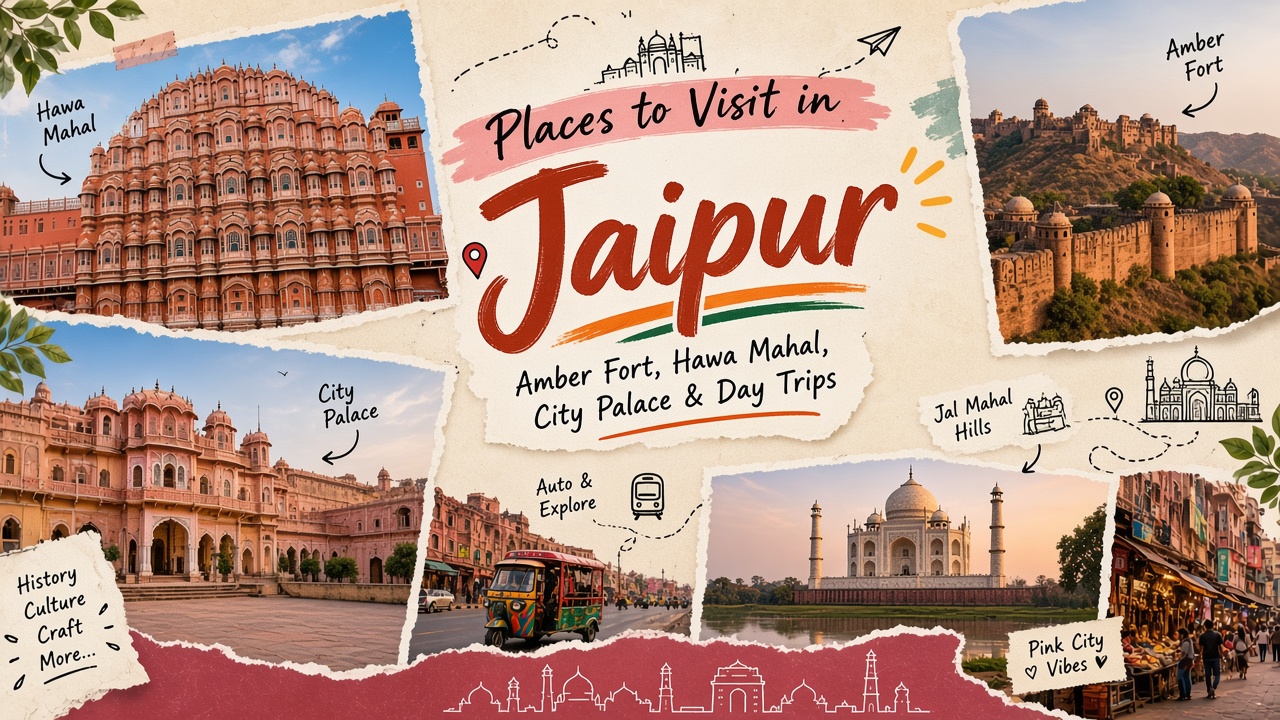
Jaipur was planned to look intentional. Wide bazaars, pink-washed facades, forts perched on Aravalli ridges like someone left the skyline on purpose. It is the Pink City on postcards and a working Rajasthani capital when you step off the tourist loop: heat, horns, and craft that still pays rent.
This is a working map of places worth standing in: Amber’s hill fort and mirror rooms, the old city’s palace and honeycomb facade, lakeside jal mahal views, hilltop sunsets, bazaars that sell more than souvenirs, and the Pushkar–Ajmer day that finishes the Rajasthan triangle for many travellers.
Start early. Group by hill vs old city. Elephant and jeep debates at Amber will eat time if you arrive late and argue with the sun.
How to read this city
Amber belt: Amber Fort, Sheesh Mahal, Panna Meena ka Kund, Jaigarh
Old city core: Hawa Mahal, City Palace, Jantar Mantar, bazaars
Lakes & hills: Jal Mahal, Nahargarh
South & soft stops: Albert Hall, Birla Mandir, Patrika Gate, Sisodia Rani, Galta Ji
Nearby: Pushkar, Ajmer
Amber and the ridge forts
Amber Fort (Amer Fort)
Hill fortress above Maota Lake, the Kachwaha seat before Jaipur was founded. Courtyards, painted gates, long climbs or a jeep up from the base, and views that make the heat feel briefly organised. Ticketed. Morning light is kinder than noon glare on sandstone.
Do: Arrive at opening. Walk or jeep with a plan. Give the Diwan halls and Ganesh Pol real time.
Don’t: Stack Amber, City Palace, and Nahargarh into one sweaty flex unless your legs filed consent.
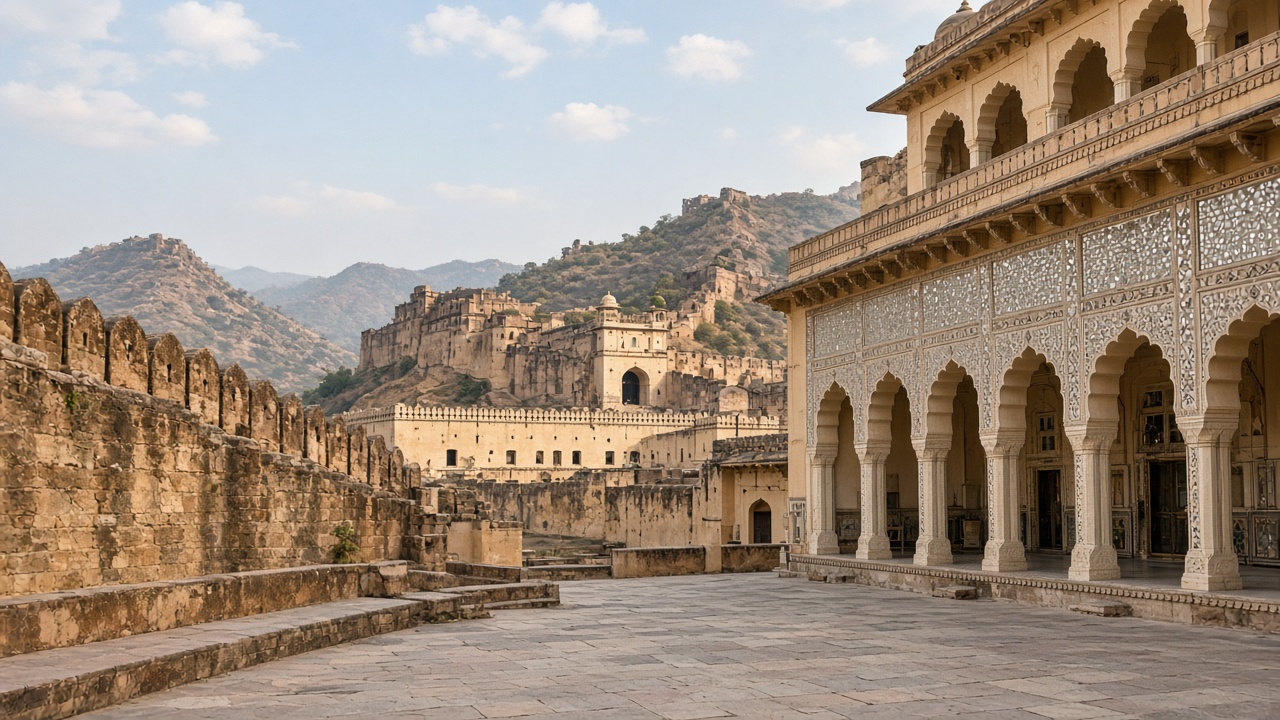
Sheesh Mahal (Mirror Palace)
Inside Amber: glass-inlaid chambers that scatter candlelight into a sky of fragments. The room everyone queues for. Guides will narrate; your eyes will do most of the work if you protect a quiet minute.
Do: Soft voice. One careful look at the craft. Pair with the rest of Amber, not as a separate cab trip.
Don’t: Flash recklessly if staff ask you not to. The mirrors are the show.
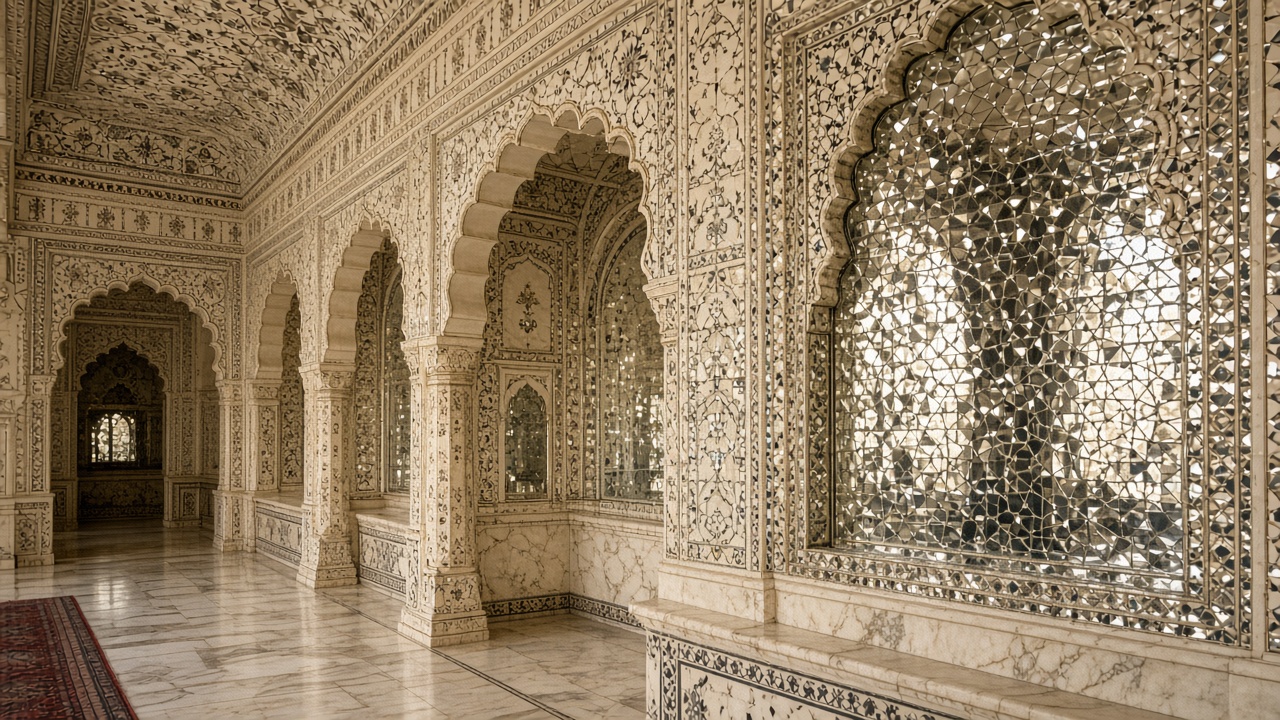
Panna Meena ka Kund
Geometric stepwell near Amber, pink-ochre tiers dropping into a square of water. Short stop, strong photograph, and a cooler pocket of shade if you time it between fort climbs.
Do: Soft morning. Watch your footing on the steps. Ten focused minutes beat a crowded pose marathon.
Don’t: Block the descent for a Reel while others are trying to move.
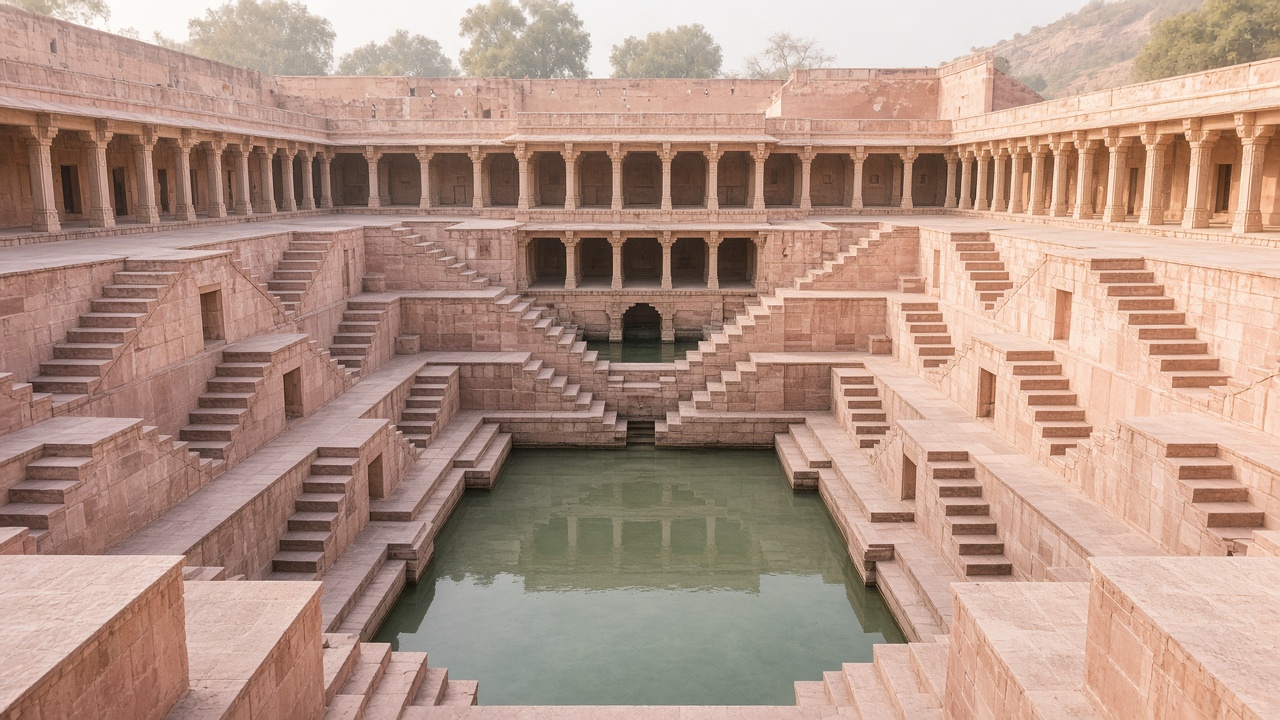
Jaigarh Fort
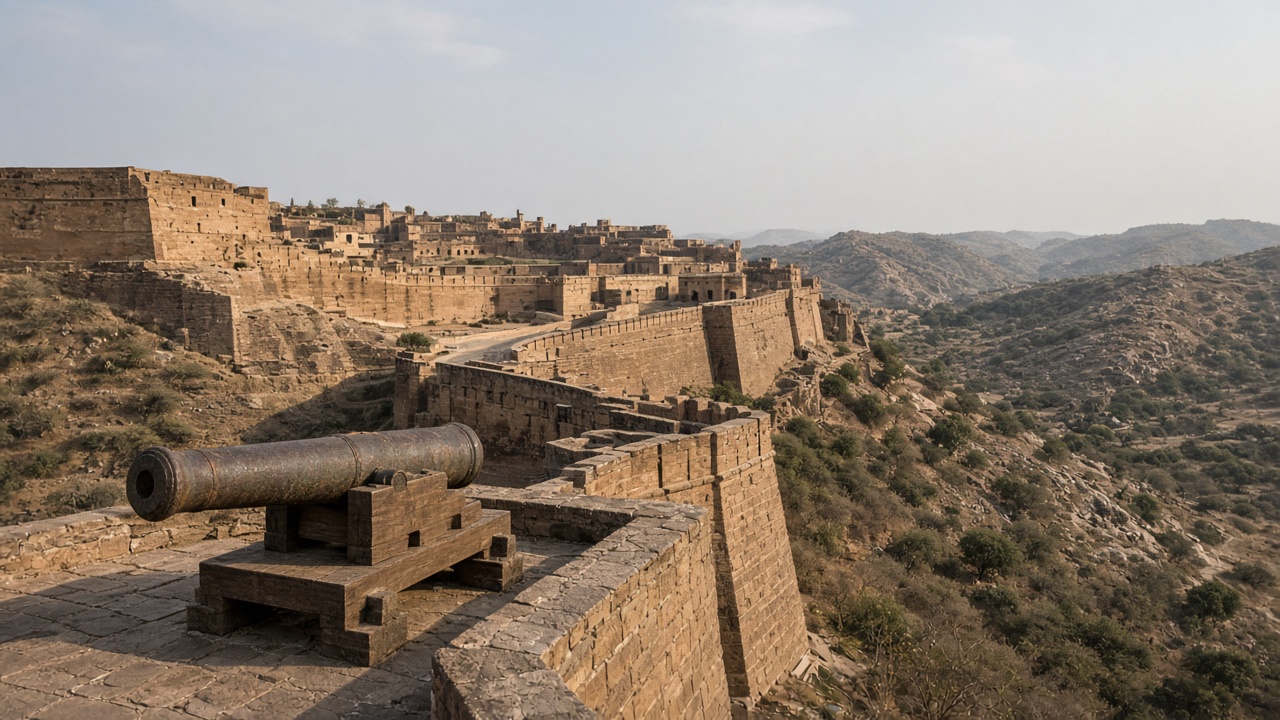
Military sibling on the ridge above Amber: thicker walls, the Jaivan cannon, and a sterner mood than the palace courtyards below. Linked historically to Amber’s water and defence story. Often quieter.
Do: Combine with Amber the same morning if energy holds. Carry water. One rampart walk.
Don’t: Expect City Palace polish. This is fort first, museum second.
Old city: pink walls, palace, and instruments
Hawa Mahal
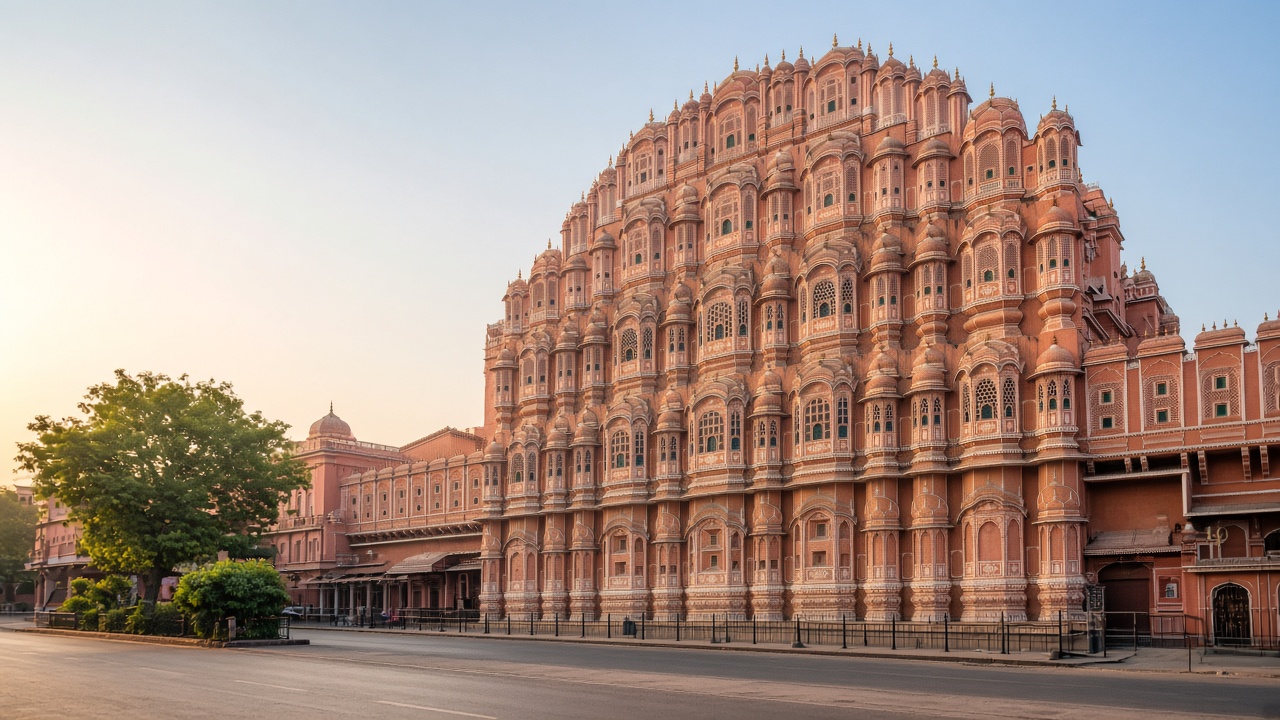
The Palace of Winds: five-storey honeycomb facade facing the bazaar, built so royal women could watch street life unseen. Most visitors frame it from outside. Interior access exists with tickets and timing; the street view is still the city’s signature rectangle.
Do: Morning light on the pink sandstone. Walk the bazaar stretch after. One clean frame beats fifty identical ones in traffic.
Don’t: Stand in the road for the shot. Autos have somewhere to be.
City Palace
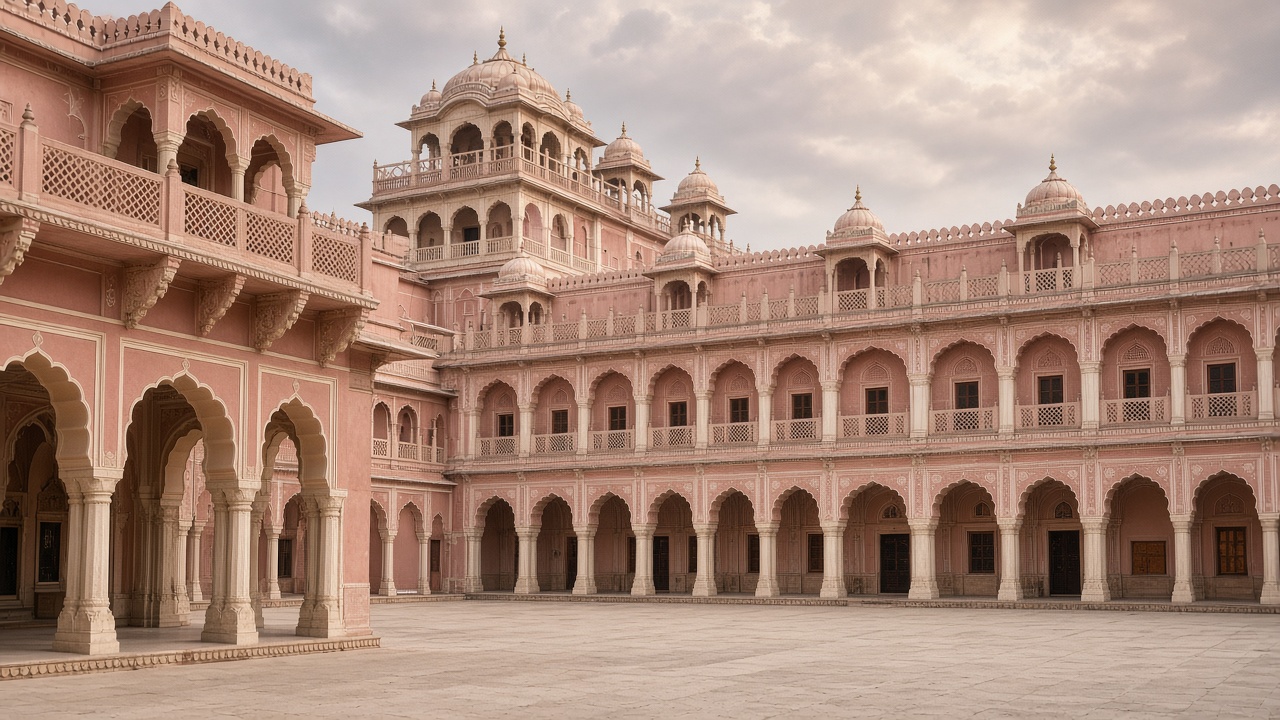
Still partly a royal residence: Chandra Mahal, Mubarak Mahal, courtyards of pink and cream, museums of textiles and arms. The heart of the planned city. Ticketed. Crowds thicken after late morning.
Do: Morning entry. Pick two courtyards and one museum room. Sit once without narrating.
Don’t: Race every gallery. Palace fatigue is real in Rajasthan heat.
Jantar Mantar
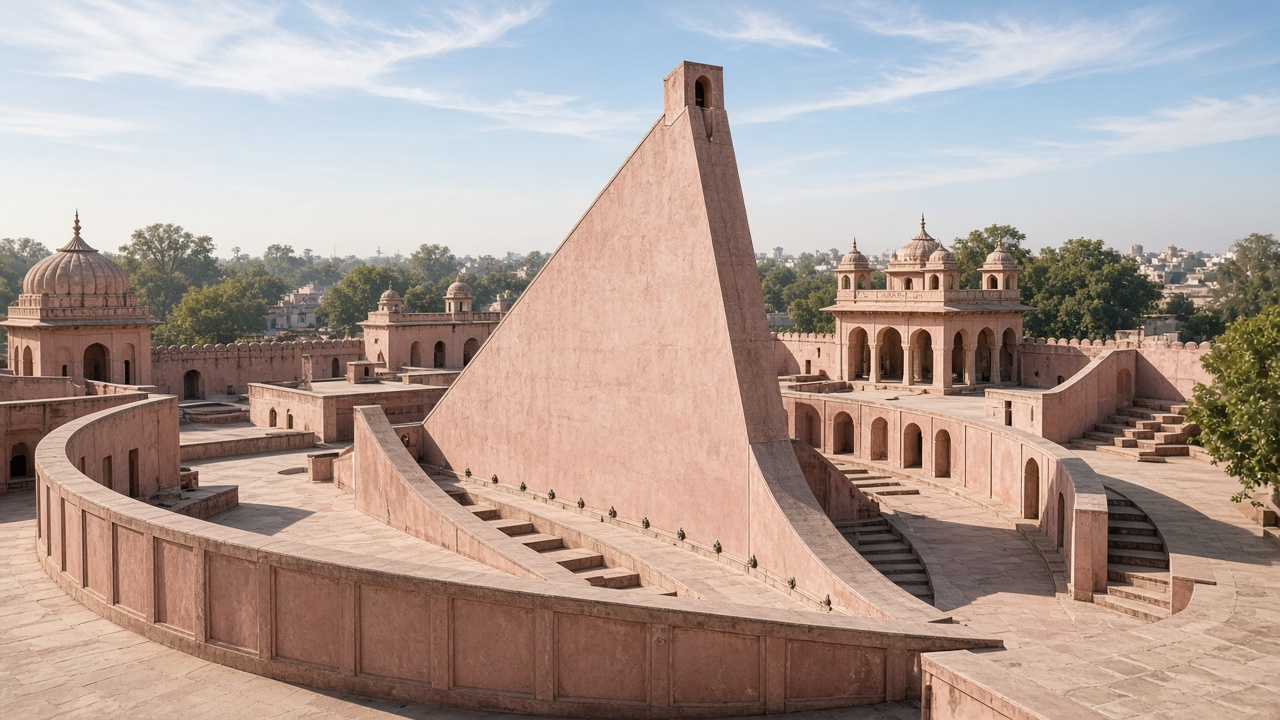
UNESCO astronomical observatory next to the City Palace: Samrat Yantra and other masonry instruments that still look like science fiction carved in stone. Short visit, high reward if you read a board.
Do: Pair with City Palace the same ticket window of the day. Mid-morning shadow helps the instruments photograph clean.
Johari Bazaar & the old market grid
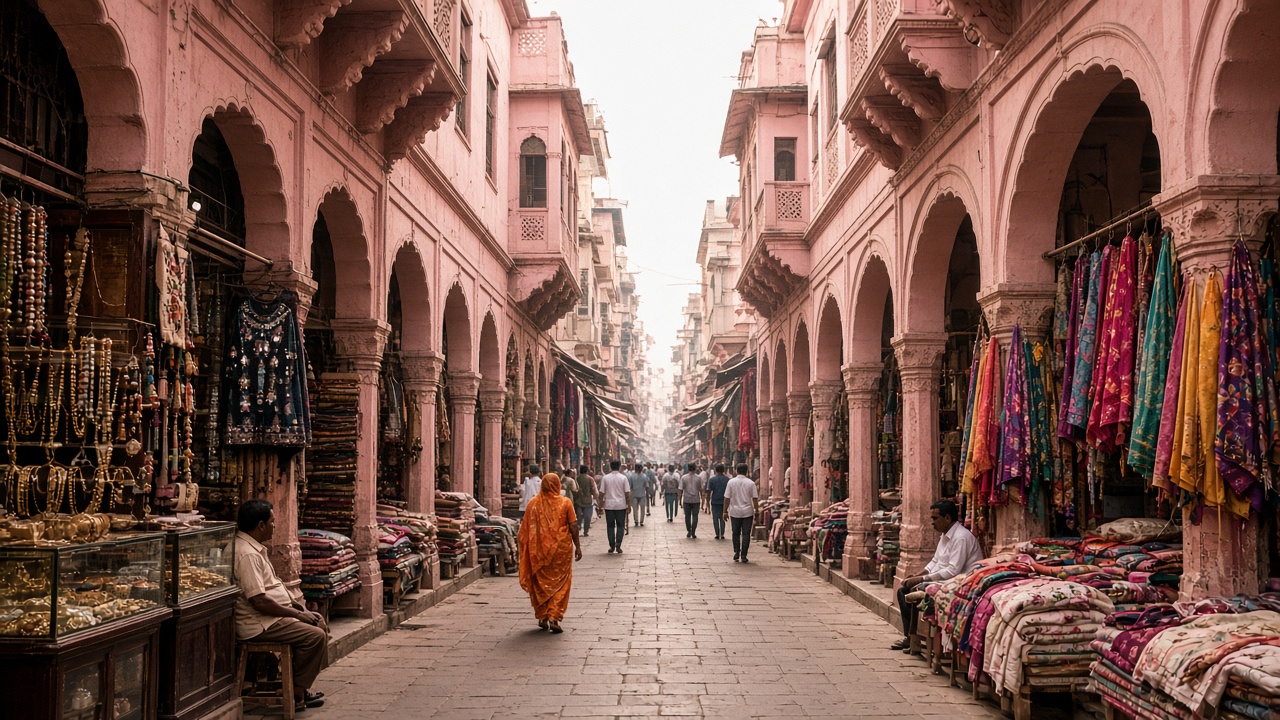
Jewellery, textiles, lac bangles, and the Pink City’s commercial spine under arches that still feel colonial-meets-Rajasthan. Bargain with patience. Buy one useful thing. Keep bags closed in denser stretches.
Do: Late afternoon into evening. Walk, don’t drive, the thickest blocks. Taste something local between shops.
Don’t: Treat every stall as a negotiation sport. Save energy for the forts.
Water, hills, and evening light
Jal Mahal
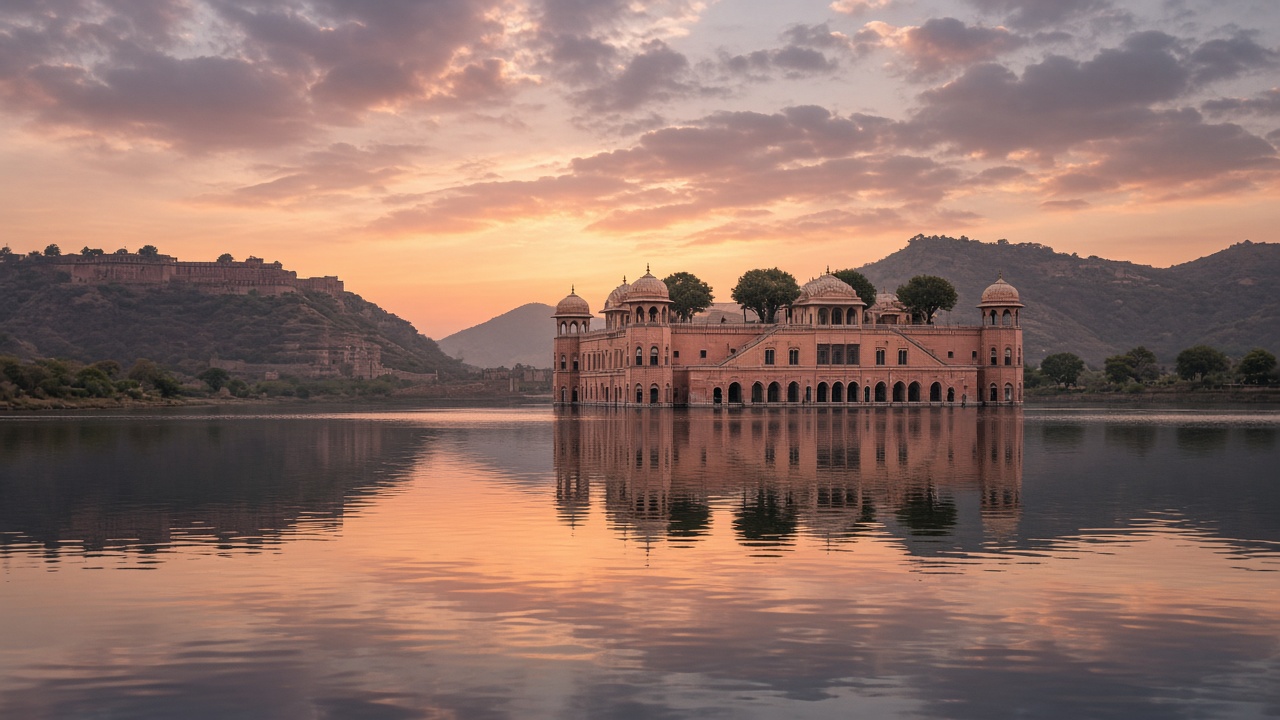
Water palace sitting in Man Sagar Lake on the Amber road. You look; you usually do not enter. Softest at sunset when the pink walls and reflection do the work. A viewpoint stop, not a half-day.
Do: Golden hour. One frame from the lakeside. Continue to Amber morning or Nahargarh evening depending on your map.
Don’t: Expect a tourable interior. The lake is the ticket.
Nahargarh Fort
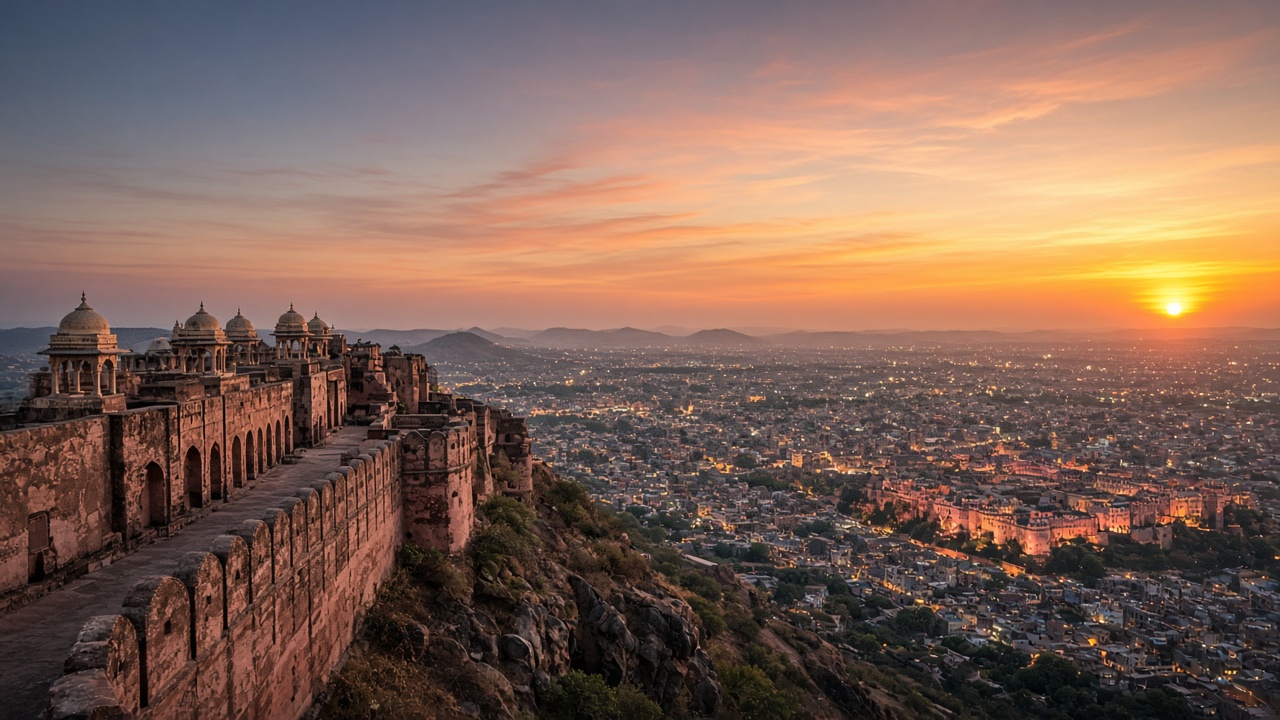
Hilltop fort with the classic Pink City panorama at dusk. Walls, cafés nearby on some evenings, and a breeze that feels earned after old-city heat. Popular sunset slot; arrive with buffer for the climb and parking mood.
Do: Sunset into blue hour. One rampart walk. Soft shoes.
Don’t: Leave City Palace at 5 pm and expect empty walls. Everyone had the same idea.
South Jaipur and quieter corners
Albert Hall Museum
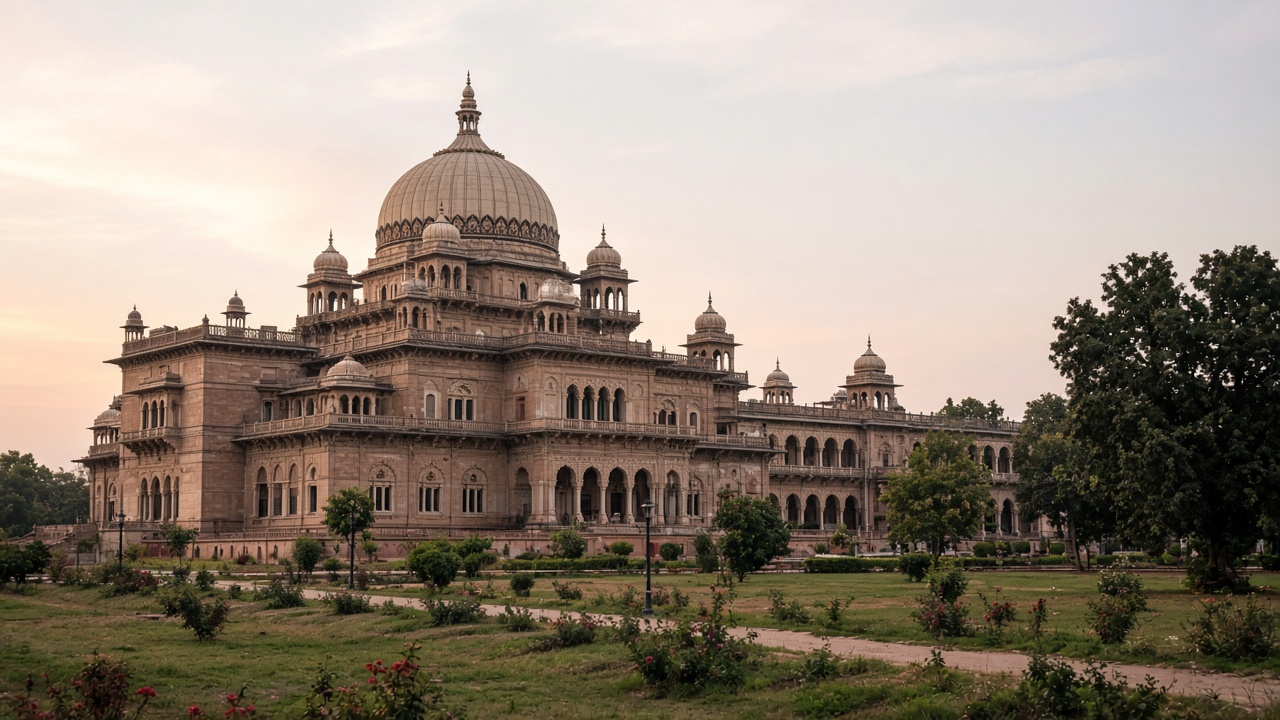
Indo-Saracenic museum in Ram Niwas Garden: dome, galleries, and a softer hour when forts start blurring. Good for textiles, crafts, and sitting still. Evening lights on the facade photograph well from outside.
Do: One or two galleries. Garden walk. Use it as a heat reset.
Birla Mandir
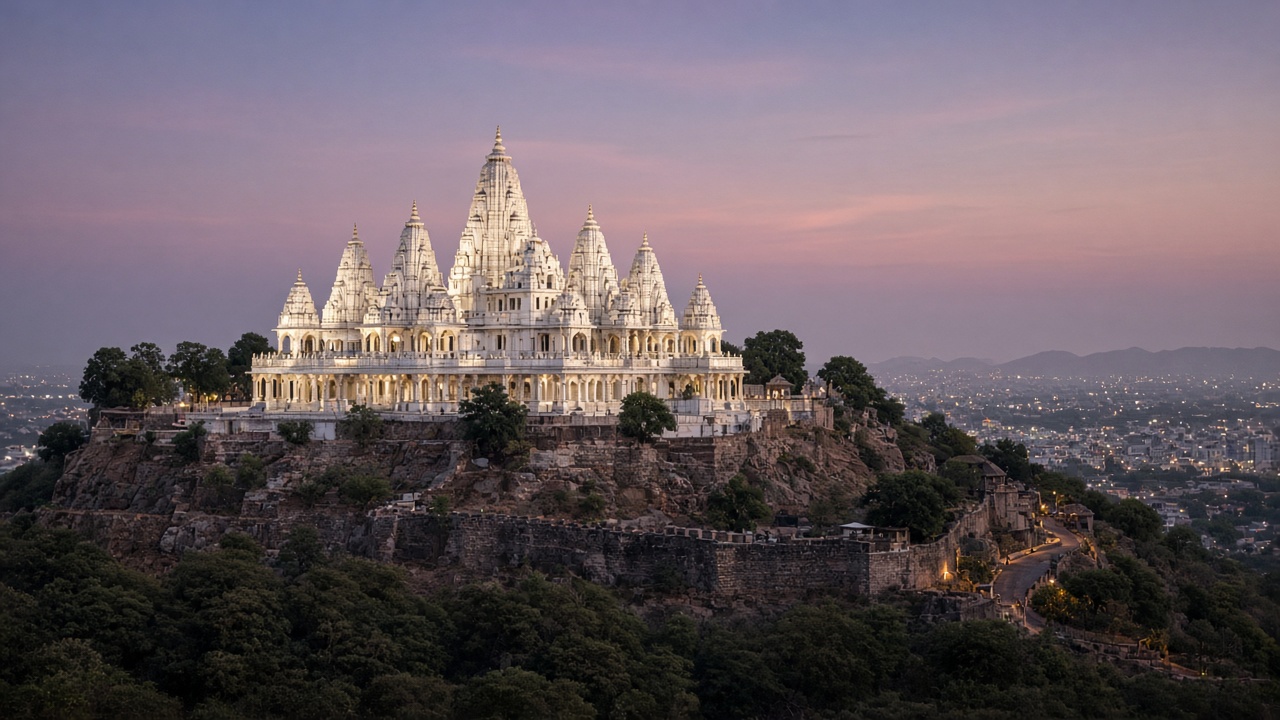
White marble temple below Moti Dungri, calm compared with bazaar noise. Modest dress. Soft dusk when the marble picks up warm light. Short, restorative stop.
Do: Cover up. Quiet minutes inside or on the approach. Pair with Albert Hall the same side of town.
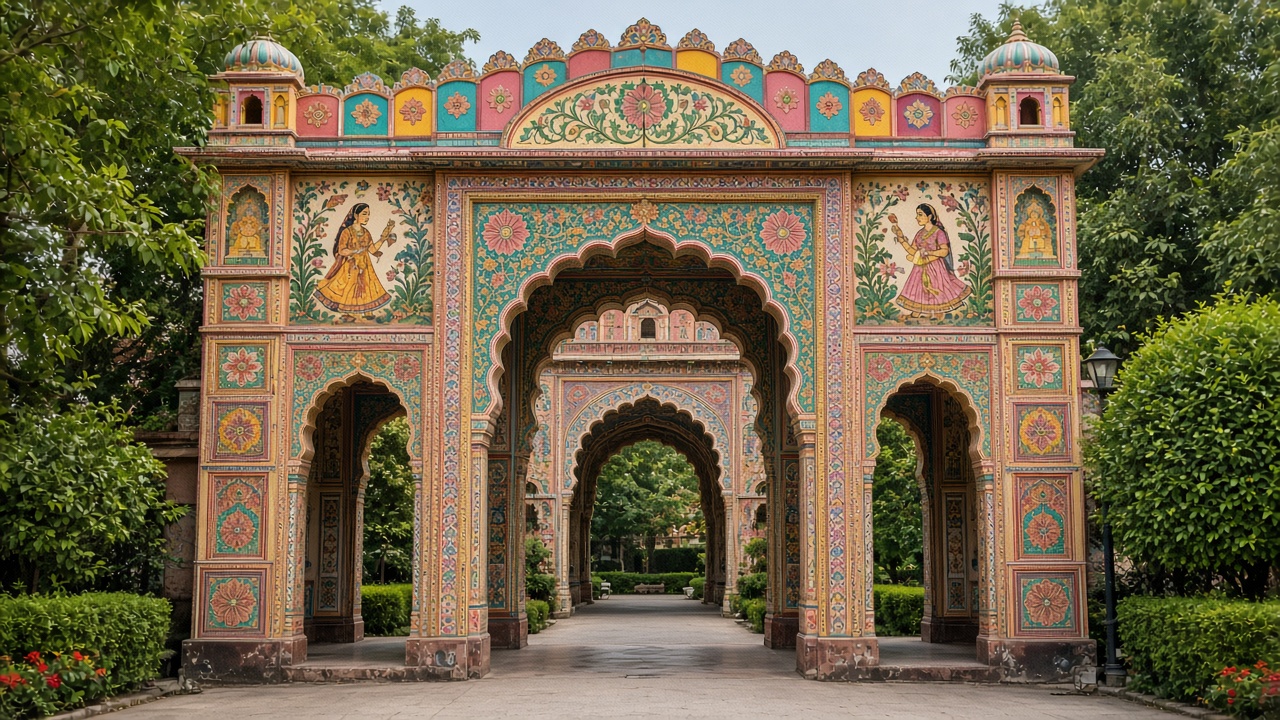
Patrika Gate
Painted gateway at Jawahar Circle: saturated murals, arches, and a garden setting that is pure colour after sandstone days. Popular photograph; go early if you want the gate without a crowd chorus.
Do: Soft morning. One walk through the arches. Keep it brief.
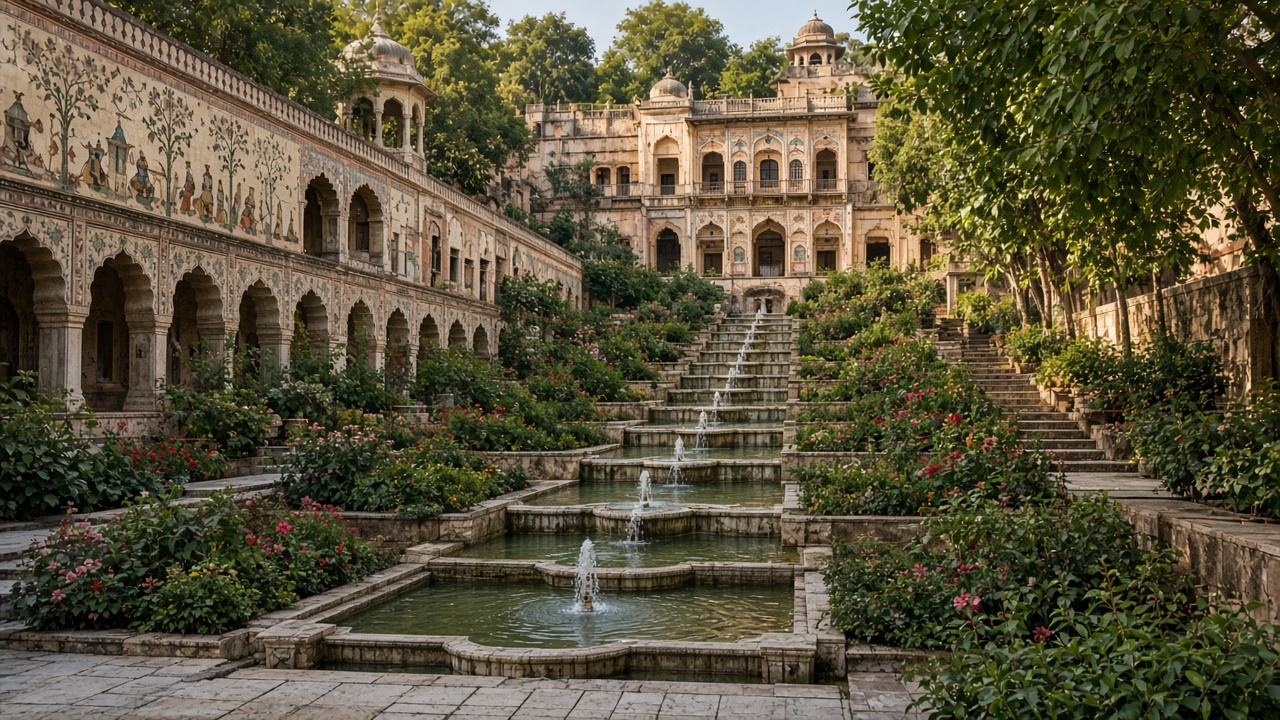
Sisodia Rani Garden
Terraced garden on the Agra road with murals, fountains, and a Mughal-Rajasthani layout that rewards a slow loop. Quieter than the fort circuit on many weekdays.
Do: Late afternoon shade. One terrace, one mural wall. Carry water.
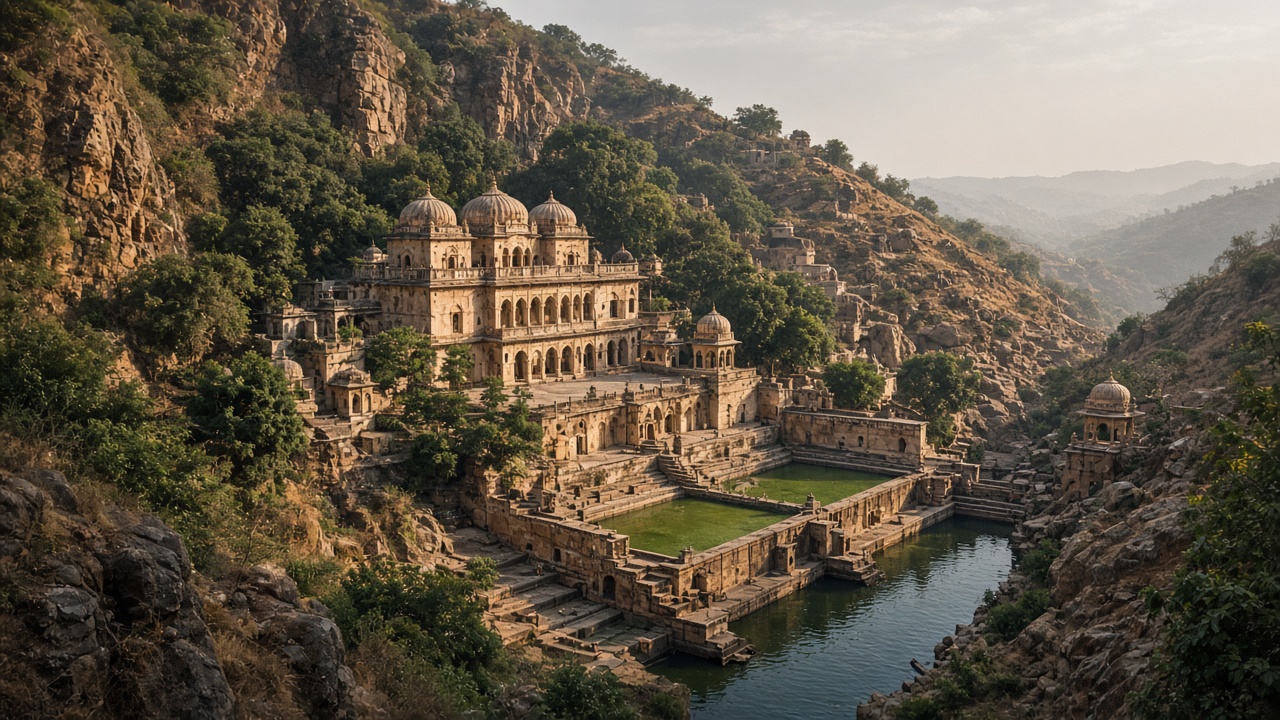
Galta Ji (Monkey Temple)
Temple complex in a gorge east of the city: kunds, sun temple above, and macaques that treat tourists as mild entertainment. Shoes, water, and caution with food. A different texture from palace courtyards.
Do: Morning. Secure bags. Climb to the sun temple if knees allow.
Don’t: Wave snacks at the monkeys. They have a union.
Nearby: Pushkar and Ajmer
When pink walls start repeating, leave for the sacred lake and the dargah. Same day is possible; overnight Pushkar is kinder.
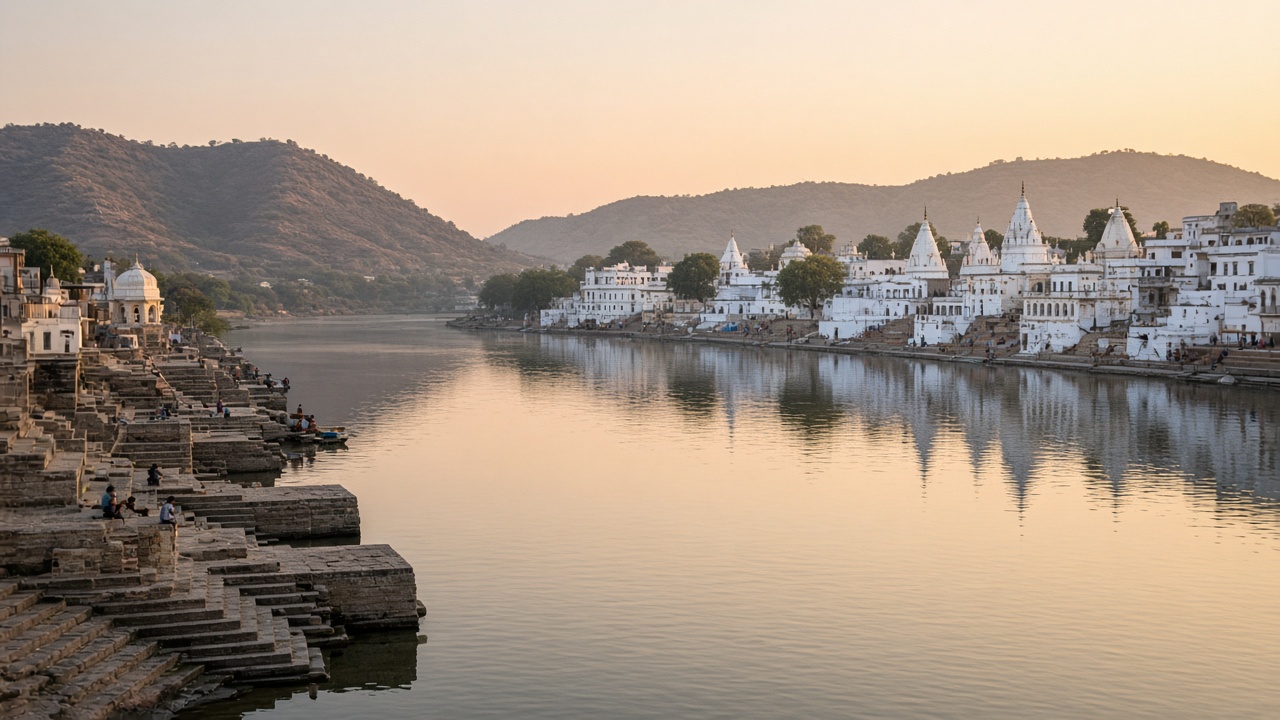
Pushkar (~150 km, ~2.5–3.5 hrs)
Holy lake, ghats, Brahma Temple, and a town that sells spirituality next to silver. Aarti evenings, camel country nearby, and crowds that swell around festivals and weekends. Modest dress on the ghats.
Do: Lake walk at soft light. One temple focus. Stay overnight if you can.
Don’t: Treat the ghats like a fashion runway. Pilgrims are not extras.
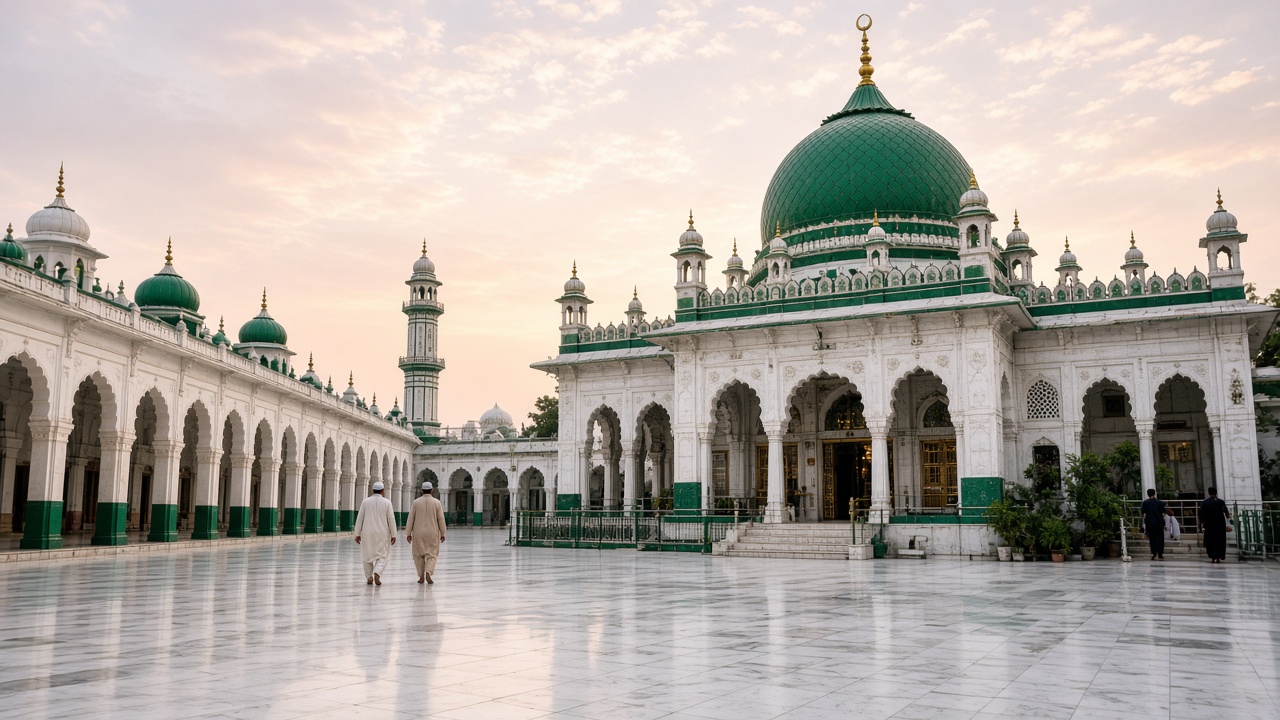
Ajmer Sharif (~130 km, ~2.5–3 hrs)
Sufi shrine of Khwaja Moinuddin Chishti: marble courtyards, devotion, and a lane approach that rewards quiet feet. Often paired with Pushkar the same day. Cover head; follow shrine etiquette.
Do: Soft evening or morning visit. Keep photography respectful. Combine with Pushkar only if you leave Jaipur early.
A practical way to spend 2–4 days
Day 1: Amber Fort morning with Sheesh Mahal and Panna Meena. Jal Mahal viewpoint. Rest. Nahargarh sunset.
Day 2: City Palace and Jantar Mantar. Hawa Mahal and bazaars. Albert Hall or Birla if energy holds.
Day 3: Jaigarh or Galta Ji. Patrika Gate and Sisodia Rani for colour and gardens.
Day 4 (optional): Pushkar and Ajmer.
Food is also a place
Jaipur eats between forts. Dal baati churma, ghewar when the season is right, lassi that arrives in a glass bigger than your restraint, and street snacks in the old city if your stomach is confident. Build meals into the map. Sandstone days run on chai and stubborn appetite.
Before you go
Oct–March is the kind season. Summer heat on open forts is a character with opinions. Monsoon is dramatic and humid.
Uber/autos work; for Amber + Jaigarh a day driver often saves arguments with parking.
Start forts at opening. Midday sandstone is a personality test.
Modest dress at temples and Ajmer Sharif. Head cover at the dargah.
Festival and wedding seasons fill hotels and Nahargarh sunsets. Book buffers.
What to skip if time is tight
Not every fort needs your Saturday. If you have one day, protect Amber morning + City Palace / Hawa Mahal afternoon + Nahargarh or Jal Mahal light, then stop. If heat wins, skip Jaigarh and keep Panna Meena as the short Amber add-on. If bazaars exhaust you, skip Johari without guilt and sit in Albert Hall’s garden. If you came for the sacred lake, Pushkar beats another painted gate. Jaipur is layered. You are allowed to leave layers for next time.
The best version of this city is not the longest list. It is the hour Amber’s courtyard cools, the pink honeycomb catching morning light on Hawa Mahal, and the Pink City grid glowing under Nahargarh before dinner.


Conversation
0 comments