

Goa is not one beach. It is a north that shouts, a south that whispers, a capital that still speaks Portuguese in paint, and a hinterland of dams, spice farms, and a waterfall loud enough to reset your ears. If you treat the whole state like a single resort day, you will mostly remember scooters and sunburn.
This is a working map: North Goa’s busy belt, quieter far-north sand, Old Goa and Panjim, South Goa’s crescents and hidden coves, cliff forts, and hinterland stops when you need green instead of salt.
Rent a scooter only if you can ride one. Distances look small on the map and grow in traffic near Calangute. Nov–March is the soft season. Monsoon is lush, wet, and honest about boat and waterfall access.
How to read this state
Busy North: Baga, Calangute, Anjuna, Vagator, Chapora, Aguada
Quieter North: Arambol, Morjim
Heritage centre: Old Goa churches, Fontainhas, Immaculate Conception, Miramar
Calm South: Palolem, Butterfly Beach, Agonda, Patnem, Cola, Colva
Cliff & wild south: Cabo de Rama
Hinterland: Dudhsagar, spice plantations, Salaulim Dam
North Goa: shacks, cliffs, and the famous belt
Baga Beach
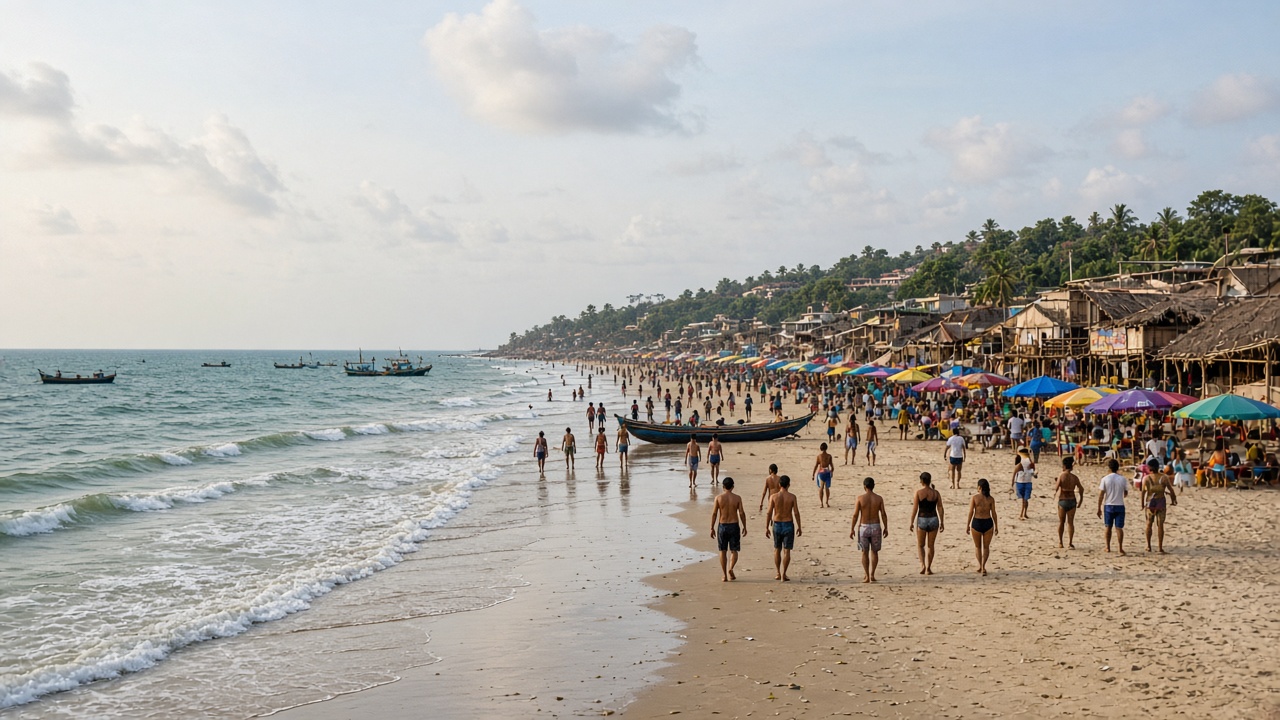
North Goa’s loudest default. Water sports, shacks, Tito’s Lane energy after dark, and a shoreline that rarely empties in season. First-timers land here because everything is close. That is the point and the problem.
Do: One water-sport if that is your mood. Sunset shack dinner. Decide early whether nightlife is for you.
Don’t: Expect silence. Expect company.
Calangute Beach
The Queen of Beaches title is marketing, but the sand is wide and the infrastructure is thick: shops, shacks, parasailing ropes in the air. Walk farther from the main access points if you want slightly softer density.
Do: Morning swim before the heat and the crowds peak. Keep valuables simple on the sand.
Don’t: Try to “see all of North Goa” from one Calangute afternoon. The belt is longer than it looks.
Anjuna Beach
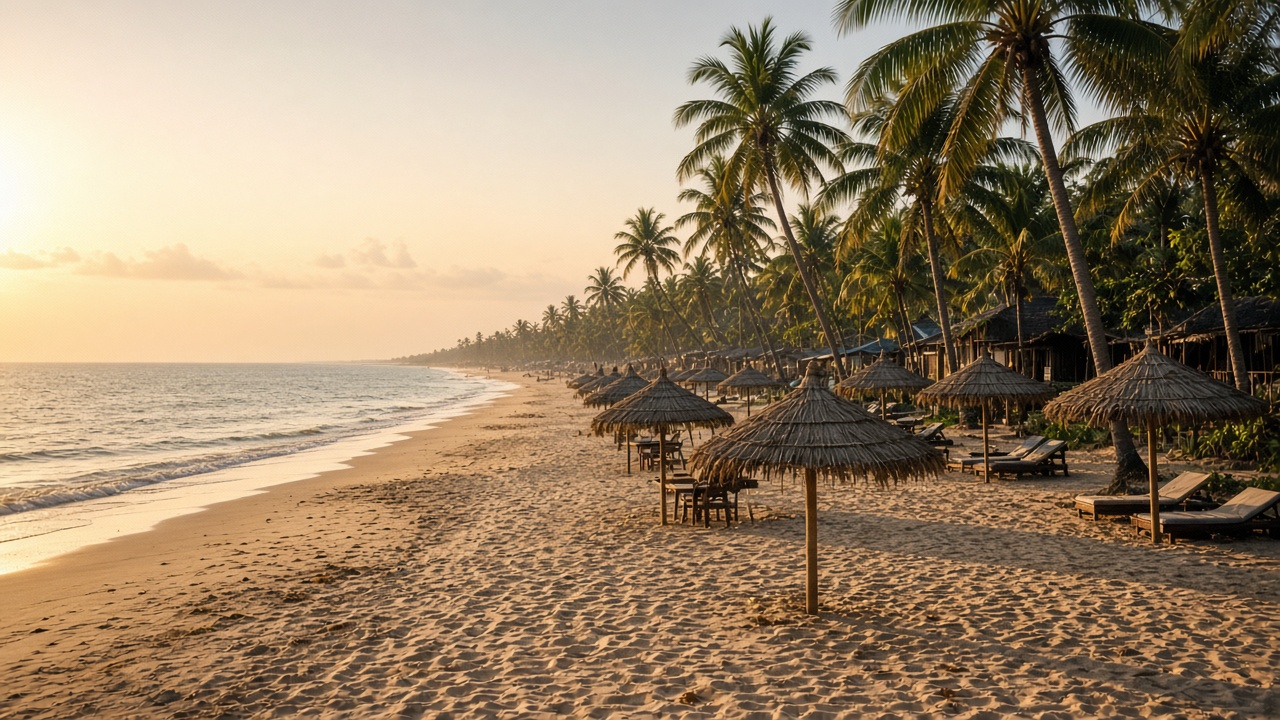
Rocky edges, flea-market legend (Wednesday in season), a slightly more bohemian hangover from older Goa myths. Good for browsing and cliffier photos than Baga’s flat parade.
Do: Wednesday market if you like bargaining theatre. Late afternoon light on the rocks.
Don’t: Assume every stall is a deal. Buy one thing you will use.
Vagator Beach
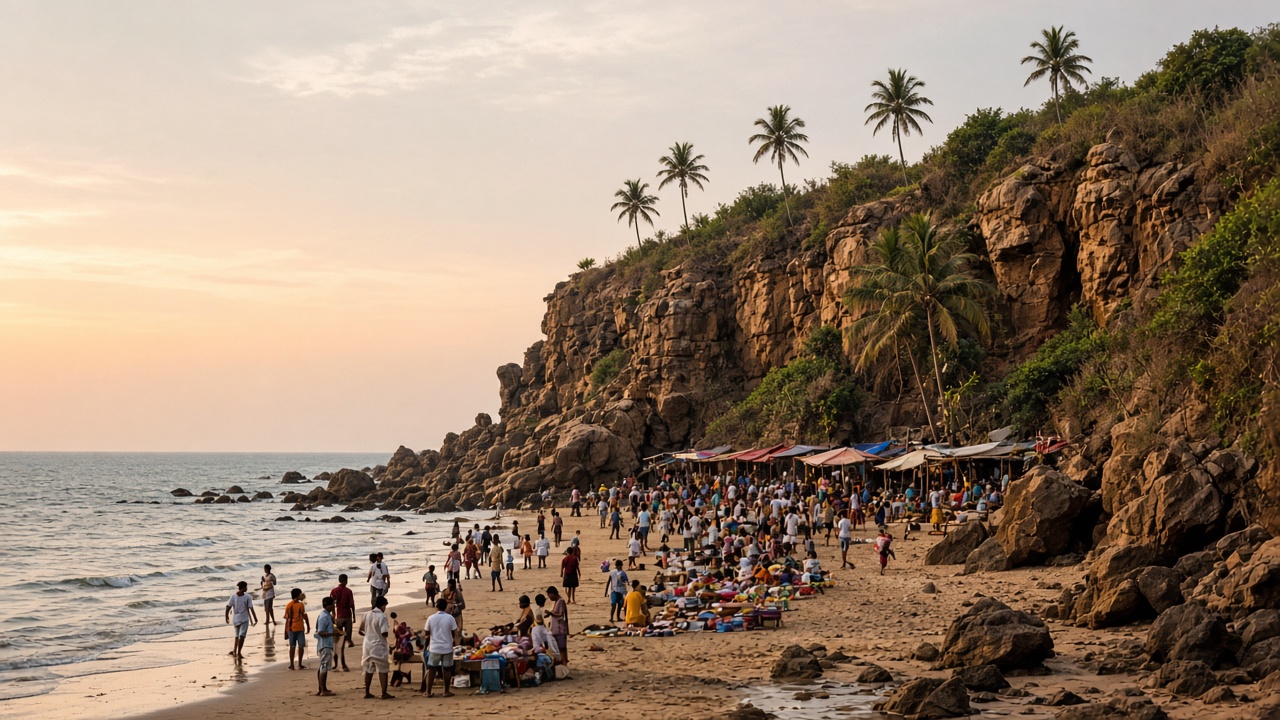
Cliff drama, Little Vagator cove, cafés that face the water like they know they are photogenic. Feels different from Calangute’s flat commercial stretch even when it is busy.
Do: Sunset from a cliff café or the beach below. Combine with Chapora the same evening.
Don’t: Rush both beaches and the fort in twenty minutes. Pick a pace.
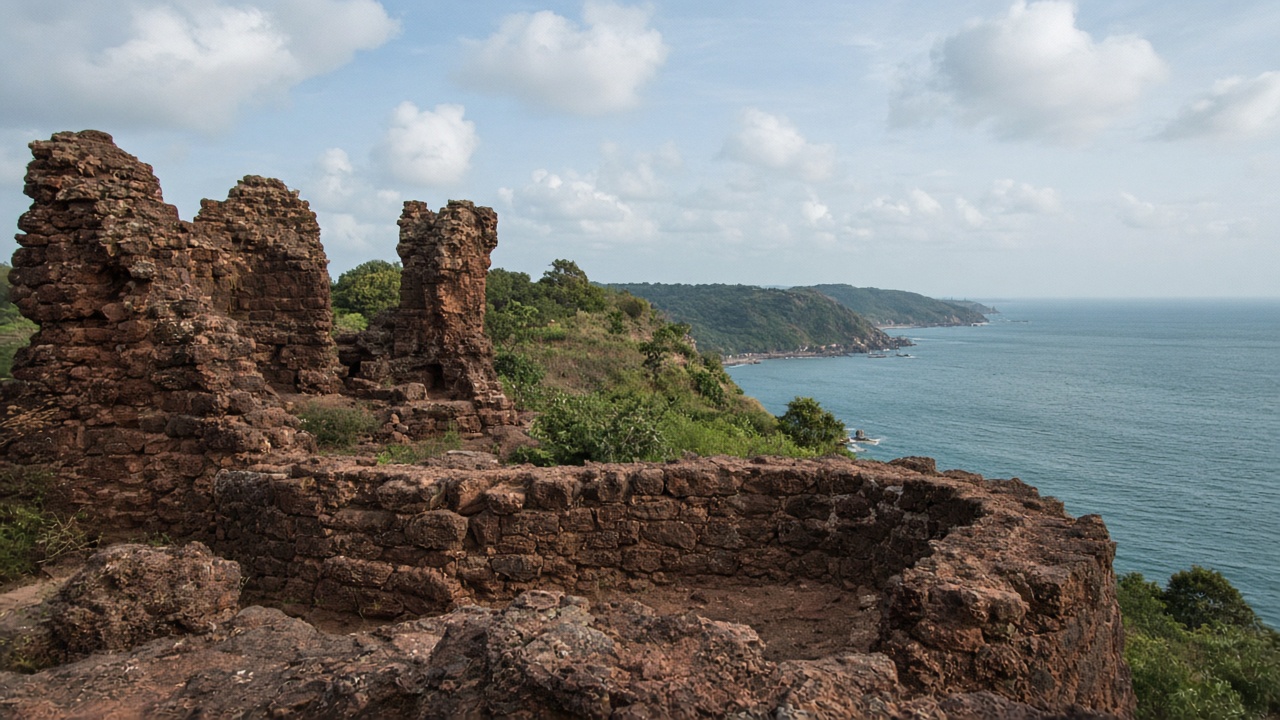
Chapora Fort
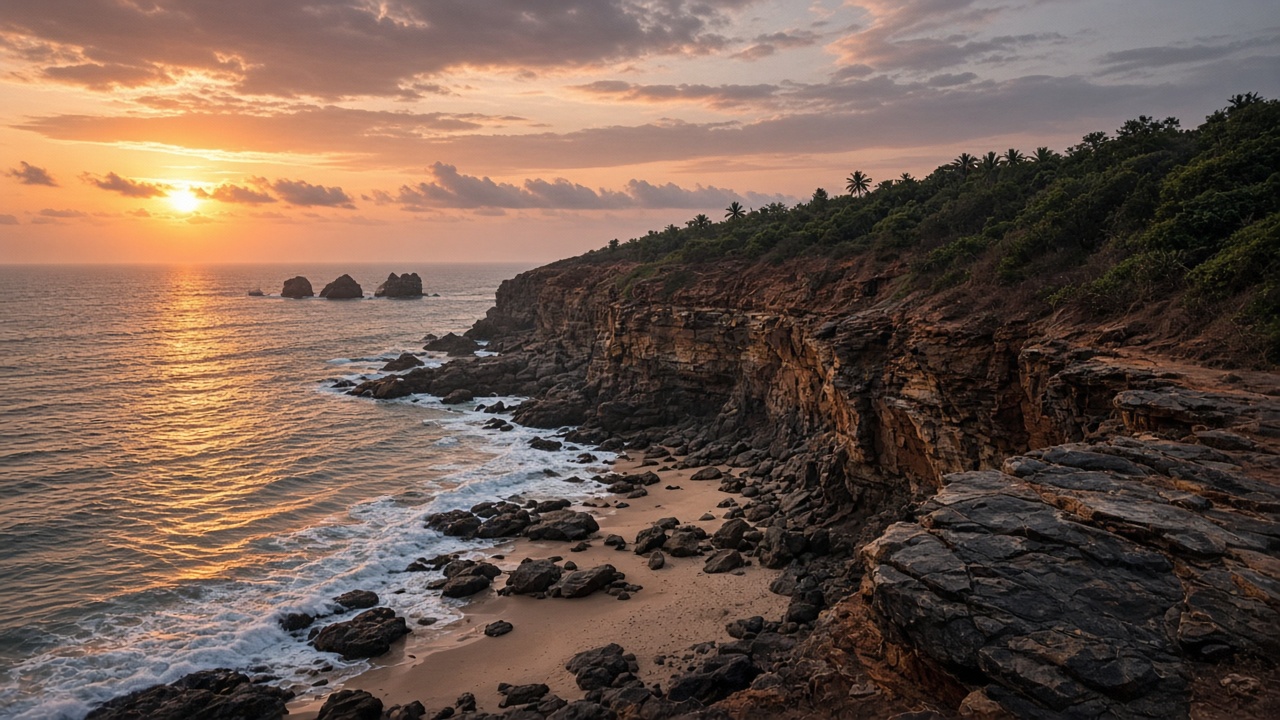
Laterite ruins on a hill, Arabian Sea on three sides, forever nicknamed after Dil Chahta Hai. Sunrise is kinder than peak sunset crowds. The climb is short. The view does the work.
Do: Early morning if you can wake up. Soft shoes. One slow circuit of the walls.
Don’t: Block the viewpoint for a twenty-person dance Reel. Others came for the sea too.
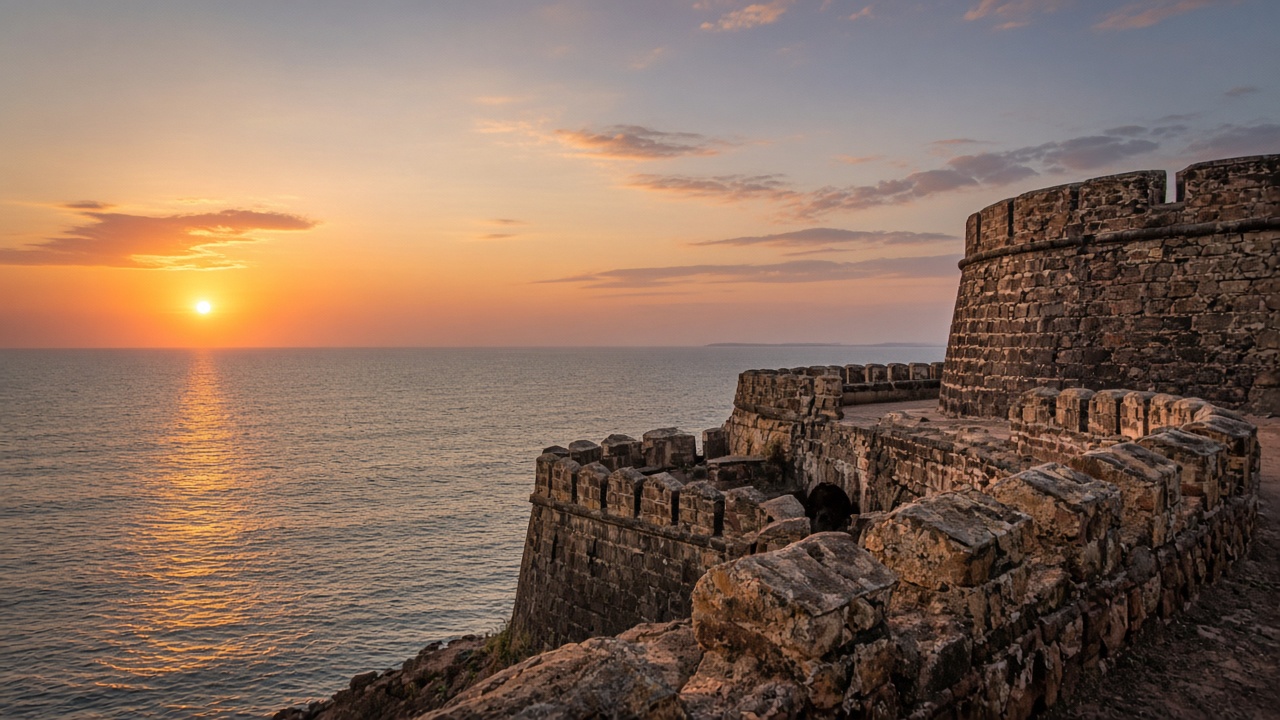
Fort Aguada
Portuguese fort and lighthouse above Sinquerim / Candolim, one of the better-preserved coastal fortifications. Sunset from the upper battlements is the classic call. Pair with Candolim sand if you still have legs.
Do: Golden hour. Walk the ramparts. Carry water.
Don’t: Arrive at noon and wonder why the stone feels like an oven.
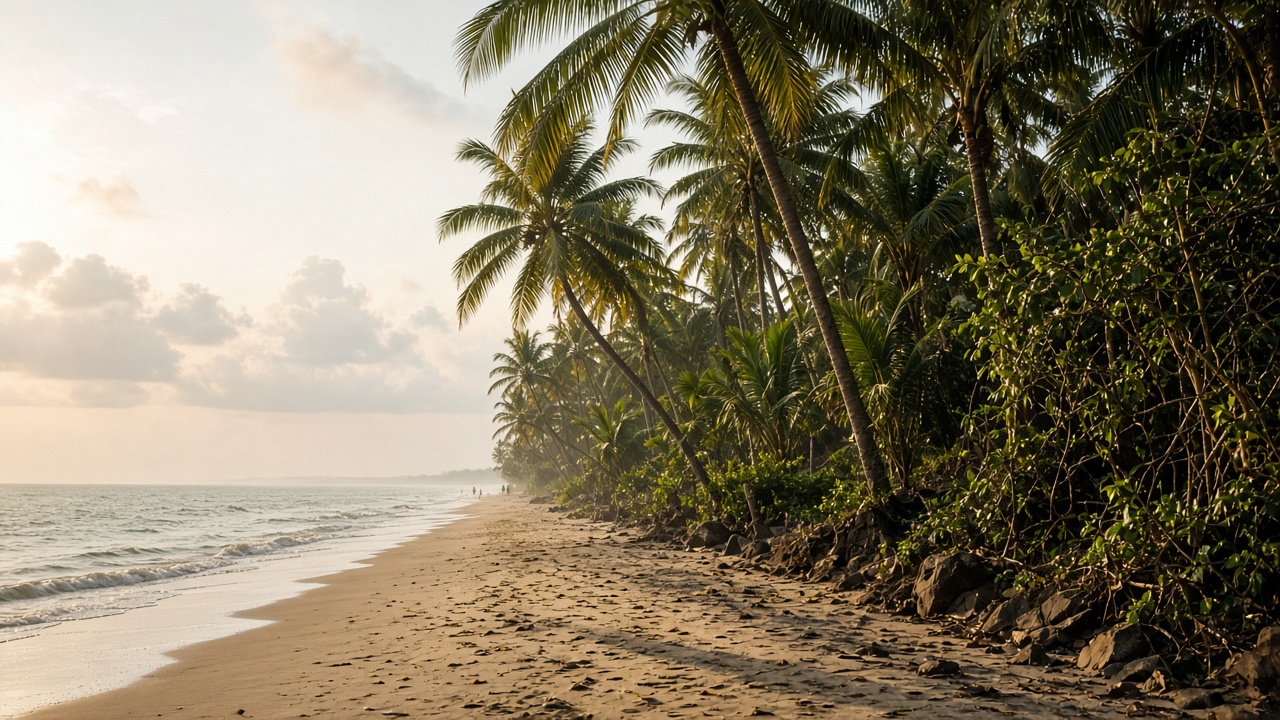
Arambol Beach
Farther north, softer volume, Sweet Lake walk inland, a crowd that skews more alternative than Tito’s Lane. Good when you want North Goa without the full Baga volume.
Do: Beach morning. Lake path if you like a short green detour. Stay for a quieter sunset.
Don’t: Treat the drive from Calangute as “five minutes.” Buffer the scooter time.
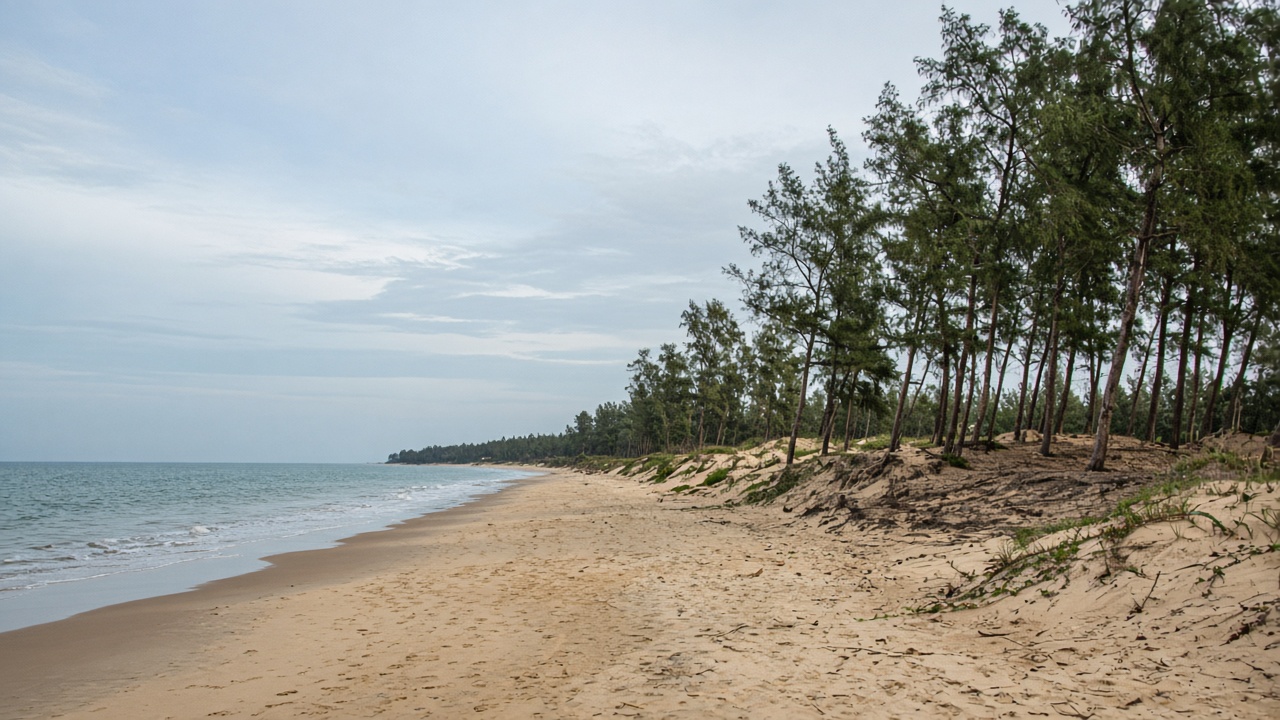
Morjim Beach
Quieter north stretch known for soft sand, casuarina shade, and olive ridley turtle nesting season in winter months. Feels closer to “slow Goa” than Baga even though you are still in the north. Ashwem sits next door if you want to keep drifting.
Do: Morning or late afternoon. Respect nesting zones and any seasonal barriers. Soft overnight if silence is the point.
Don’t: Blast music near turtle areas. The beach is the attraction, not your speaker.
Heritage Goa: churches, colour, and the capital
Basilica of Bom Jesus (Old Goa)
UNESCO baroque church holding the relics of St. Francis Xavier. Dark laterite exterior, heavy history, a stop that still quiets people who arrived thinking Goa was only beach. Dress modestly.
Do: Morning visit. Cover shoulders. Give the interior real minutes.
Pair with: Se Cathedral and the rest of the Old Goa cluster the same half-day.

Se Cathedral
One of Asia’s largest churches from the Portuguese era, white facade on the Old Goa square, a scale that makes the colony story feel architectural instead of abstract. Walk the square slowly between buildings.
Do: Exterior photographs in soft light. Quiet interior if open for visitors.

Fontainhas (Panjim)
The Latin Quarter: narrow lanes, painted Portuguese houses, galleries, bakeries, the part of Goa that looks like a film set and is actually still a neighbourhood. Best on foot. Worst in a rushed cab loop.
Do: Late afternoon colour walk. One café. One postcard street done properly.
Don’t: Honk through alleys that were built for walking.
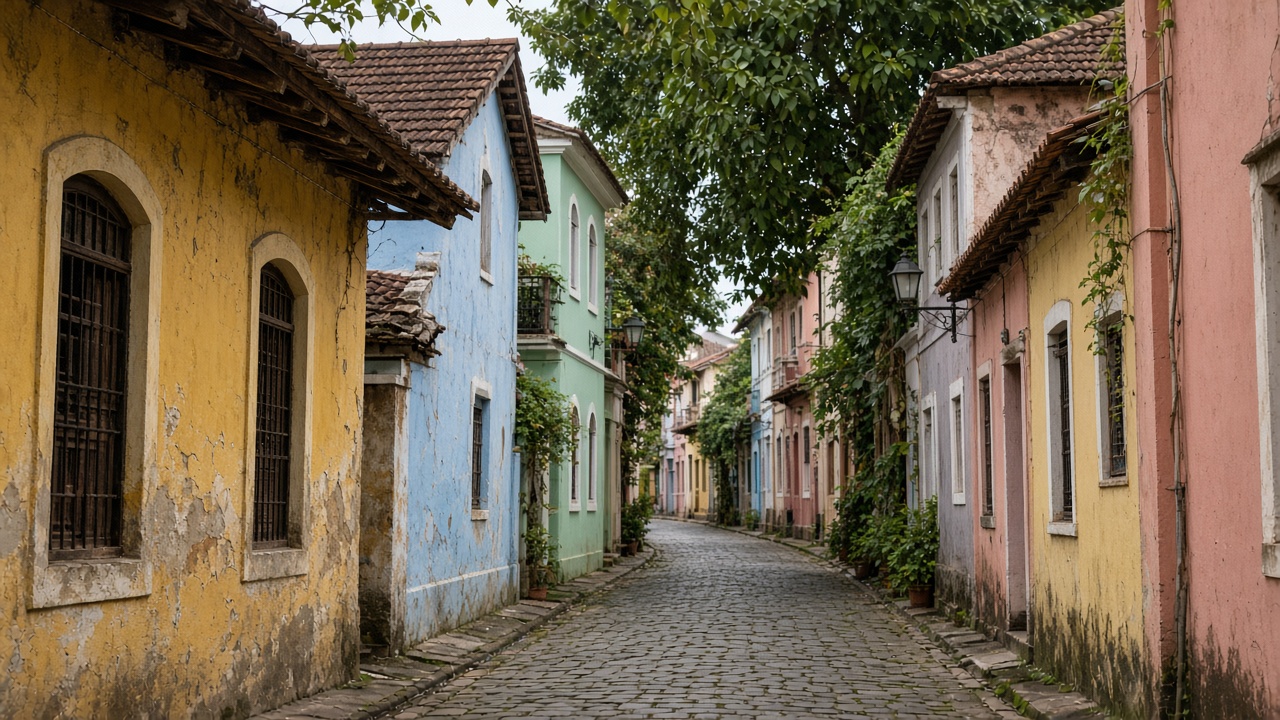
Our Lady of the Immaculate Conception Church
Panjim’s hilltop landmark: twin towers, zigzag steps, the white church that shows up in every capital postcard. Climb for the facade and the town view. Evening lights are kinder than midday glare.
Do: Soft evening visit after Fontainhas. Modest dress. One slow climb of the steps.
Don’t: Treat the staircase like a fashion runway during mass hours.

Miramar Beach
Panjim’s city beach: promenade energy, families, a soft evening when you are already in the capital for heritage and food. Not Palolem. Not trying to be.
Do: Sunset stroll after Fontainhas. Light snack. Watch the Mandovi side of the day end.
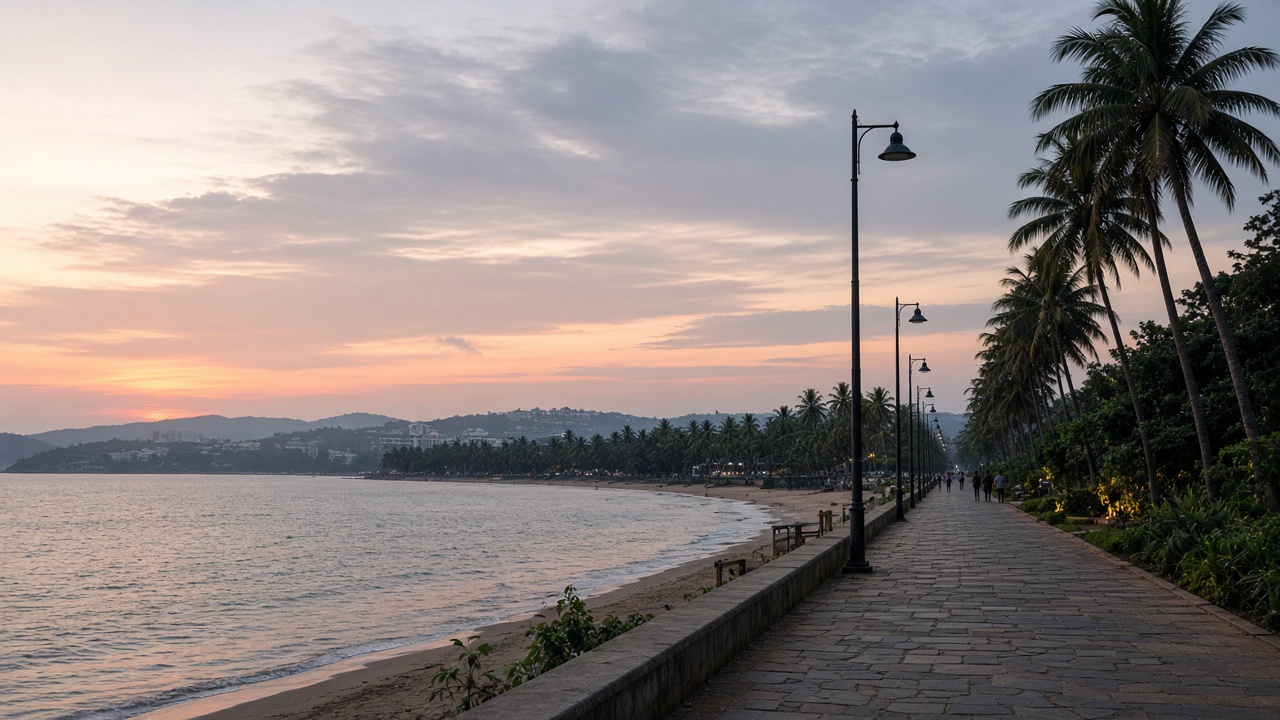
South Goa: crescents, hidden coves, cliff forts
Palolem Beach
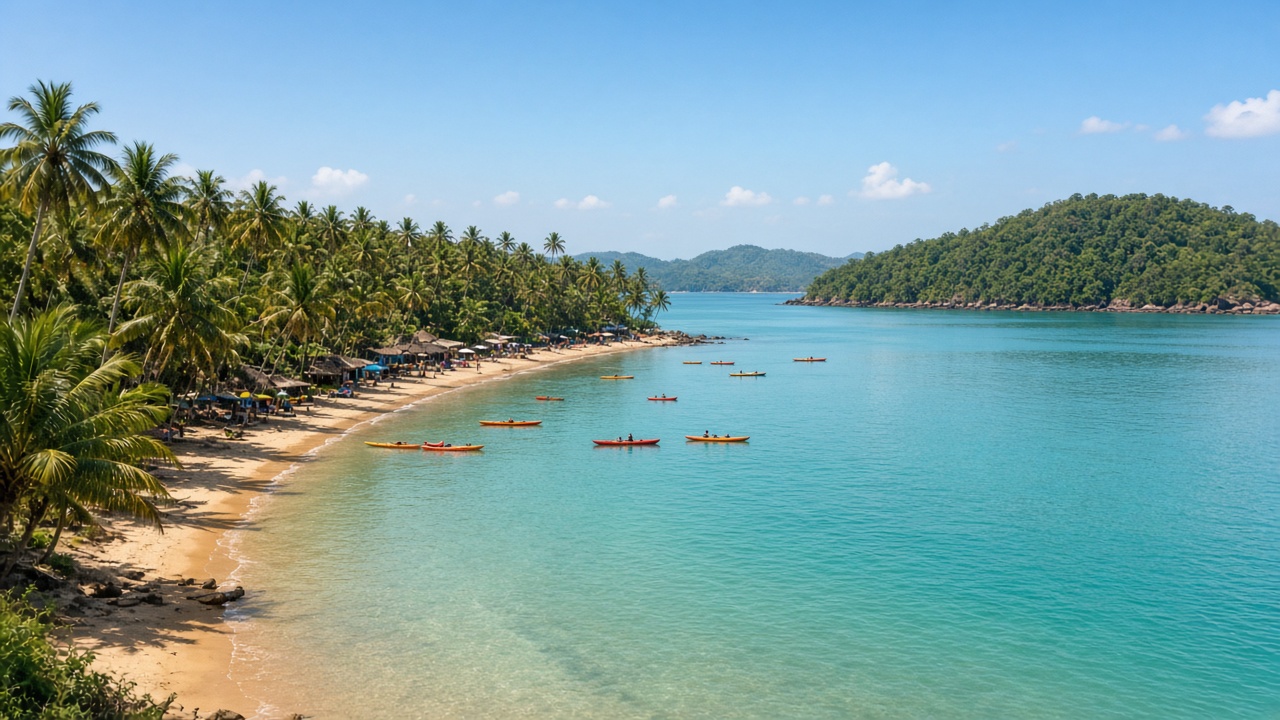
The crescent everyone puts on posters for a reason: palms, calm bay, kayaks toward Butterfly Beach when the sea allows. Busier than Agonda, still softer than Baga. Huts and shacks line the curve.
Do: Morning swim. Overnight if you can. Day-trippers miss the quieter hours.
Don’t: Stack Palolem and Dudhsagar as a casual same-day double. Distances and energy both argue back.
Butterfly Beach
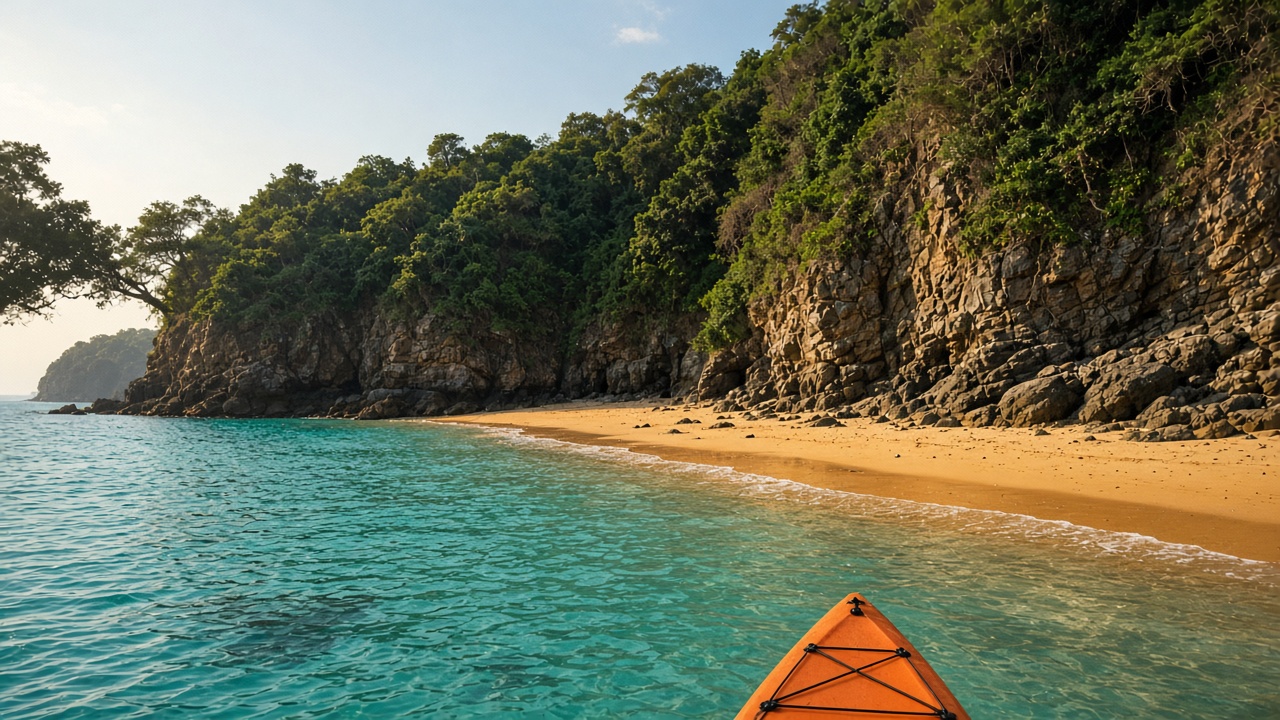
A small cove south of Palolem, usually reached by boat or kayak rather than a casual walk-in. Clear water, cliff sides, the kind of pocket beach people chase for a quieter swim. Sea conditions decide whether you get there at all. Morning boat slots are kinder.
Do: Book a boat from Palolem when the water is calm. Carry water and cash. Give yourself buffer for the return.
Don’t: Force it in rough monsoon swell. A cancelled boat is better than a stubborn one.
Pair with: Palolem base. Same-day Agonda only if energy and timing still feel soft.
Agonda Beach
Longer, quieter neighbour energy. Fewer water-sport ropes, more empty sand stretches, a favourite for people who came to read and sleep. Good for couples and anyone allergic to North Goa volume.
Do: Full beach afternoon. Soft dinner. Leave the checklist at the room.
Patnem Beach
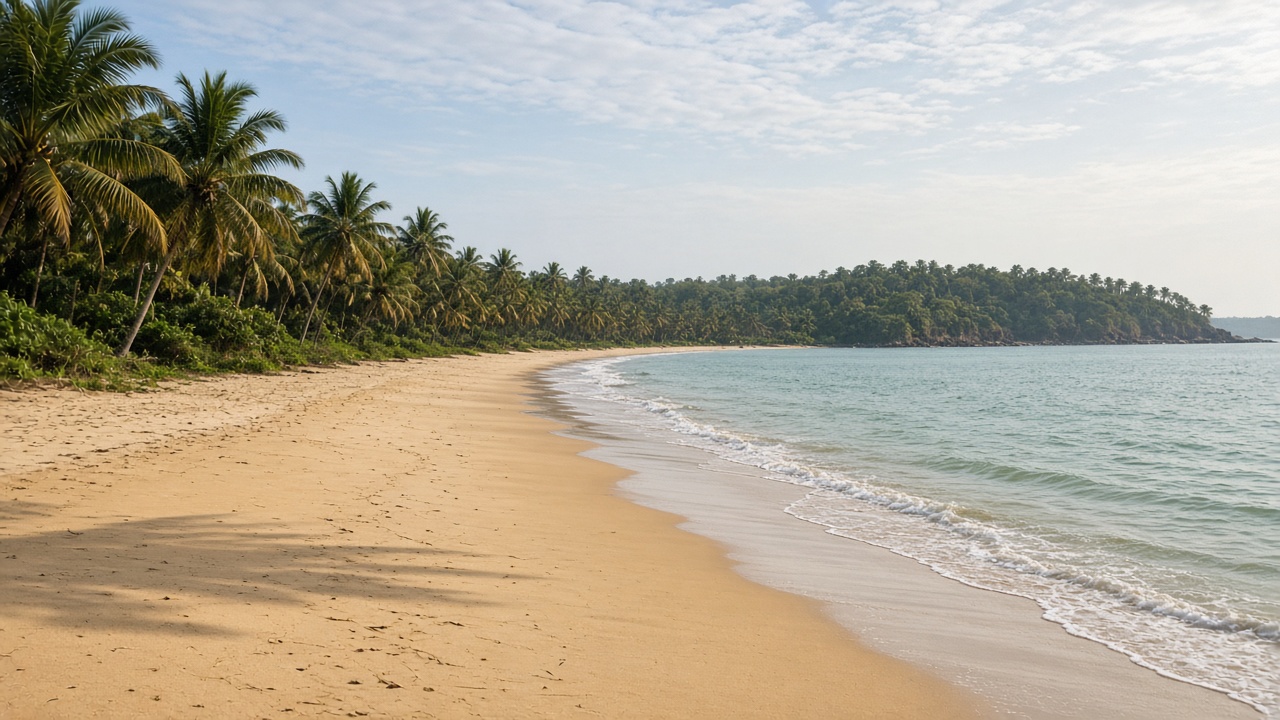
Just south of Palolem, a calmer sibling with a family-friendly pace. Easy to combine with Palolem if you want two moods without a long drive.
Do: Morning at one, sunset at the other. Keep plans light.
Cola Beach
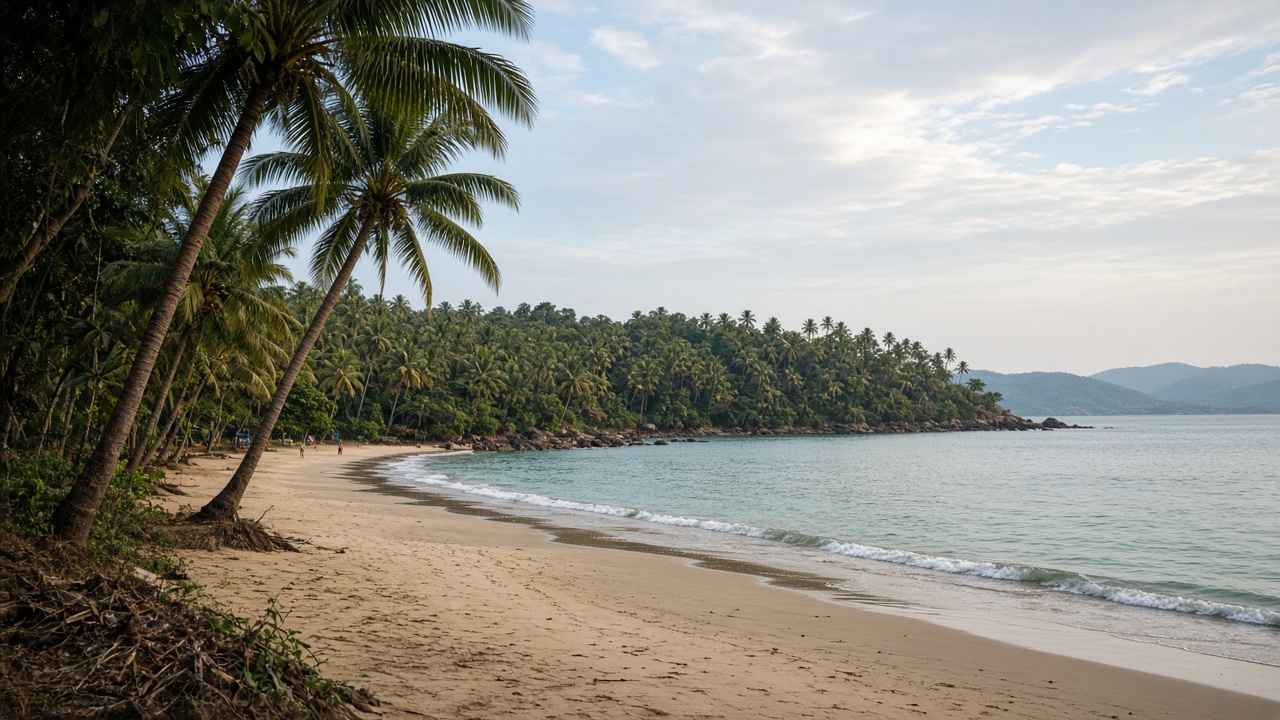
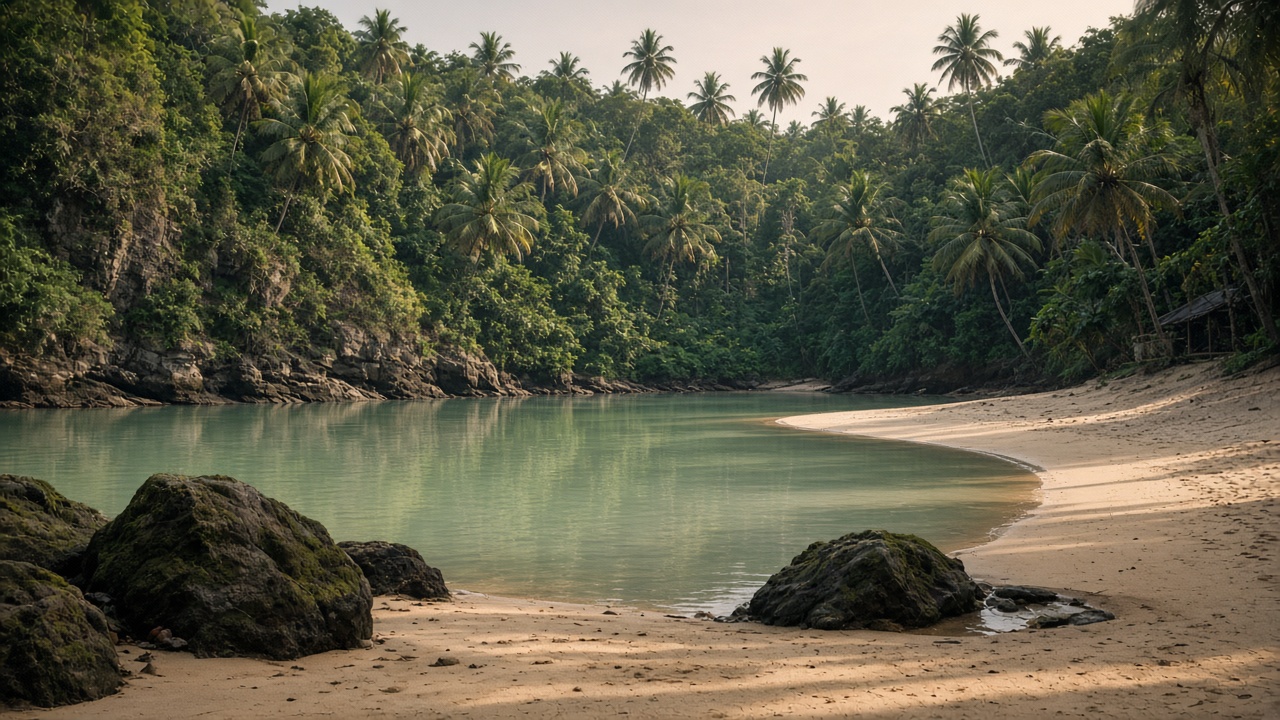
One of South Goa’s quieter “find it on purpose” stops: a small twin-beach setup with a lagoon feel, fewer shacks, more sand and water doing the talking. Access is a bit more effort than Palolem, which is why it stays softer.
Do: Soft day trip from Palolem / Agonda. Swim where it looks safe. Leave litter where it belongs: with you, going out.
Don’t: Expect full resort infrastructure. Bring what you need.
Colva Beach
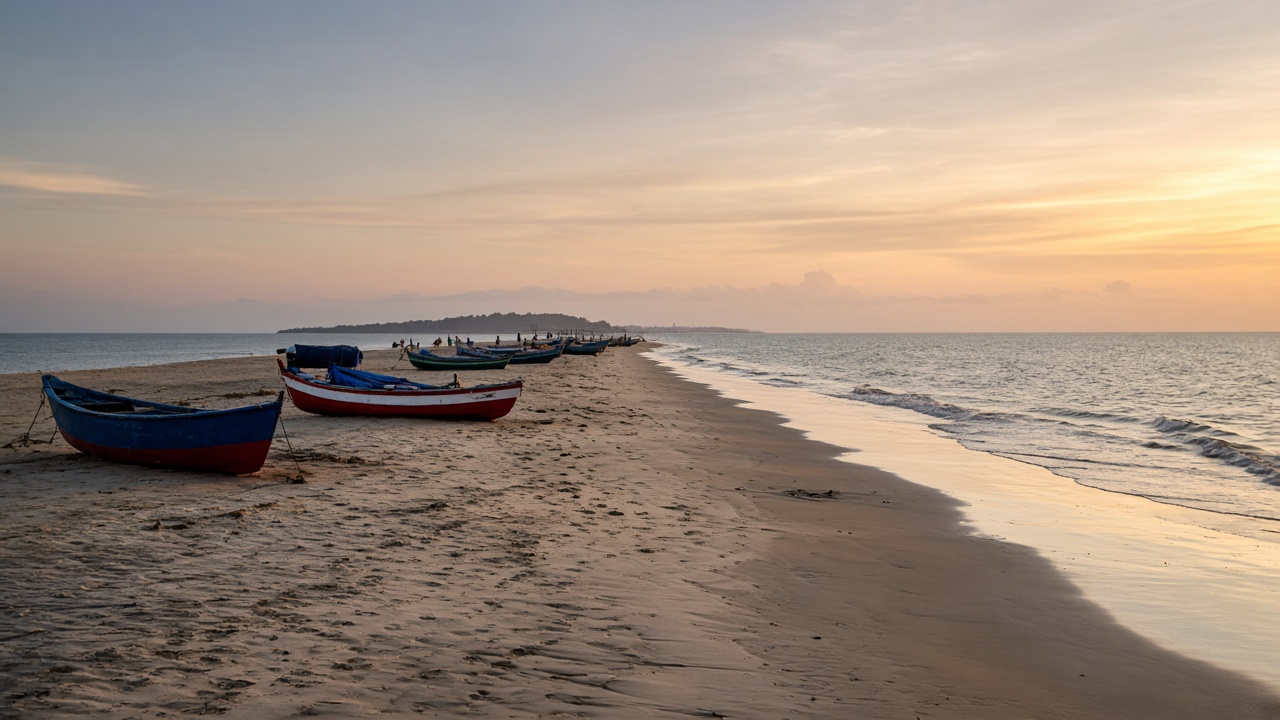
South Goa’s more commercial long beach: fishing boats, shacks, easier access from Margao. Busier than Agonda, useful if you are based mid-south and want sand without the far-south transfer.
Do: Evening walk. Seafood if a shack smells honest.
Don’t: Confuse Colva with “secret South Goa.” It is popular for a reason.
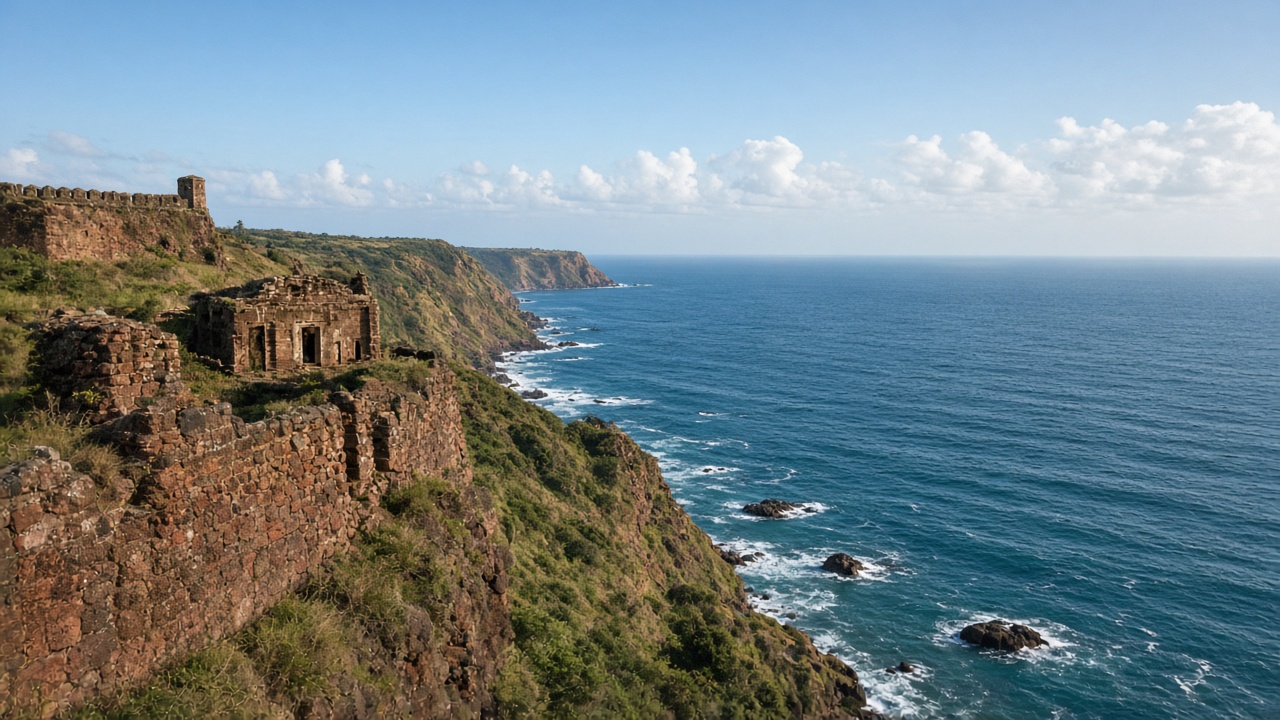
Cabo de Rama Fort
Cliff fort in the deep south with absurd ocean views and laterite walls that feel properly abandoned in the best way. Pair with a quiet southern beach the same day if you have a scooter or cab.
Do: Late afternoon light. Walk the edges carefully. Carry water.
Don’t: Lean over stupid drops for a Reel. The view is already dramatic enough.
Hinterland: water, spice, and the dam
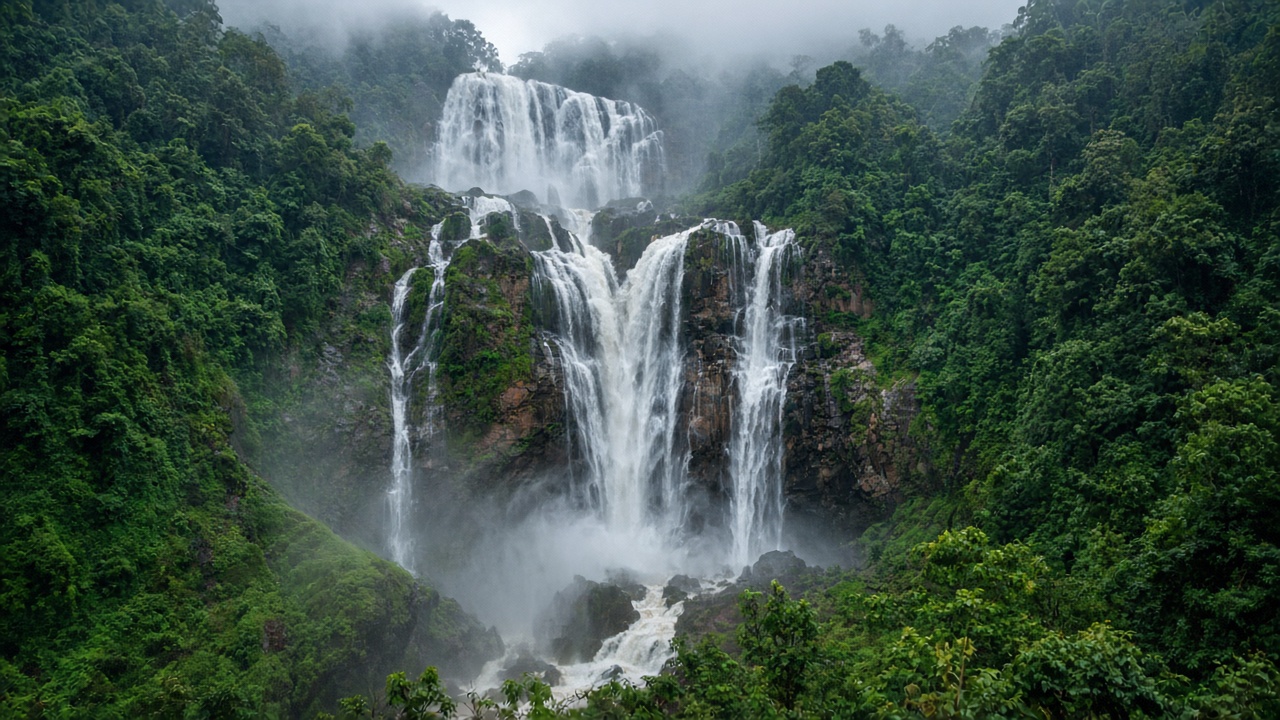
Dudhsagar Falls
Four-tier waterfall in the Western Ghats on the Goa–Karnataka edge, loudest after good rain. Jeep safaris from the Mollem / Collem side are the usual approach. Access and water volume change with season. This is a full outing with dust or mud, not a beach add-on.
Do: Book a legitimate jeep. Start early. Swim only where allowed and safe.
Don’t: Force it in peak dry months and complain the falls look shy. Timing is the itinerary.
Spice plantations
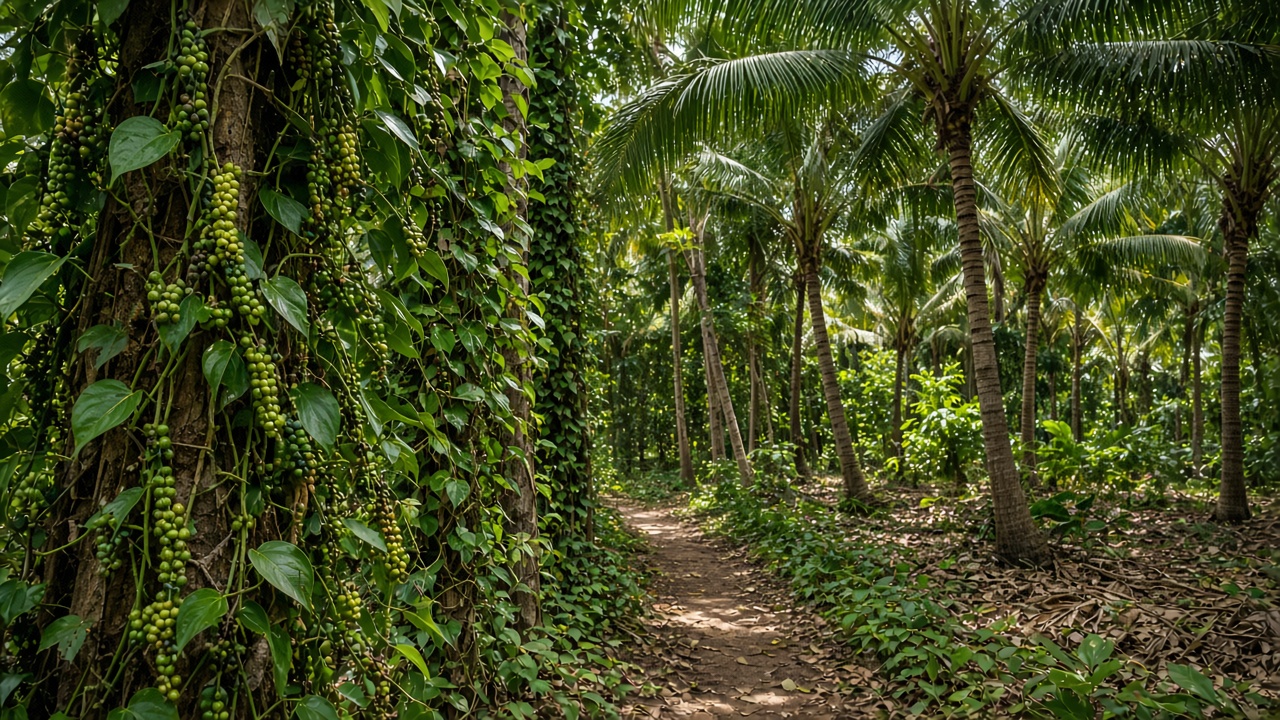
Pepper vines, nutmeg, cashew stories, buffet lunches under coconut shade. Touristy in the best practical way: you learn something, you eat, you cool down between beach days. Ponda belt plantations are the common circuit from Panjim / mid-Goa.
Do: Morning tour with lunch included. Ask questions. Buy one spice you will cook with.
Don’t: Expect wilderness. Expect a farm that knows tourists come through.
Salaulim Dam
South Goa’s big reservoir dam near Sanguem / Quepem country: wide water, engineering scale, a hinterland stop when you want open sky without another beach shack. Often combined with a countryside drive rather than treated as a two-hour checklist. Sunset light on the reservoir can be quietly excellent.
Do: Late afternoon visit. Carry water. Pair with a spice plantation or a slow south inland loop if you are already off the coast.
Don’t: Expect nightlife or shacks. Expect dam views, breeze, and a different Goa register.
Note: Access rules and viewing points can change. Follow local signage and any restricted zones around the structure.

A practical way to spend 3–7 days
Days 1–2 (North): Baga / Calangute base. Aguada sunset. Anjuna + Vagator + Chapora. Arambol or Morjim if you want quieter sand.
Day 3 (Heritage): Old Goa churches morning. Fontainhas + Immaculate Conception afternoon. Miramar or Mandovi evening.
Day 4 (Hinterland): Spice plantation, Dudhsagar if season allows, or Salaulim Dam for reservoir quiet.
Days 5–7 (South): Palolem base. Butterfly Beach by boat. Agonda / Patnem / Cola. Cabo de Rama if you want cliff drama.
Food is also a place
Goa eats between swims. Fish curry rice done properly. Bebinca if you still have room. Feni if that is your experiment. Beach-shack seafood that tastes better when you stop comparing every plate to Instagram. Panjim bakeries for a Portuguese echo. Build meals into the map the way you build beaches.
Before you go
Nov–March is the classic window. Monsoon is green and wet; some boat and waterfall trips pause.
Scooter only if you can ride confidently. Helmets are not optional theatre.
North and South are different trips. Trying both in two days mostly teaches you highways.
Modest dress in churches. Soft shoes for forts, dams, and waterfall approaches.
Book Dudhsagar jeeps, Butterfly Beach boats, and popular stays ahead in peak season.
Respect turtle nesting zones at Morjim and similar beaches in season.
What to skip if time is tight
Not every beach needs your stamp. If you have three days, pick one belt: busy North or calm South, plus one heritage half-day. If nightlife bores you, skip Tito’s Lane without guilt and sleep in Agonda. If the sea is rough, skip Butterfly Beach and keep Palolem. If waterfalls are dry, skip Dudhsagar and keep spice lunch or Salaulim. If you hate crowds, Calangute noon is optional; Morjim, Cola, or Agonda will treat you better. Goa is layered. You are allowed to leave layers for next time.
The best version of this place is not the longest beach list. It is the hour Chapora goes quiet at sunrise, the boat ride into Butterfly Beach when the cove opens, and a South Goa evening when the bay turns silver and nobody is shouting over a DJ yet.



Conversation
0 comments