
A workation is not "I disappeared to the hills and hope Slack forgives me."
It is remote work from somewhere prettier, with the same deadlines, the same standups, and a WiFi situation that can still ruin your week.
Cute Instagram balcony. Also how people get quietly side-eyed, then PIP'd, then told they were "not available enough."
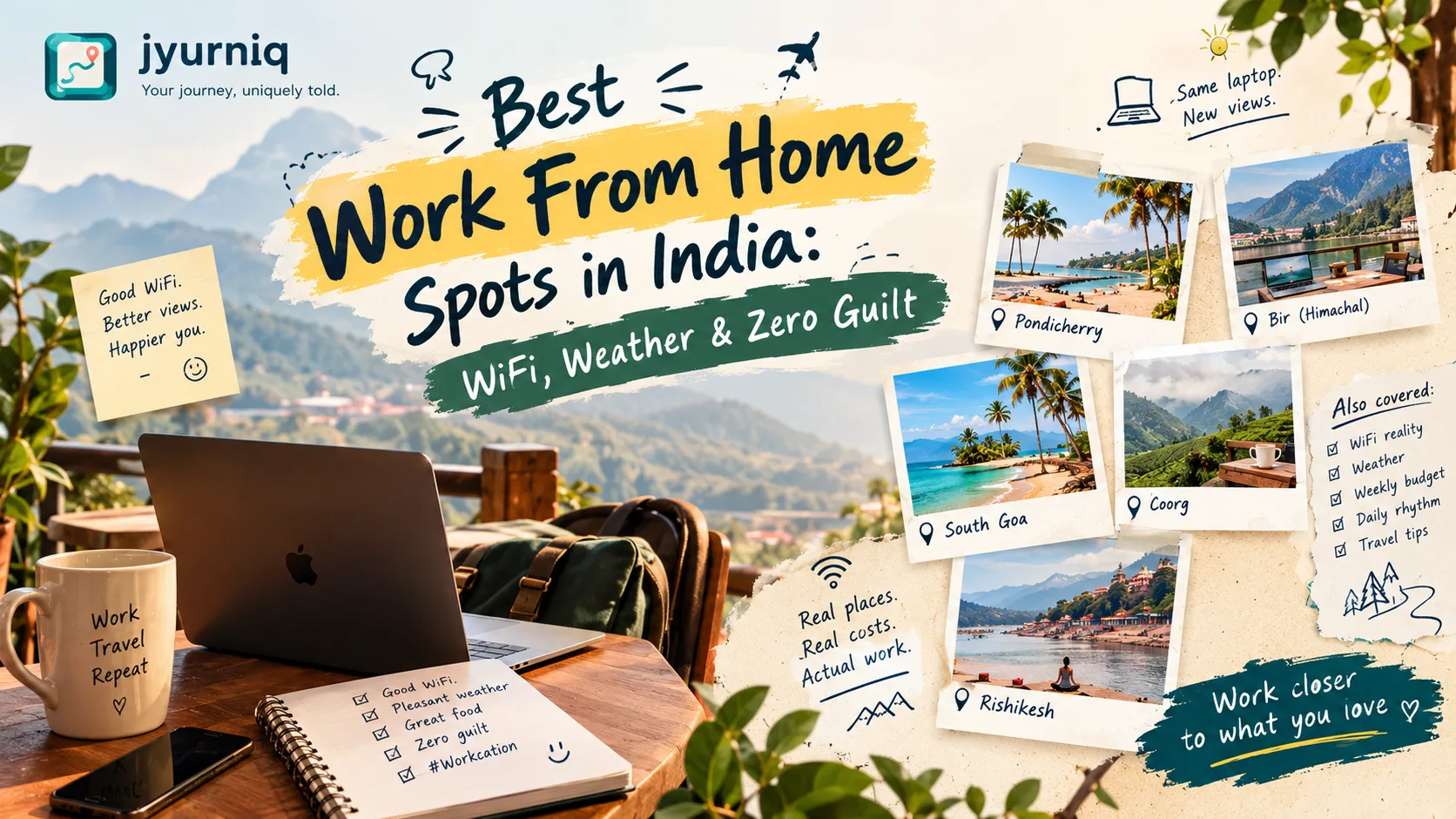
This is the systems post: WiFi, bosses, boundaries, and when a workation actually works. For where to go once the systems are solid, use the WFH spots guide. This one is how not to get fired first.
Company policies differ. Read yours. HR beats vibes.
What a workation is (and is not)
Is: working your normal job from another city / town for a defined stretch
Is: output + availability staying roughly the same as your home setup
Is not: leave with laptop cosplay
Is not: surprise time zones, cafe background noise on every client call, and "sorry network" as a personality
If your role needs lab access, constant office drop-ins, or confidential rooms you cannot recreate, this may not be your genre.
WiFi reality check before you book
Do not trust listing copy that says "high-speed WiFi" like it is a personality trait.
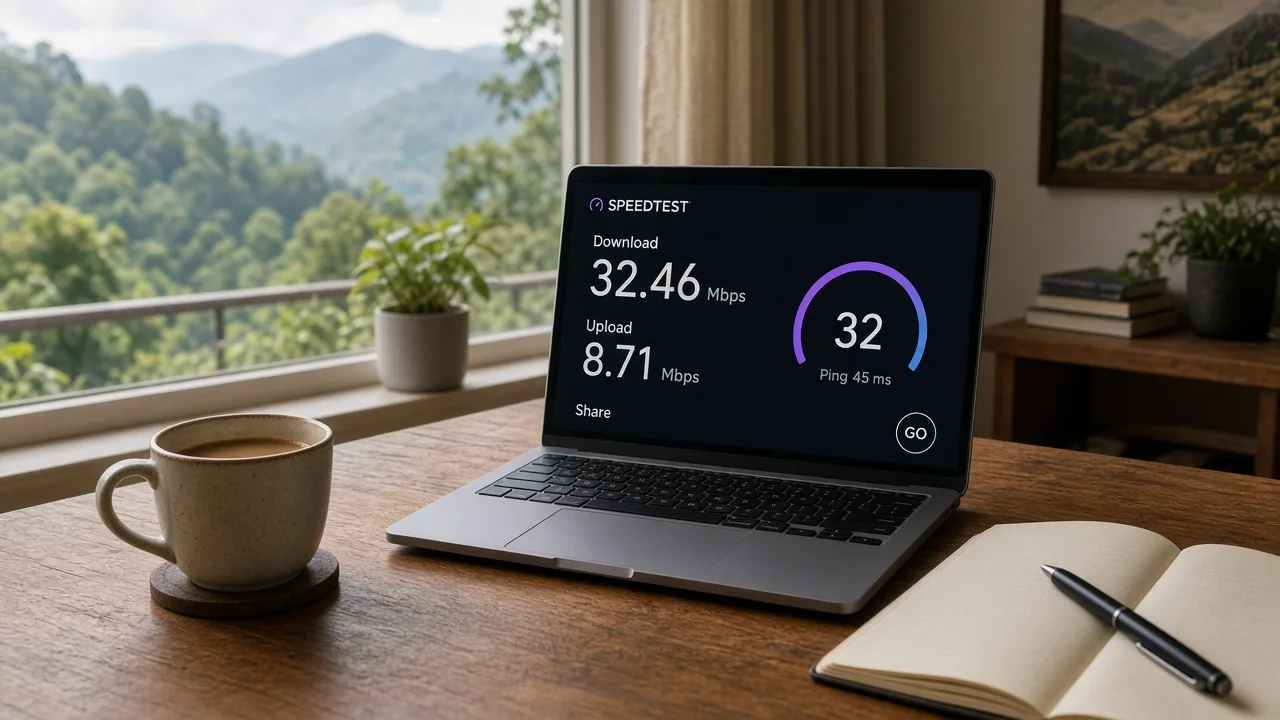
Ask the host / hotel for a recent speed-test screenshot at the desk you will use (Speedtest or Fast.com).
Aim for something that survives video: roughly 20 Mbps down / 5 Mbps up as a floor for many call-heavy jobs. Heavier screen-share days want more headroom.
Ask where the router sits. A lobby router with walls between you and it is not a plan.
Pack a backup hotspot on a different network than the property WiFi. Local SIM / eSIM + phone hotspot.
If your company requires VPN, test it on the backup before week one of meetings.
Monsoon / hill towns: power cuts happen. Know the inverter story, or accept laptop battery maths.
If you cannot verify internet, you are booking a holiday and hoping work cooperates. That is a different product.
Bosses and HR: how to ask without sounding sneaky
Frame it as remote work from X for dates Y to Z. Not "I need mountain air for my soul."
Check written policy first: eligibility, max days, India-only vs abroad, approval chain, device / VPN rules.
Abroad workations are a different animal (tax, data, client contracts). Many Indian employers want extra written approval or a hard no.
Pitch with dates, core hours in IST, project calendar, verified connectivity, and a backup plan if WiFi dies.
Offer overlap: "I will be on Slack for core hours 10:30 to 6:30 IST and camera-on for standups."
Do not announce after you have already checked into the hostel. Surprises make managers allergic.
Sample tone that usually lands better:
"I want to work remotely from [place] from [date] to [date]. Connectivity is verified, backup hotspot ready, and I will keep our core hours. Any meetings I should protect before I lock travel?"
Boundaries that keep you employed and vaguely sane

Work block first. Sightseeing is after delivery, not during the demo.
One desk. Bed + laptop for eight hours looks cute once. Then your back files a complaint.
Cafe calls selectively. Background noise and public screens are how confidential calls go weird. Use room / cowork for anything sensitive.
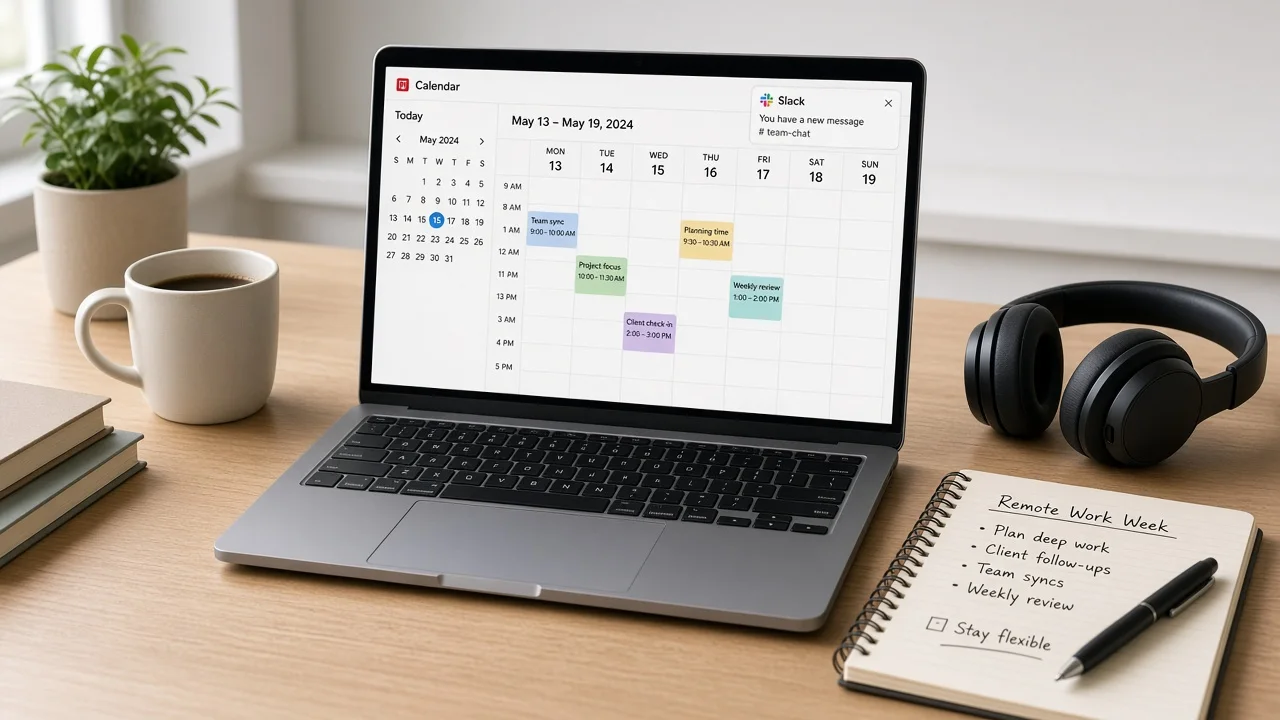
Calendar as truth. Block focus time. Put travel days honestly. Do not pretend the overnight bus was a normal morning.
Same response SLA. If you reply in 5 minutes at home and 5 hours on workation, people notice before HR does.
Hard stop. Close the laptop. Walk. Eat. The whole point dies if every evening becomes "just one more Slack."
When a workation works
Your job is already remote / hybrid with clear output measures
You can keep IST overlap without turning into a nocturnal raccoon (unless your team is US-hours by design)
Stay has proven WiFi + a quiet corner
Trip length is short enough that one bad week does not become a performance novel (often 5 to 14 days for a first attempt)
You are not mid-crisis launch, PIP cloud, or "everyone must be in office Thursday" season
When to skip
Probation, shaky trust, or a manager who already thinks WFH means Netflix
Heavy onsite / client face time weeks
You need stable power and you picked a place famous for 8-hour cuts
You are using "workation" to avoid rest. If you are burned out, take leave. Mixing exhaustion with Slack is how both fail.
Group trip chaos: six friends, one room, zero doors, "quick trek at 3 pm" every day
Pack the boring kit
Laptop charger + power bank that can actually finish a call
Headset you trust
Mouse / small stand if you are older than your posture
Hotspot SIM / eSIM already activated
Extension board for Indian sockets that never face the bed
Printed / offline notes for important meeting links when hotel WiFi captive portals get dramatic
Money note (quick)
Workation costs are usually yours: stay, travel, cafe WiFi guilt. Company rarely sponsors your "productivity in nature" arc unless policy says so. Budget like a trip with a job attached, not a free relocation.
7-day starter shape
Day 0 travel: arrive, test WiFi, set desk, sleep
Days 1 to 4: full work blocks, one short evening outing max
Day 5: normal work + one longer local thing after hours
Day 6: lighter if your job allows, or normal work + buffer
Day 7: wrap, travel without a 9 am all-hands from the taxi
Must do / must avoid
Do: verify WiFi, tell manager early, keep core hours, carry hotspot backup
Do: pick stays for desk + sleep, not only for the balcony reel
Avoid: silent relocation abroad against policy
Avoid: stacking treks across every lunch break in week one
Avoid: public WiFi for anything your IT team would cry about
Final verdict
A workation that keeps your job is boring on purpose: approved dates, proven internet, same availability, and evenings that are actually off.
The hills are optional. The backup hotspot is not. If you cannot say that out loud to your manager, you are not ready for a workation. You are ready for leave.


Conversation
0 comments