
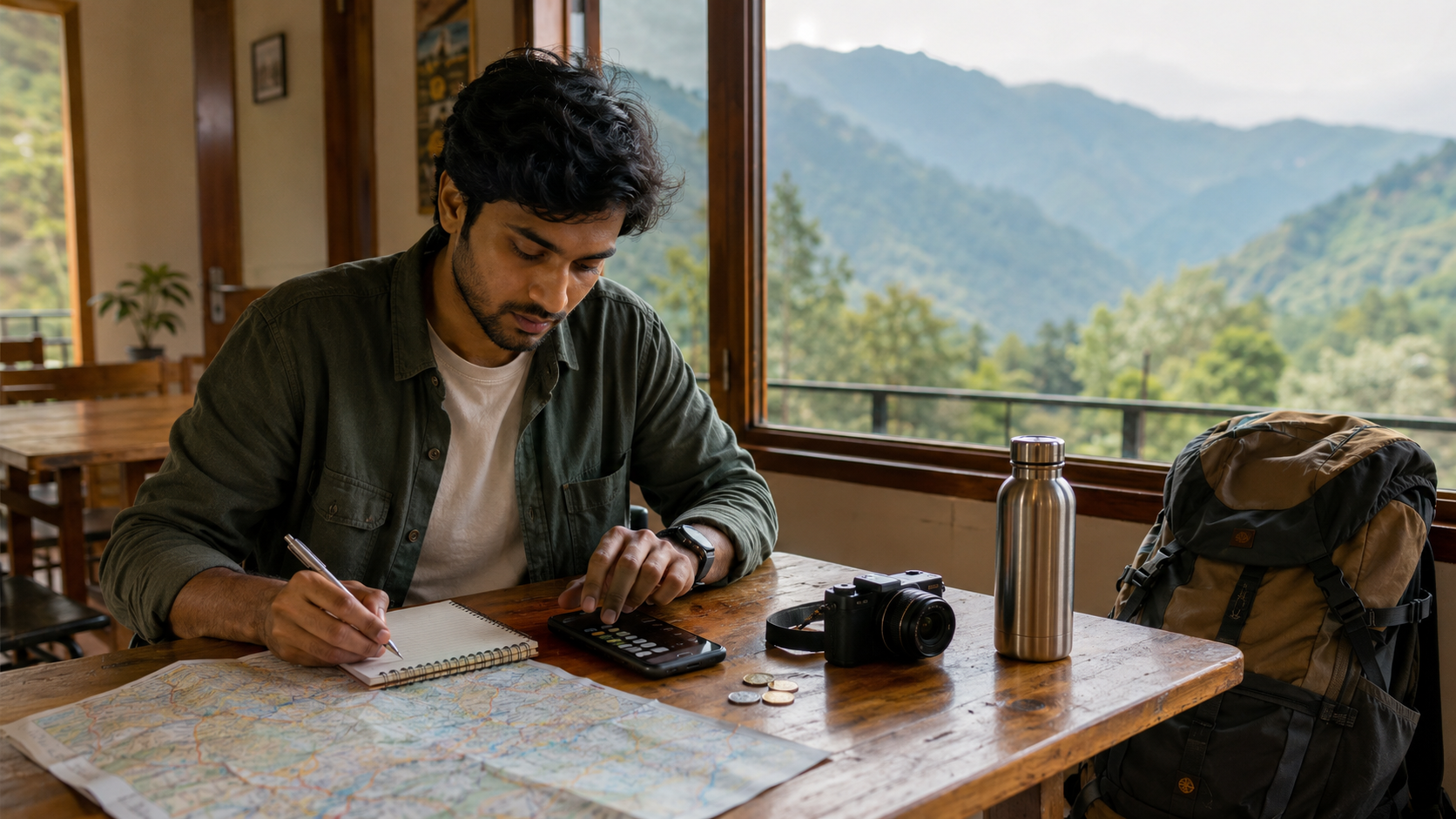
Travelling on a budget does not mean staying in uncomfortable rooms, skipping good food or saying no to every interesting experience.
A budget trip simply means spending thoughtfully. You save money on things that do not matter much to you, so you can spend it on the experiences that will actually make the journey memorable.
With a little planning and flexibility, you can enjoy a wonderful trip without returning home worried about your bank balance.
1. Decide Your Total Budget Before Choosing the Destination
Most people choose a destination first and think about money later. This often leads to cancelling plans or spending more than expected.
Start by deciding how much you can comfortably spend. Divide that amount between transportation, accommodation, food, local travel, activities and emergency expenses.
Once you know your limit, look for destinations that fit it. A peaceful hill station closer to home may offer a better experience than an expensive destination where you have to compromise on everything.
The goal is not to choose the cheapest place. It is to choose a place you can enjoy without constantly checking your remaining balance.
2. Travel During the Shoulder Season
Popular destinations are generally most expensive during holidays, festivals and peak tourist months.
Instead, consider travelling just before or after the busiest season. This period is commonly called the shoulder season. Hotels may be more affordable, attractions are usually less crowded and the weather can still be pleasant.
You may also receive better service because hotels and restaurants are not handling peak-season crowds.
Always check the local weather before booking, especially for mountain, coastal and monsoon destinations. Saving money is useful, but travelling during unsafe or extremely uncomfortable conditions is not worth it.
3. Compare the Complete Cost of Transportation
A cheap flight or train ticket is not always the cheapest option overall.
An early-morning flight may require an expensive cab. A distant airport might add several hours and extra transportation costs. Similarly, an overnight train may take longer but save the cost of one hotel night.
Compare the complete journey, including baggage fees, meals, station transfers and local transport. Sometimes paying slightly more for a convenient option saves both money and energy.
Also, avoid booking extremely tight connections. Missing the next bus, train or flight can quickly become more expensive than the amount you initially saved.
4. Choose Accommodation Based on Value, Not Just Price
The lowest-priced room is not automatically the best deal.
Before booking, check the location, cleanliness, recent guest reviews and distance from the places you plan to visit. A hotel located far outside the main area may force you to spend more on cabs every day.
Homestays, hostels with private rooms and small guesthouses can offer excellent value. Some may include breakfast, filtered water or access to a shared kitchen.
Prioritise safety, cleanliness and location. Luxury is optional, but feeling comfortable and secure should never be treated as an unnecessary expense.
5. Use Public Transport Whenever It Is Practical
Metro trains, local buses and shared vehicles can significantly reduce your transportation expenses.
They also allow you to experience a destination more naturally. You notice neighbourhoods, markets and everyday life that you might miss while travelling directly between tourist attractions in a private cab.
However, public transport may not be suitable everywhere. Remote areas, late-night arrivals or unfamiliar routes may require a trusted cab or authorised local operator.
Use the affordable option when it is convenient and safe, not simply because it costs less.
6. Eat Local Instead of Eating Only at Tourist Restaurants
Food can either become one of the best parts of your trip or one of its biggest expenses.
Restaurants located directly beside major attractions often charge more because of their location. Walk a little further and look for clean places that are popular with local families.
Try regional meals, small cafés and traditional breakfast options. Local food is often more affordable and gives you a better understanding of the place.
You do not have to avoid attractive cafés completely. Choose one or two that genuinely interest you instead of visiting an expensive café for every meal simply because it appeared on social media.
7. Prioritise Experiences Instead of Trying Everything
Every destination has paid activities, guided tours and “must-do” experiences. Booking all of them can quickly exceed your budget.
Choose the experiences that matter most to you. If you love adventure, spend on a professionally operated activity. If you enjoy history, choose a knowledgeable local guide. If peaceful travel is your priority, perhaps a scenic room or houseboat stay is worth the extra cost.
Skip activities you are choosing only because everyone else seems to be doing them.
A trip becomes personal when you spend according to your interests, not according to somebody else’s checklist.
8. Keep Free Experiences in Your Itinerary
Not every memorable travel experience requires a ticket.
Walking through an old neighbourhood, watching a sunrise, exploring a local market or spending an evening beside a lake can be completely free.
Research public beaches, viewpoints, heritage streets, gardens and walking routes before the trip. Mix these experiences with your paid activities to keep the overall budget balanced.
Free does not mean boring. In many destinations, the simplest moments give you the strongest sense of the place.
9. Carry the Small Things That Become Expensive Later
Items such as a reusable water bottle, basic medicines, sunscreen, a power bank, an umbrella and comfortable footwear can prevent unnecessary purchases.
Buying something you forgot once may not seem expensive, but several small purchases can quietly affect your budget.
At the same time, avoid overpacking. Extra baggage charges and the difficulty of carrying a heavy suitcase can create new problems.
Pack according to the weather and planned activities. Carry what you are likely to need, not everything you might possibly use.
10. Always Keep an Emergency Amount Separate
A travel budget should never use every rupee available.
Keep a separate emergency amount for unexpected transportation, medical needs, booking issues or changes in your journey. Do not include this money in your daily spending limit.
If possible, keep access to funds in more than one secure form rather than depending completely on one card, wallet or payment method.
You may return without using the emergency amount, and that is perfectly fine. Its purpose is to give you confidence and flexibility when something unexpected happens.
A Simple Way to Divide Your Travel Budget
There is no perfect formula for every trip, but you can begin with a simple structure:
Transportation to and from the destination
Accommodation
Food and drinks
Local transportation
Activities and entry tickets
Shopping and personal expenses
Emergency fund
Estimate each category before making bookings. If the total is too high, reduce optional expenses or choose more affordable dates instead of removing essentials such as safe accommodation.
Final Thoughts
Budget travel is not about choosing the cheapest option every time. It is about recognising which expenses improve your experience and which ones can be reduced without affecting the journey.
Save on unnecessary cab rides, oversized luggage and overpriced tourist restaurants. Spend on safe accommodation, meaningful experiences and the food you genuinely want to try.
When your spending reflects what matters to you, even a simple weekend trip can feel rich, comfortable and memorable.

Conversation
0 comments