

You book a Puja trip thinking India runs on one kitchen rule.
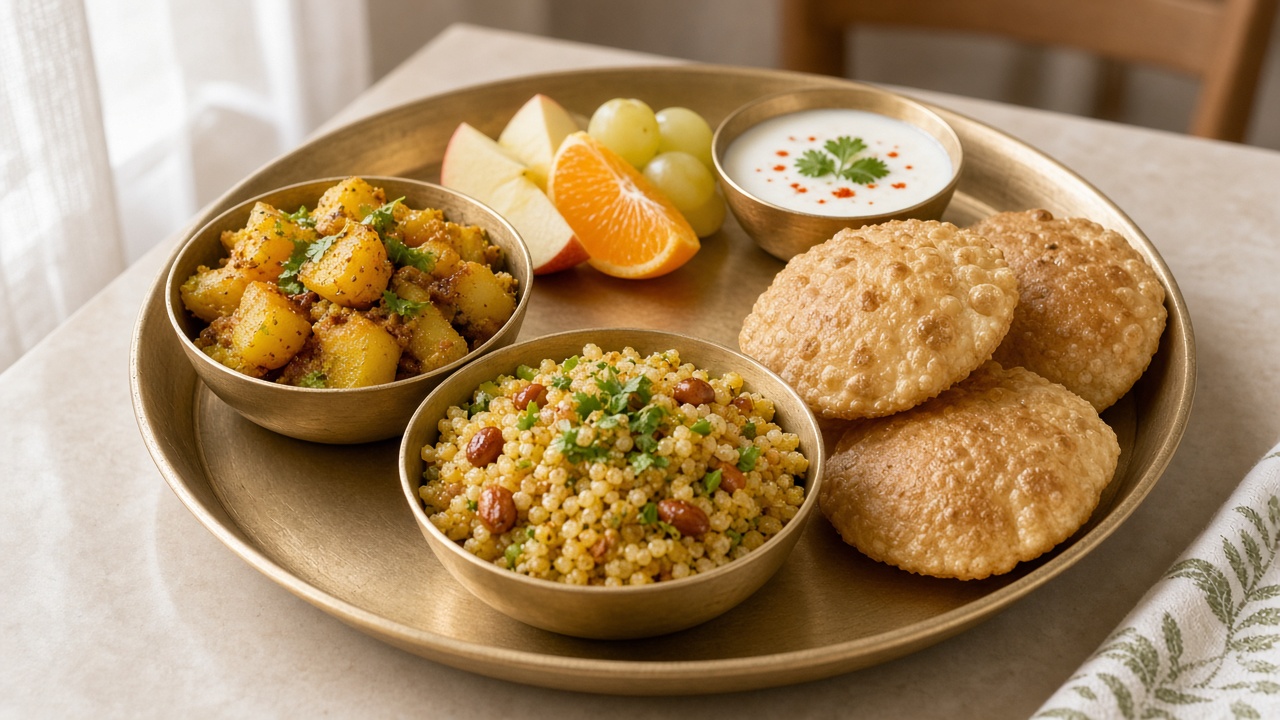
Day one in Delhi, the hotel puts out sabudana and a quiet note about Navratri fasting. A few days later in Kolkata, the lunch table looks fuller. Different state, different custom. Nobody is doing devotion wrong. The plate simply follows local tradition.
Maha Navami 2026 is Monday, 19 October. If you are travelling through it, this is a gentle heads-up: vegetarian fasting is common in many places, but it is not the only way families mark the day.
For travellers, in one line:
In much of North and West India, Navratri lean towards sattvik and vegetarian meals.
In parts of East and Northeast India, Durga Puja meals can include fish or meat dishes as part of long-standing regional custom.
Most big public pandals still serve vegetarian khichuri (khichdi). Where non-veg is offered, there is usually a vegetarian counter too.
1. Two festival maps, one calendar
In Delhi, Rajasthan, Gujarat and a lot of Maharashtra, Madhya Pradesh and western UP, Sharad Navratri often means lighter, vegetarian cooking. Homestays and hotels lean into that menu because guests expect it.
In West Bengal, Assam, Odisha and Tripura, Durga Puja is widely celebrated as Maa's homecoming. Families cook with warmth and abundance. In Shakta regions, where Goddess worship has deep local roots, festive menus may include fish or carefully prepared meat dishes. That is culture and parampara, not a debate scoreboard.
Both ways can be full of faith. As a traveller, just notice which map you stepped into.
2. Why the plate can look different mid-Puja
Think of the week like a playlist, not one song on loop.
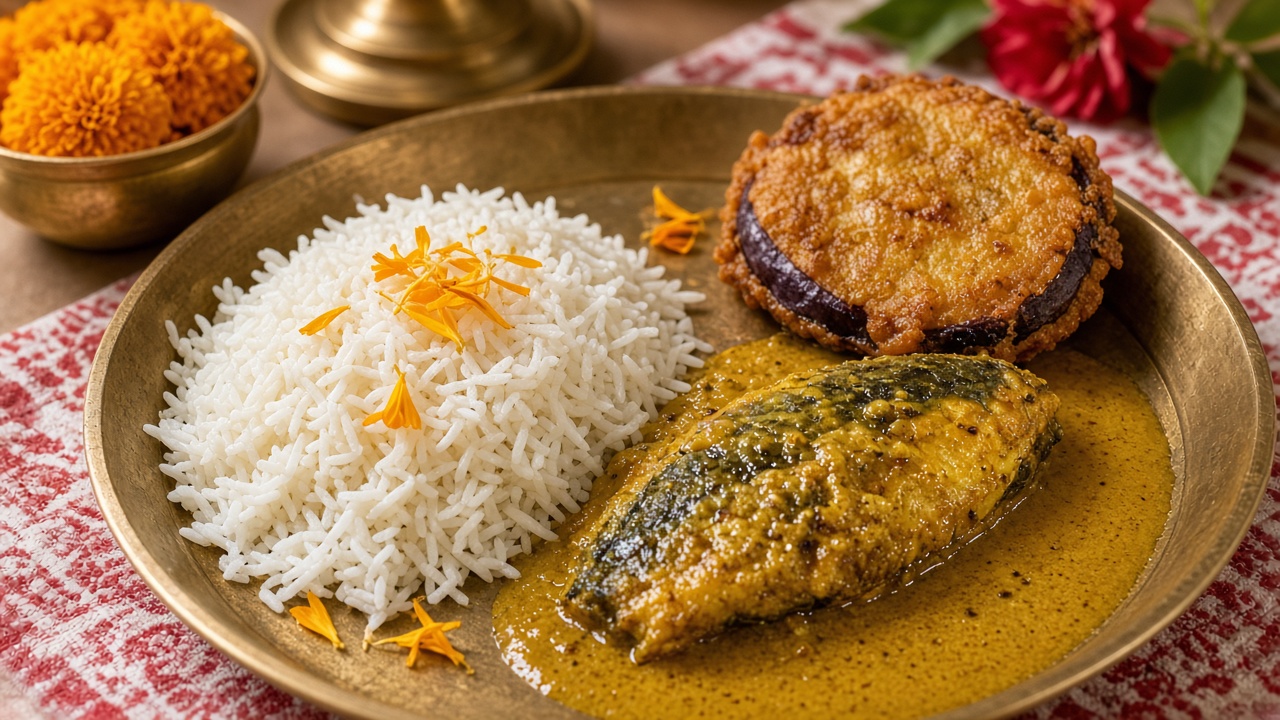
Early days are arrival and anjali. Ashtami is when many travellers remember the classic vegetarian khichuri (khichdi) line: fragrant rice and dal, labra, beguni, payesh. Later in the week, especially around Navami, some East Indian homes open richer festive dishes that have been part of their Puja calendar for generations.
You may hear of fish preparations, or niramish mangsho: mutton cooked without onion and garlic for ritual kitchens. In those homes, Navami simply feels like a fuller celebration day after lighter meals earlier in the week.
So if you arrive only for the Navami weekend, you may meet the feast version first and wonder where the fasting menu went. It did not vanish. You changed cities.
3. What about pandal prasad?
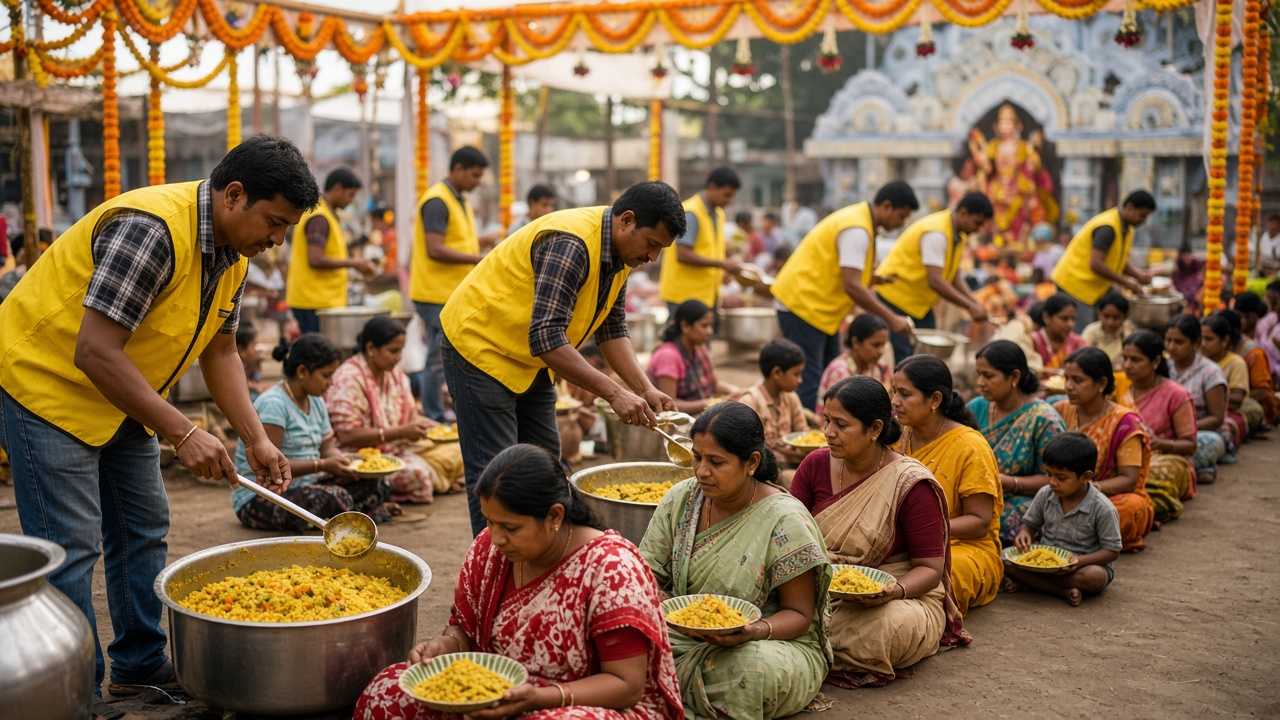
Most sarbojanin / barowari pandals stick to vegetarian khichuri (khichdi) because thousands of guests eat from one kitchen. That public plate is designed to feel welcoming to everyone.
Some neighbourhood committees, housing-society lunches and family pujas may also serve fish or mutton as part of community meals. Temple kitchens in Assam, Odisha and Tripura can have their own prasad customs too.
Important for travellers: if a place offers non-veg prasad or a non-veg community meal, there is almost always a clear vegetarian option as well. Look for the second counter, ask a volunteer, and take what suits you. Nobody should feel left out of the line.
Travel rule: if the board says khichuri (khichdi) bhog, expect vegetarian. If the menu also lists fish or mutton, choose calmly. Follow the house rules with a smile.
4. Khichuri (khichdi) can mean more than one plate
The famous Ashtami bhoger khichuri (khichdi) that travellers queue for is vegetarian. That is still the most common pandal experience.
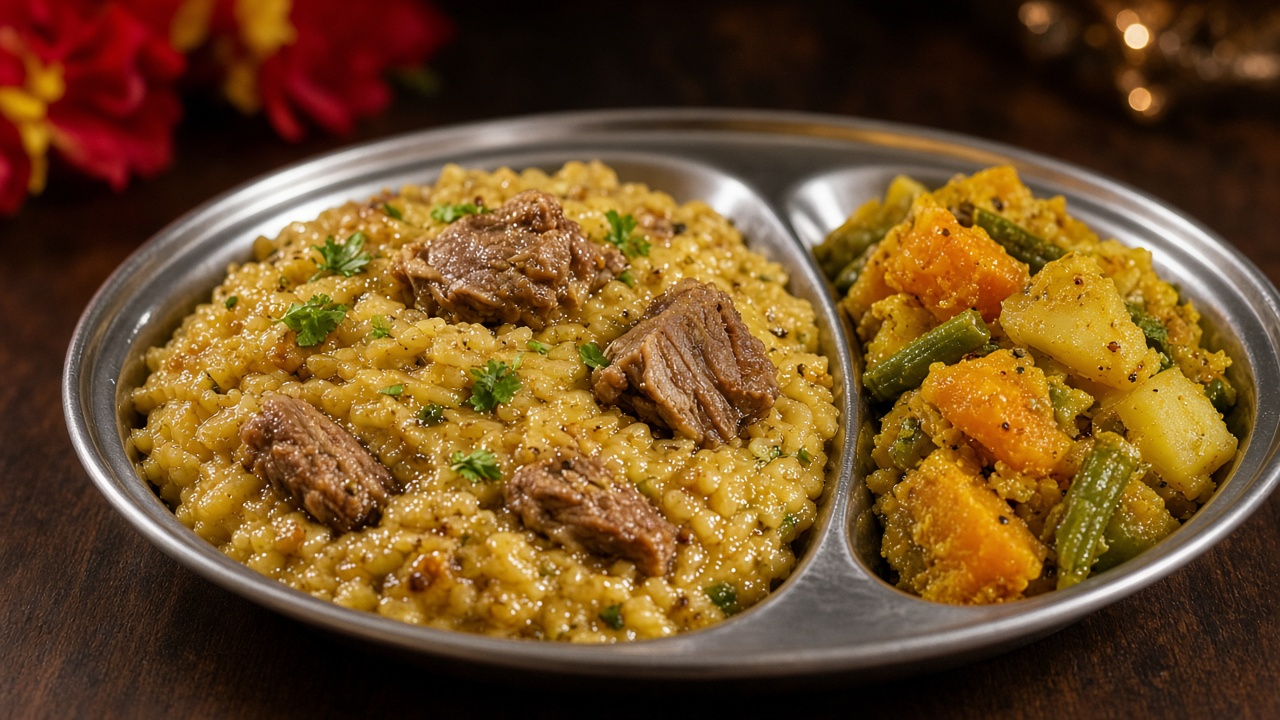
In a few East and Northeast settings, festive one-pot meals may also include meat cooked into the rice-and-dal style dish, or families may make mangsho khichuri (khichdi) at home during Puja week. Odisha also has slow-cooked ritual meat-and-vegetable pots that feel close to a rich one-pot meal.
So if someone says they had a non-veg khichuri (khichdi), they are usually describing a regional kitchen, not correcting your pandal plate. Both can exist in the same festival week.
5. State by state, if you are on the road
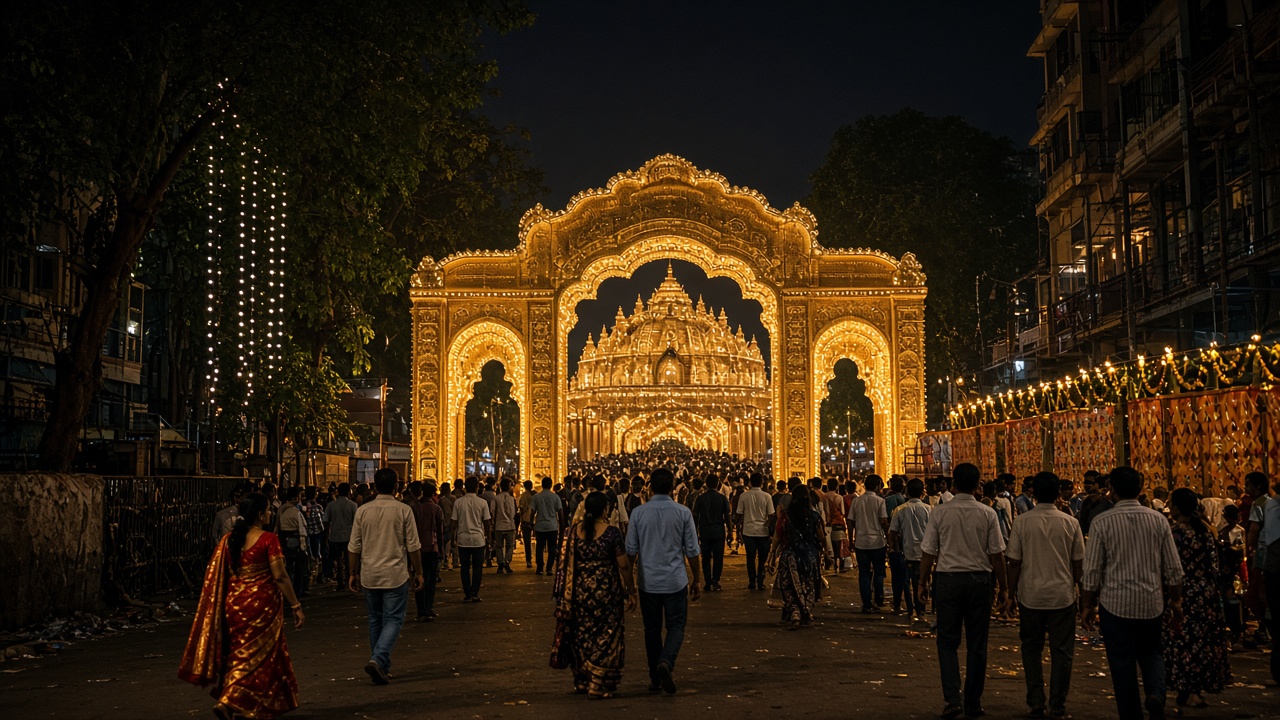
West Bengal
Kolkata for pandal nights. Ask locals which family or society lunch welcomes guests.
Big public pandals: usually vegetarian khichuri (khichdi). Homes and some community meals: festive fish or mutton may appear around Nabami.
Budget roughly ₹800-2,000 per person for an evening of walking, tea and tasting beyond free bhog.
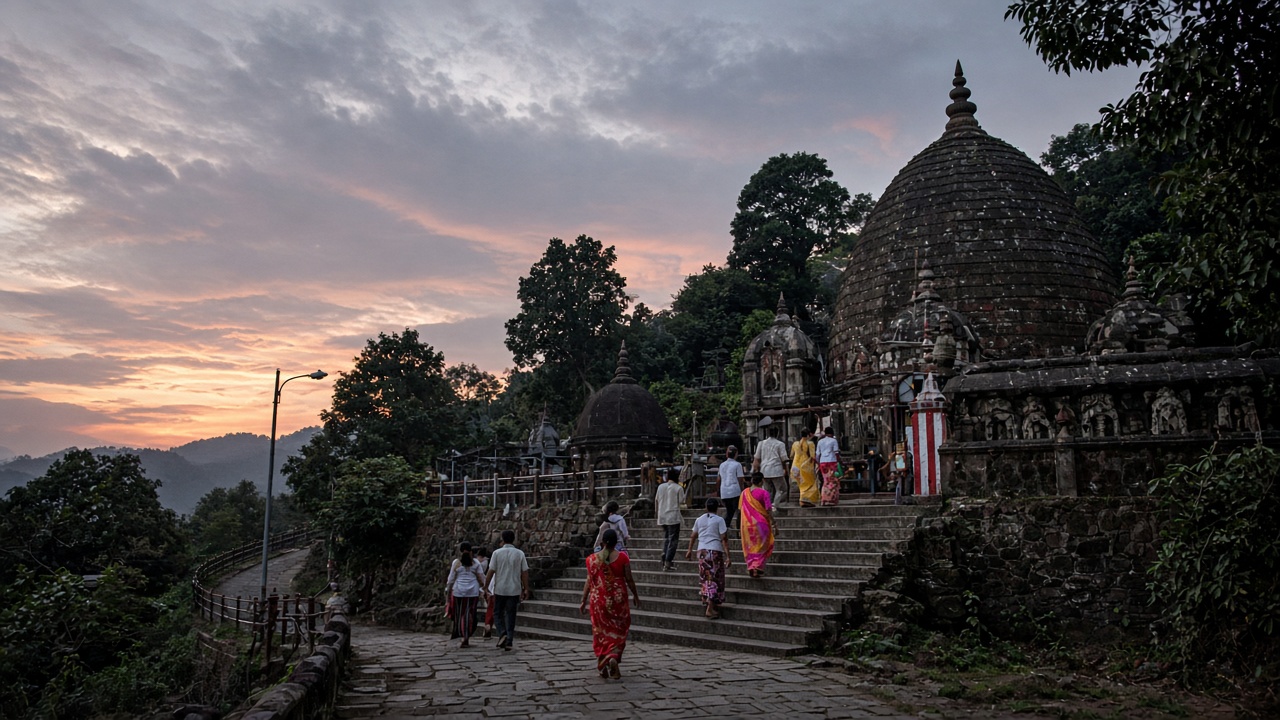
Assam
Guwahati and Kamakhya are the best-known Shakta stops for travellers.
Local prasad customs vary by shrine. Dress modestly, go early, and follow volunteer guidance.
Vegetarian food is easy to find in the city either way.
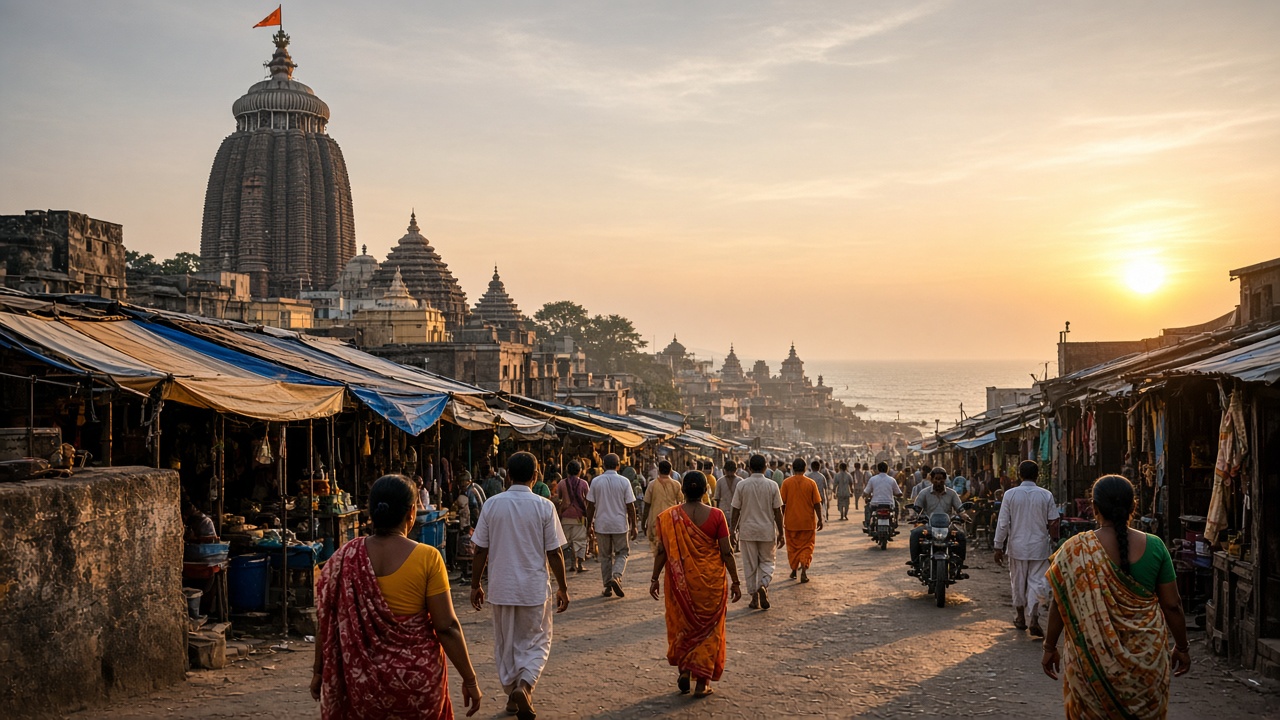
Odisha
Puri, Cuttack's Puja belt, and selected Shakti shrines each keep their own kitchen notes.
Ask before tasting prasad. Outside ritual spaces, Odisha feeds both vegetarian and seafood travellers well.
Tripura
Agartala is a compact base. Ask which pandals keep which menu. Smaller city, easier conversations.
Bihar and Jharkhand
Many travellers find vegetarian Navratri menus here, with local shrine customs that can differ. Check the hotel board rather than assuming Kolkata rules apply.
Delhi, Rajasthan, Gujarat, Punjab, much of UP
Plan for vegetarian festival menus in homes and many hotels. City restaurants may still serve regular menus separately.
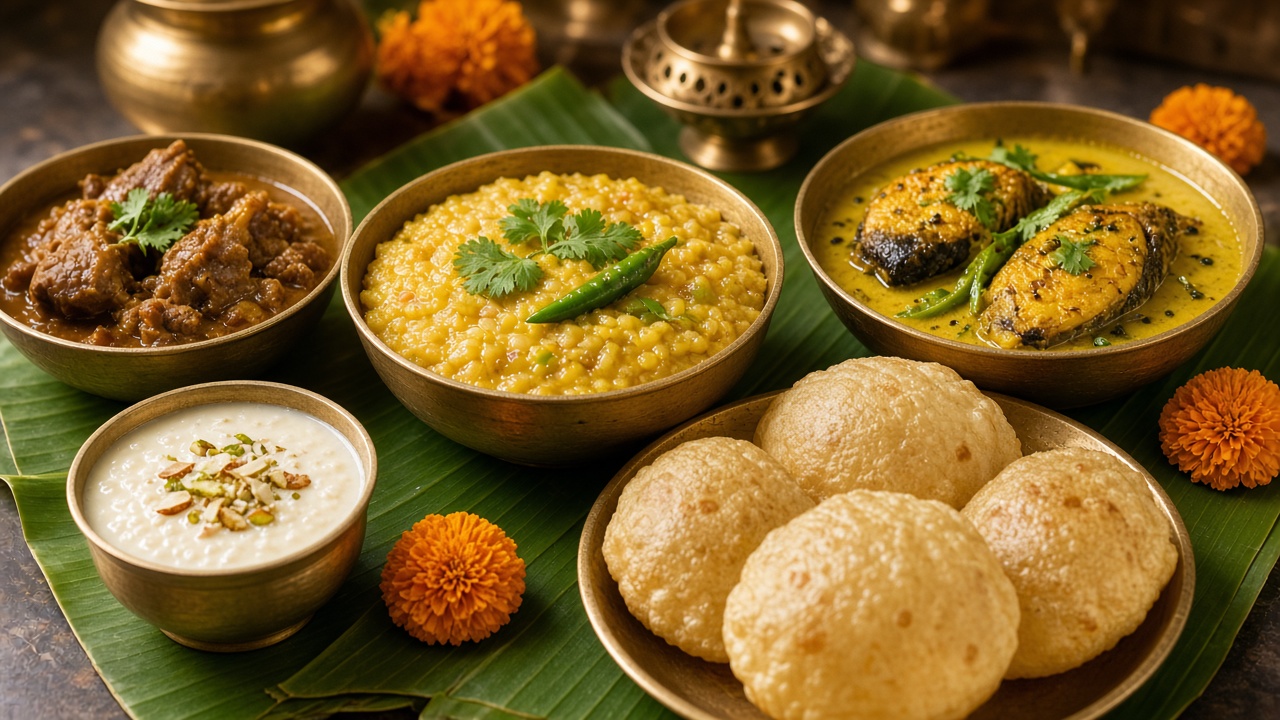
6. How to travel kindly
Respect the house or pandal you entered. Local custom is hospitality, not a debate topic.
Vegetarian travellers eat beautifully in Bengal too. Public khichuri (khichdi) lines were built for shared joy.
If you prefer non-veg, wait for an invitation to special prasad and never treat ritual food like a restaurant order.
Skip photography where volunteers say no. Keep queues calm.
7. Final tip
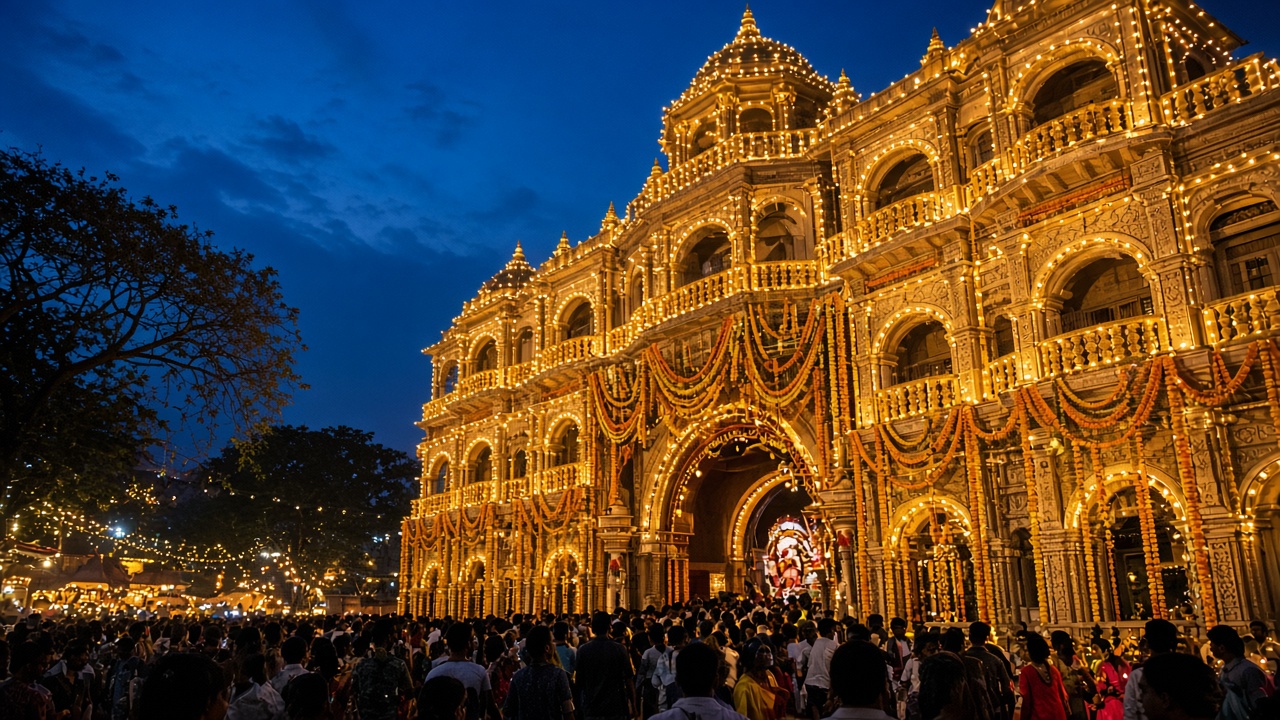
Book the flight for the lights. Read the plate for the state.
West Bengal, Assam, Odisha and Tripura may serve richer festive menus around Navami, including fish or meat in some homes and community spaces, always with room for vegetarian guests. Much of North and West India keeps the same day lighter and vegetarian.
Don't assume. Ask politely. Then enjoy wherever you landed.

Conversation
0 comments