
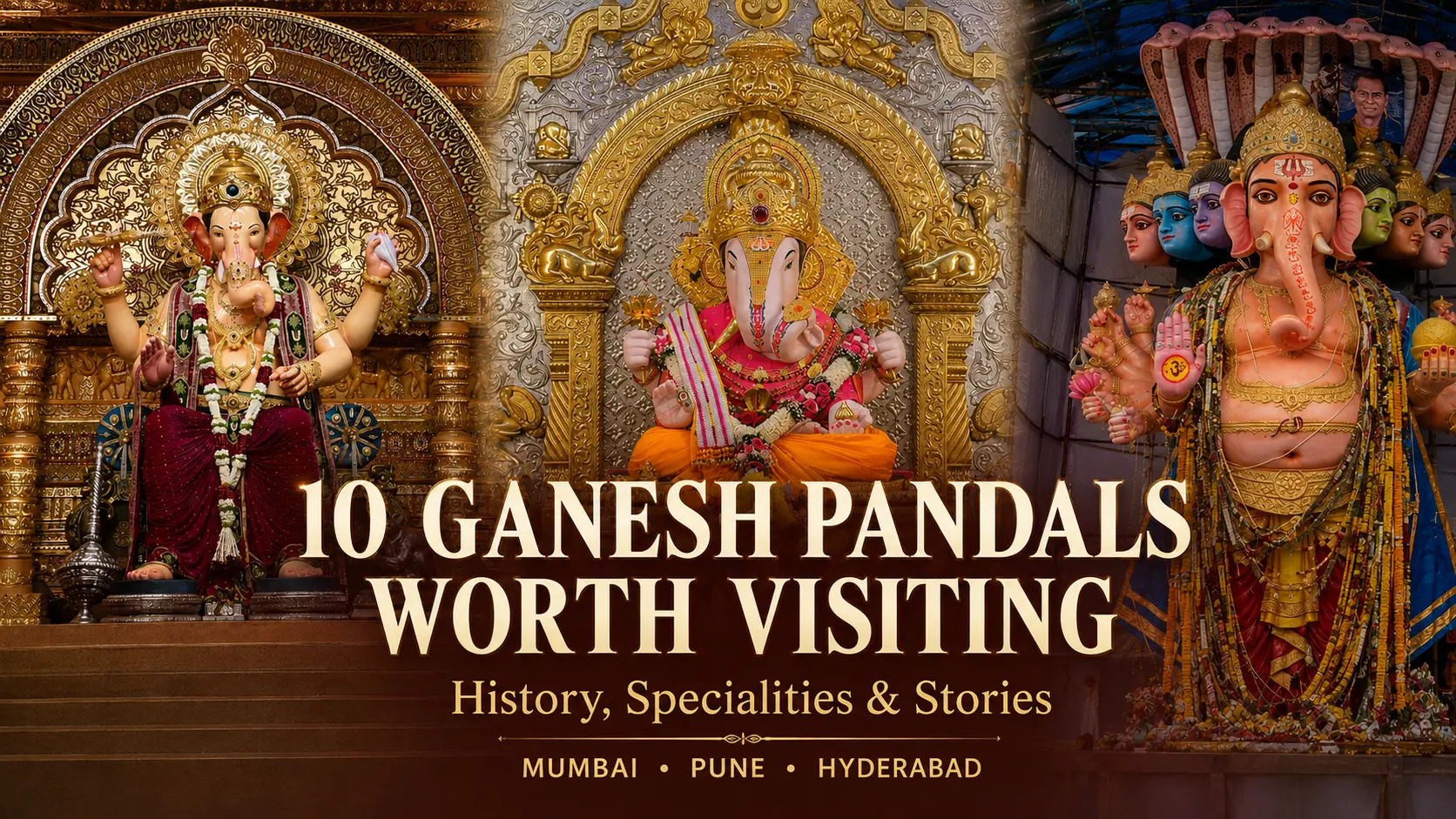
Every Ganesh Chaturthi outing has that one person who says, “We can easily cover six pandals today.”
Very confident. Usually said before seeing the first queue.
But visiting Ganesh pandals is not really about collecting photographs from as many places as possible. The interesting part is discovering why each celebration matters. One began with market vendors hoping for a secure livelihood. Another grew from a neighbourhood’s small contributions. Somewhere else, Hindu and Muslim families built a tradition together.
The decorations get your attention. These stories give you a reason to stay interested after the photograph.
This guide covers ten notable celebrations across Mumbai, Pune and Hyderabad, with their histories, specialities and practical things to know before going. It is a shortlist, not a ranking, and definitely not a one-trip checklist.
A small distinction: a mandal is the organising group, while a pandal is the temporary festival structure. Some entries below are associated with permanent temples that also organise public Ganeshotsav celebrations.
Information checked on 2 September 2026. Ganesh Chaturthi falls on 14 September this year, with Anant Chaturdashi on 25 September. Individual celebrations may finish earlier or later, so check each organiser’s schedule. Official 2026 festival announcement.
Mumbai: Big Celebrations with Neighbourhood Roots
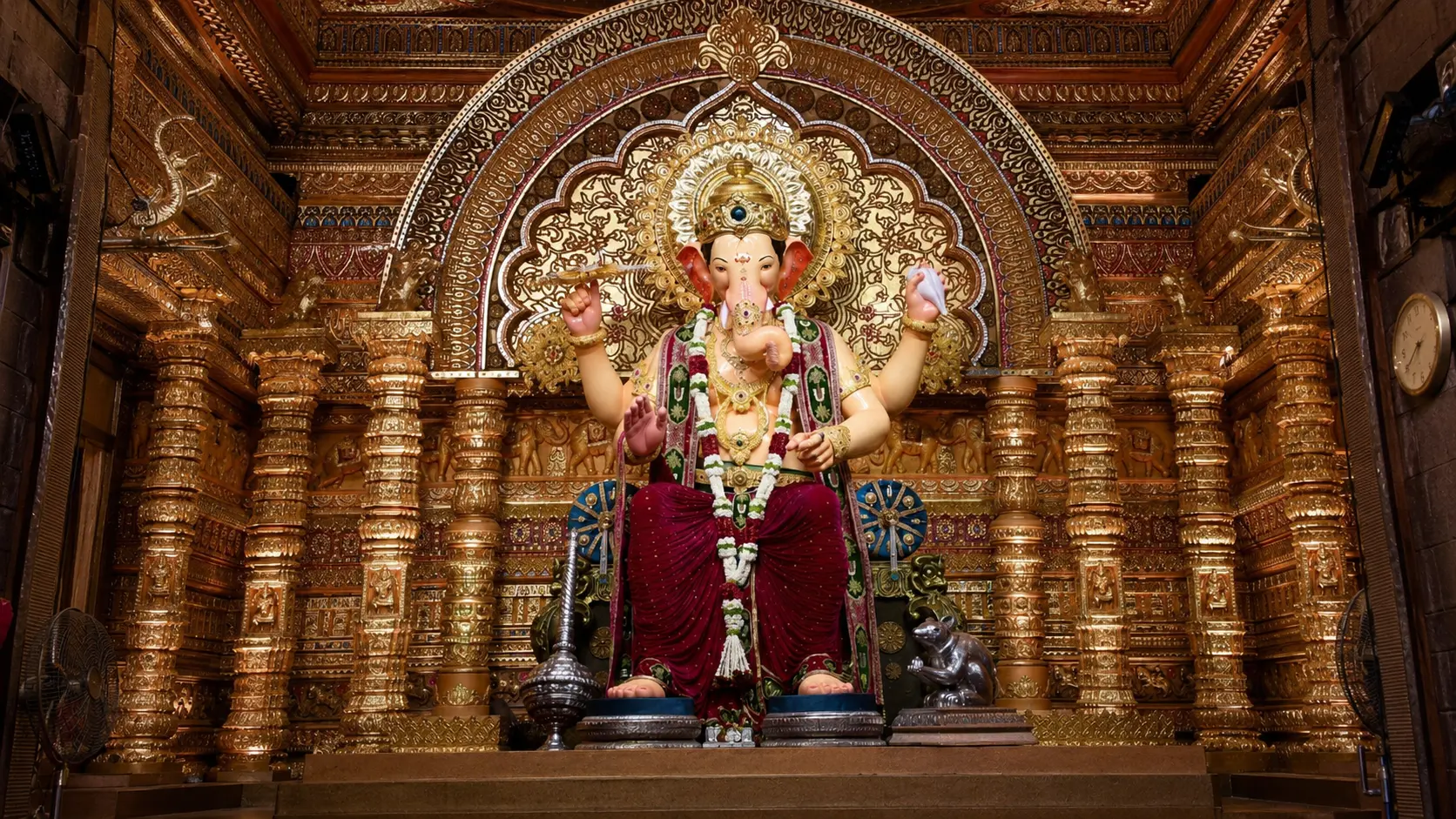
1. Lalbaugcha Raja: A Famous Ganpati with a Market Story
Where: Lalbaug, Mumbai.
Before the television coverage and enormous crowds, this celebration had a very practical concern behind it: a place to earn a living.
Its origins go back to the closure of a local market in 1932. Fish sellers and other vendors prayed for a permanent marketplace and promised to establish a Ganesh idol. After securing space for the market, they installed the first Lalbaugcha Raja in 1934.
That story helps explain its identity as Navsacha Ganpati, a Ganpati whom devotees believe fulfils wishes. For many visitors, the journey here is deeply personal, not simply another famous Mumbai stop. Read the history reported by The Indian Express.
Its speciality is that powerful connection between faith, gratitude and the neighbourhood’s working life. Knowing the background changes how you look at the celebration.
If you visit, understand the current queue arrangements before joining. Traditionally, mukh darshan and the vow-related navas queue have served different purposes. Ask volunteers which route suits your visit, and leave generous time rather than promising everyone you will be back in an hour.
2. Ganesh Galli’s Mumbaicha Raja: For People Who Notice Every Detail
Where: Ganesh Galli, Lalbaug, Mumbai.
First, a useful clarification: Mumbaicha Raja and Lalbaugcha Raja are different celebrations. Similar names, nearby locations, very easy confusion.
The Lalbaug Sarvajanik Utsav Mandal behind Mumbaicha Raja was founded in 1928. It has become particularly associated with imposing idols and elaborate architectural settings. Its official history recalls a recreation of Madurai’s Meenakshi Temple during its platinum-jubilee celebrations. Explore the mandal’s history.
The attraction here is the complete setting: the idol, the scale, the decorative details and the work involved in building a temporary space with such ambition.
If you enjoy art, design or architecture, give yourself time to notice more than the centrepiece. Someone worked on those smaller details too.
It makes sense to consider Ganesh Galli alongside other Lalbaug visits, but nearby does not necessarily mean quick. The map does not account for the queue you have just joined.
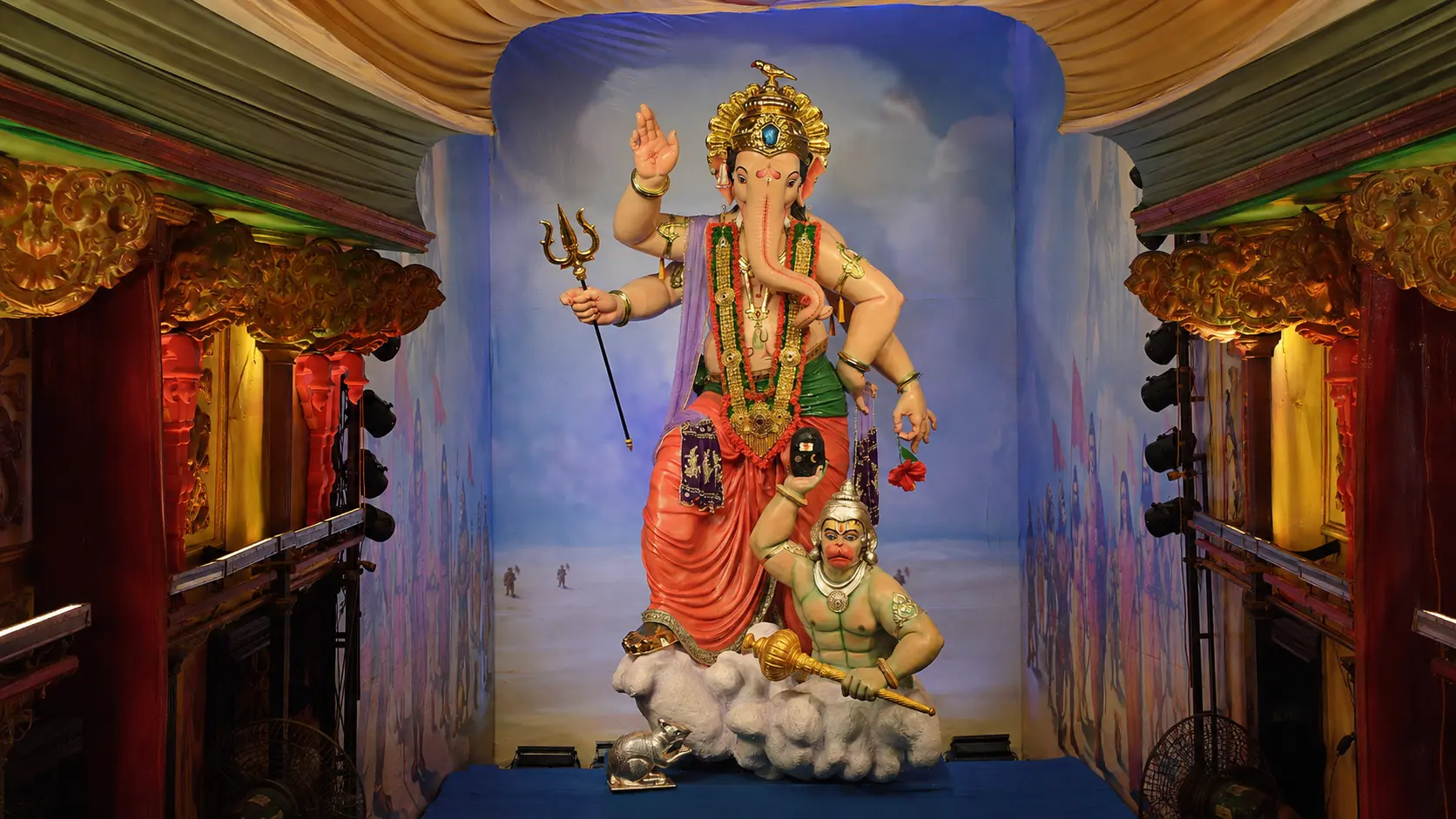
3. Chinchpoklicha Chintamani: A Century of Community Effort
Where: Chinchpokli East, Mumbai.
Chinchpoklicha Chintamani’s organising mandal was established in 1920, in the neighbourhood of Mumbai’s textile mills.
According to its own history, local organisers formed the mandal after Lokmanya Tilak’s death, inspired by his ideas of public participation and unity. Early contributions were just four annas. The first festival came together through local effort, not a grand starting budget. Read the mandal’s history.
That is what makes this celebration interesting beyond its famous name: the continuity of people coming together, year after year, to keep something meaningful alive.
The idol’s arrival ceremony, or aagman, is a distinct part of its celebrations. The organisation also runs educational, health and other social initiatives beyond the festival. See the organiser’s updates and activities.
When planning, do not confuse an arrival-procession announcement with the regular darshan schedule. They are different events, with different crowd conditions.
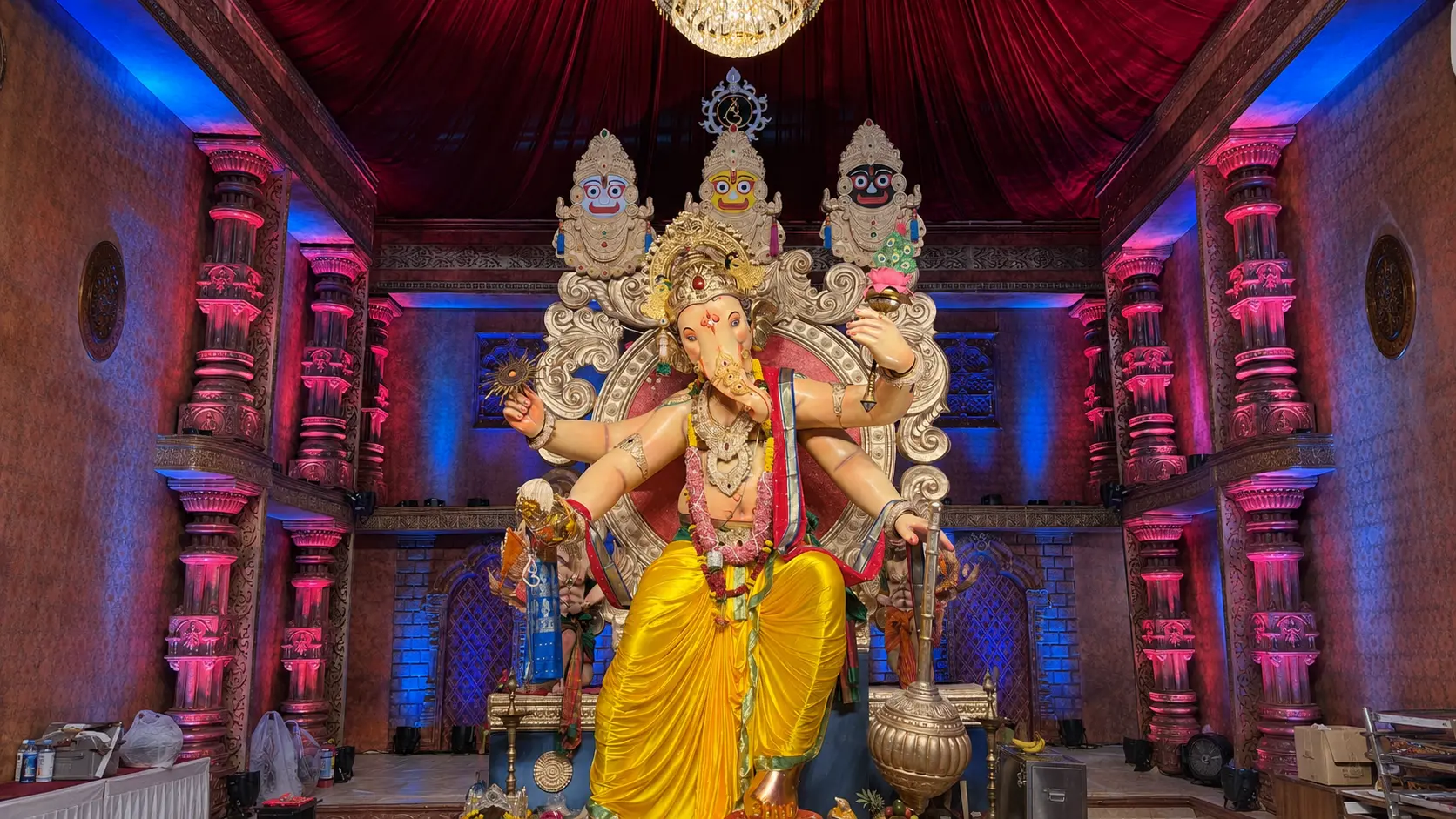
4. GSB Seva Mandal: Look Beyond the Gold
Where: Shree Sukriteendra Nagar, King’s Circle, Mumbai.
Photographs of this Ganpati often focus on its gold and silver ornaments. Understandable, but the jewellery is only part of the story.
GSB Seva Mandal was founded in 1951. Its official account dates the beginning of its Ganeshotsav to 1955, initially with a small, 14-inch idol. The festival has a close religious association with Shri Kashi Math Samsthan. Read the official festival history.
Its speciality is the combination of elaborate adornment, traditional worship and organised volunteer service. Go with an interest in the rituals and community effort, not only the value of the ornaments.
There is also an important planning detail: this is a five-day celebration. The organisers have announced 14–18 September for 2026, at King’s Circle. Check the official 2026 announcement.
In other words, this is not a visit to leave until “somewhere near the end of the festival.” That flexible plan has an actual expiry date.
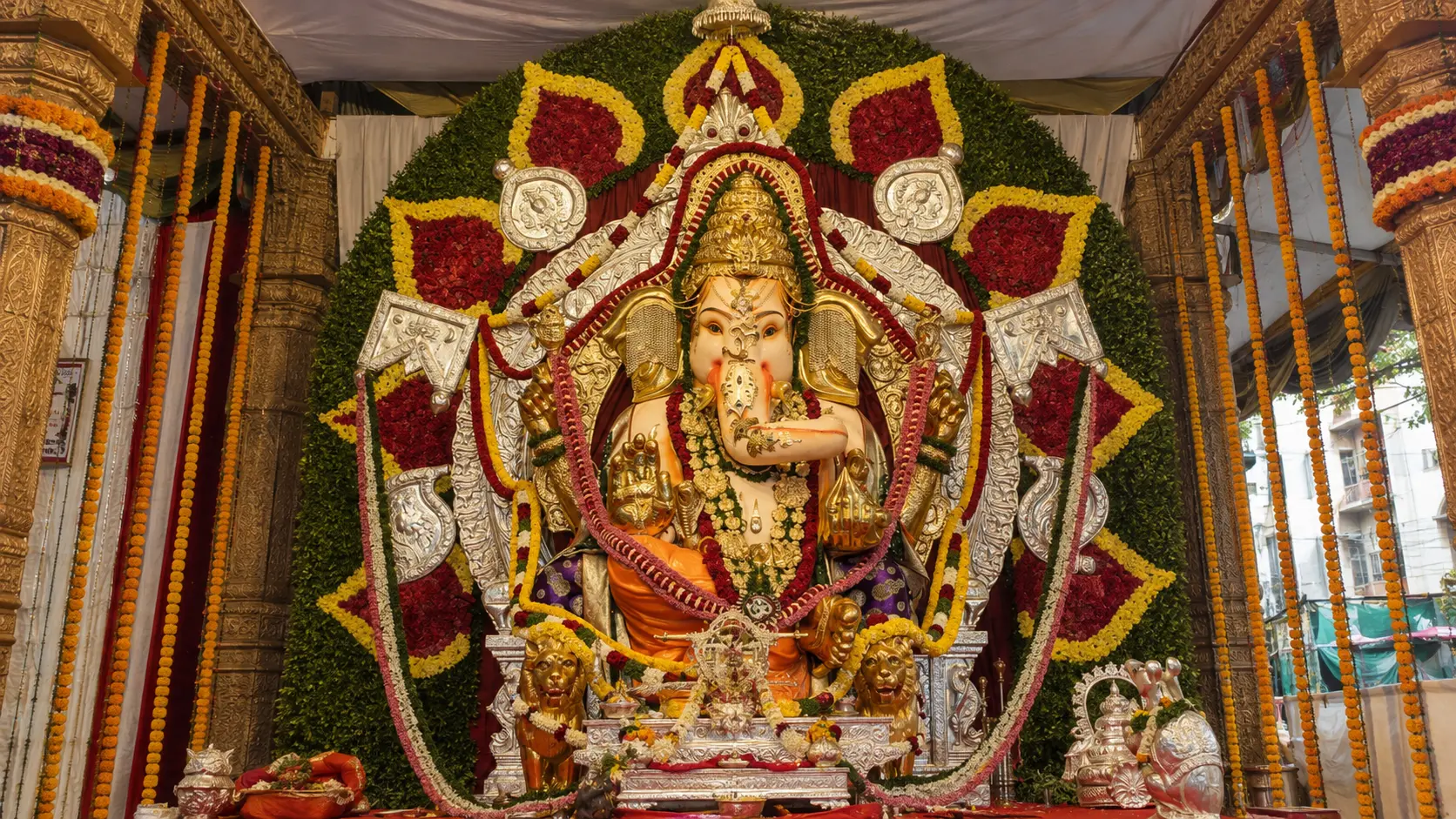
5. Khetwadicha Ganraj: Big Ideas in the 12th Lane
Where: Khetwadi’s 12th Lane, Mumbai.
The mandal behind Khetwadicha Ganraj was established in 1959 and became known for ambitious idol-making. One memorable example in its own records is a 40-foot Ganesh idol in a Parashuram-inspired form in 2000. Explore the mandal’s history.
That is a historical example, not the height or design to expect every year.
The speciality here is the sculptural imagination: how a familiar deity can be presented through different forms, proportions and decorative approaches across successive festivals.
Khetwadi has several separate neighbourhood celebrations, so save the exact name and lane before setting out. “The famous Khetwadi Ganpati” may not be precise enough to get you to the one you intended.
And once you arrive, keep moving when the queue moves. Admiring the craftsmanship is encouraged; establishing a permanent photography studio in the passage is not.
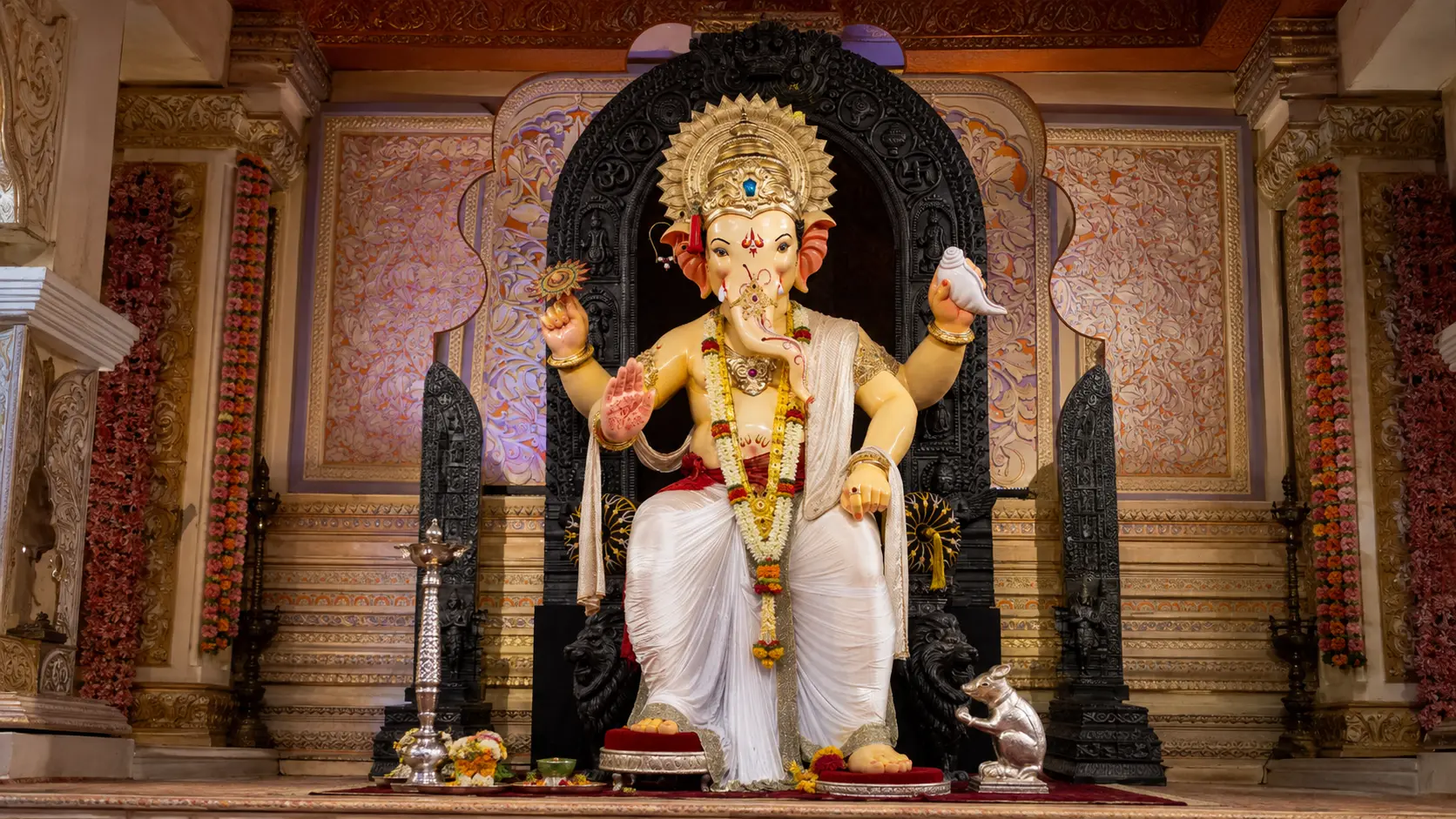
6. Andhericha Raja: A Festival with Its Own Farewell Tradition
Where: Azad Nagar, Andheri West, Mumbai.
Andhericha Raja is organised by the Azad Nagar Sarvajanik Utsav Samiti, established in 1966 by factory workers. Its roots are another reminder of how strongly Mumbai’s public celebrations are connected to working communities. Read the organiser’s account.
Alongside its themed settings, it is known for a distinctive immersion tradition: the main idol’s visarjan takes place on Sankashti Chaturthi after Anant Chaturdashi. The organiser describes this later farewell as part of the celebration’s established practice. See the mandal’s tradition and updates.
That makes it different from pandals following the more familiar Anant Chaturdashi timetable. However, check the current closing, darshan and procession arrangements before planning a late-festival visit.
If you are staying in Mumbai’s western suburbs, this is worth considering on its own terms. You do not need to travel across the entire city every evening to feel that you have properly celebrated.
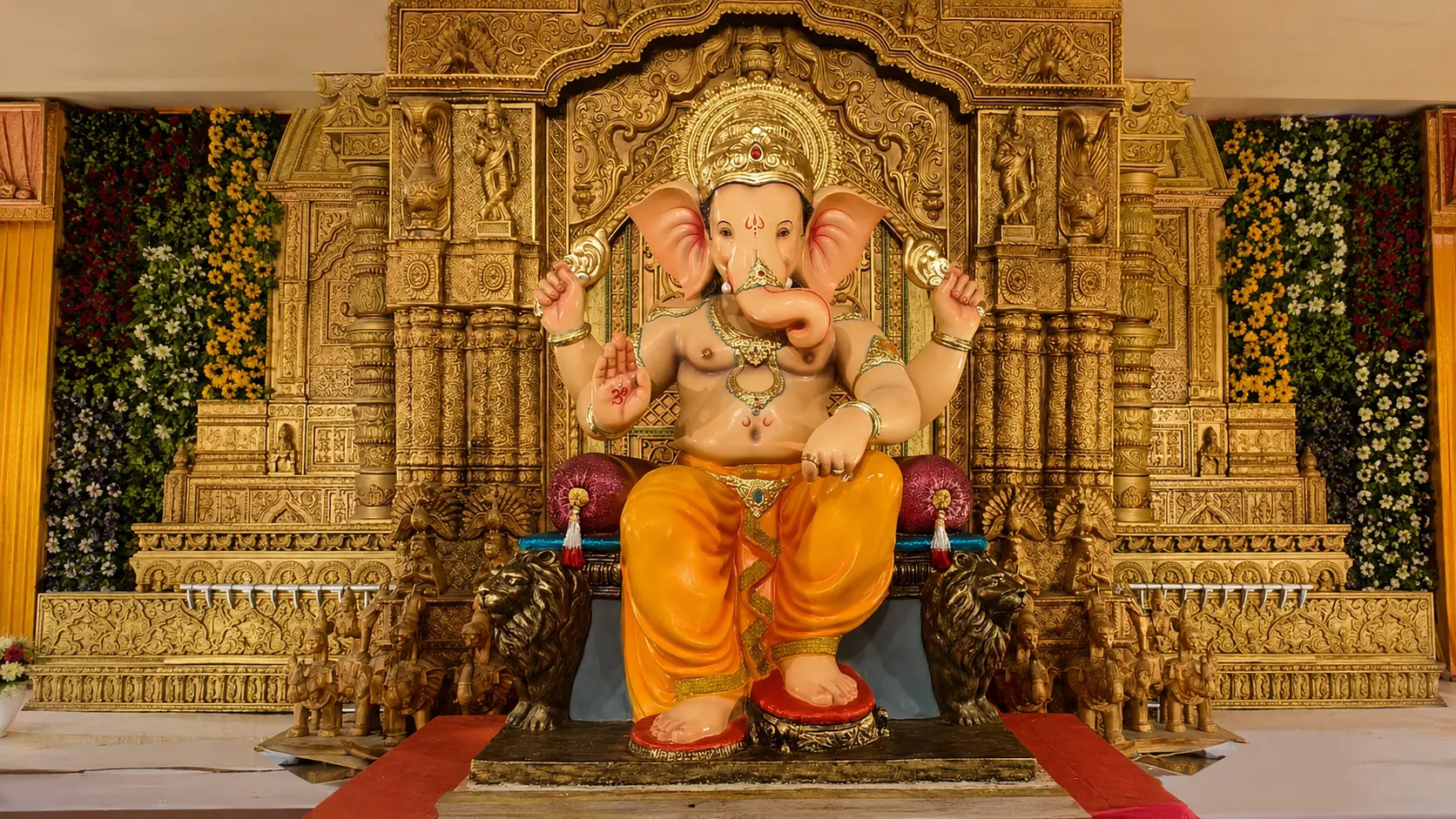
Pune: History Matters as Much as the Decorations
7. Dagdusheth Halwai Ganpati: A Celebration with a Deeply Personal Beginning
Where: Budhwar Peth, Pune.
Dagdusheth Halwai Ganpati is associated with a permanent temple as well as a major public Ganeshotsav celebration. It is not simply a temporary pandal that disappears after the festival.
The trust dates its beginnings to 1893. Its account connects the worship to Dagdusheth Halwai and his wife Lakshmibai, who turned to devotion after losing their son. What began with a family’s grief became a celebration shared by the neighbourhood. Read the trust’s history and its historical timeline.
The festival’s appeal includes its richly decorated presentation, but the trust’s year-round work deserves attention too. Its activities extend into education, care and support for people in need. That wider role adds substance to the grandeur.
If you are visiting during Ganeshotsav, check the festival-specific darshan location and arrangements rather than relying only on ordinary temple information.
And once you reach the front, allow yourself a moment to look properly. A photograph is useful; actually remembering what you came to see is better.
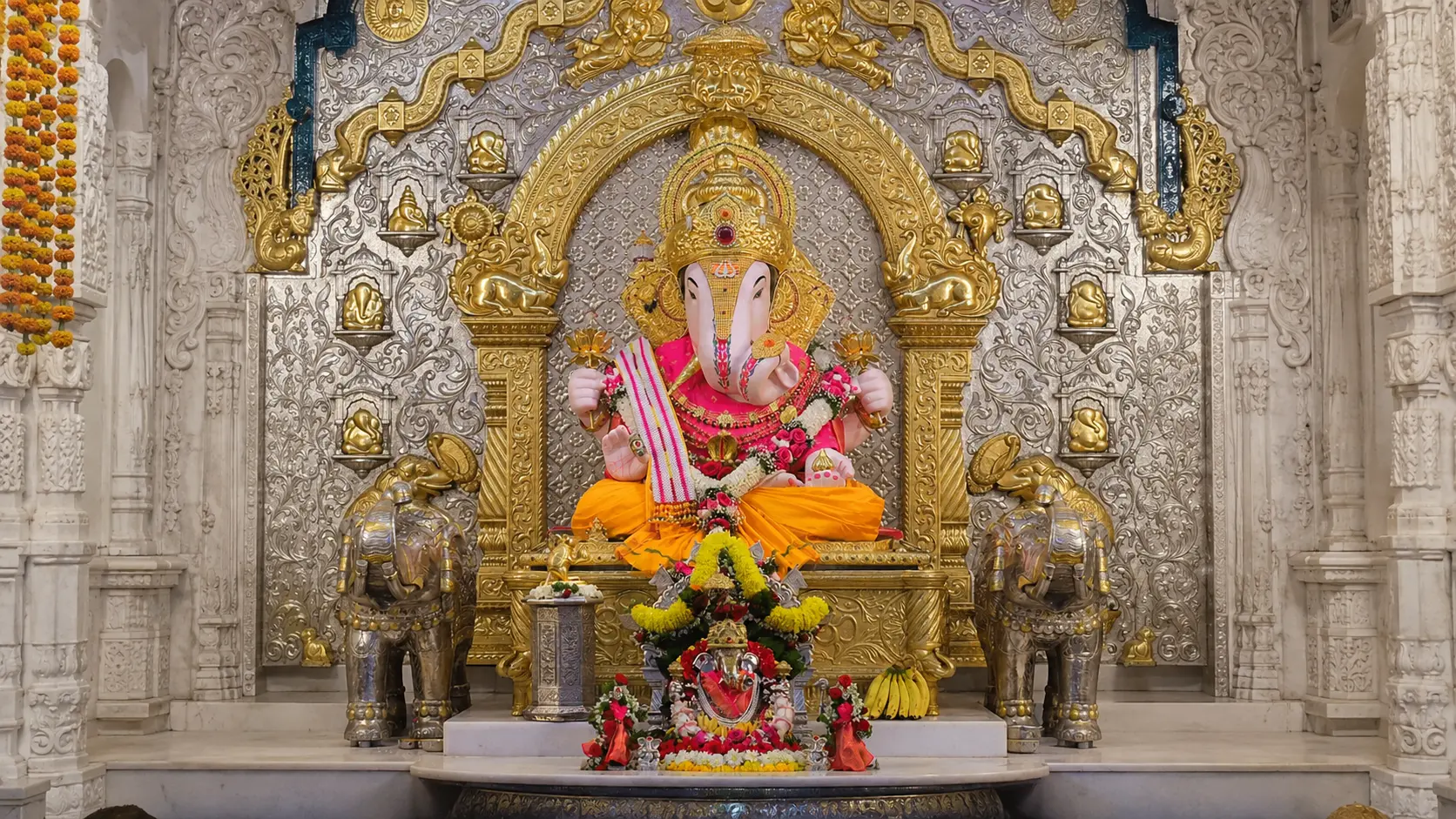
8. Kasba Ganpati: Understanding Pune’s First Honoured Ganpati
Where: Kasba Peth, Pune.
Kasba Ganpati’s significance goes beyond the annual festival. The deity is regarded as Pune’s presiding deity, and the temple’s history is associated with Jijabai and Chhatrapati Shivaji Maharaj.
The mandal’s public Ganeshotsav dates to 1893. It holds first place among Pune’s five Manache Ganpati, the honoured Ganpatis, and leads their traditional immersion procession. Read the mandal’s history and significance.
That honour is a matter of tradition, not a competition over who has the largest idol or the most elaborate lights.
Visit Kasba if you want to understand why Ganeshotsav means so much to Pune. The attraction is the relationship between the deity, the old city and the customs that residents continue to preserve.
It is a meaningful place to begin a Pune visit, though you should check the day’s access arrangements before deciding your walking route through the old city.
9. Guruji Talim: A Story of Celebrating Together
Where: Laxmi Road area, Pune.
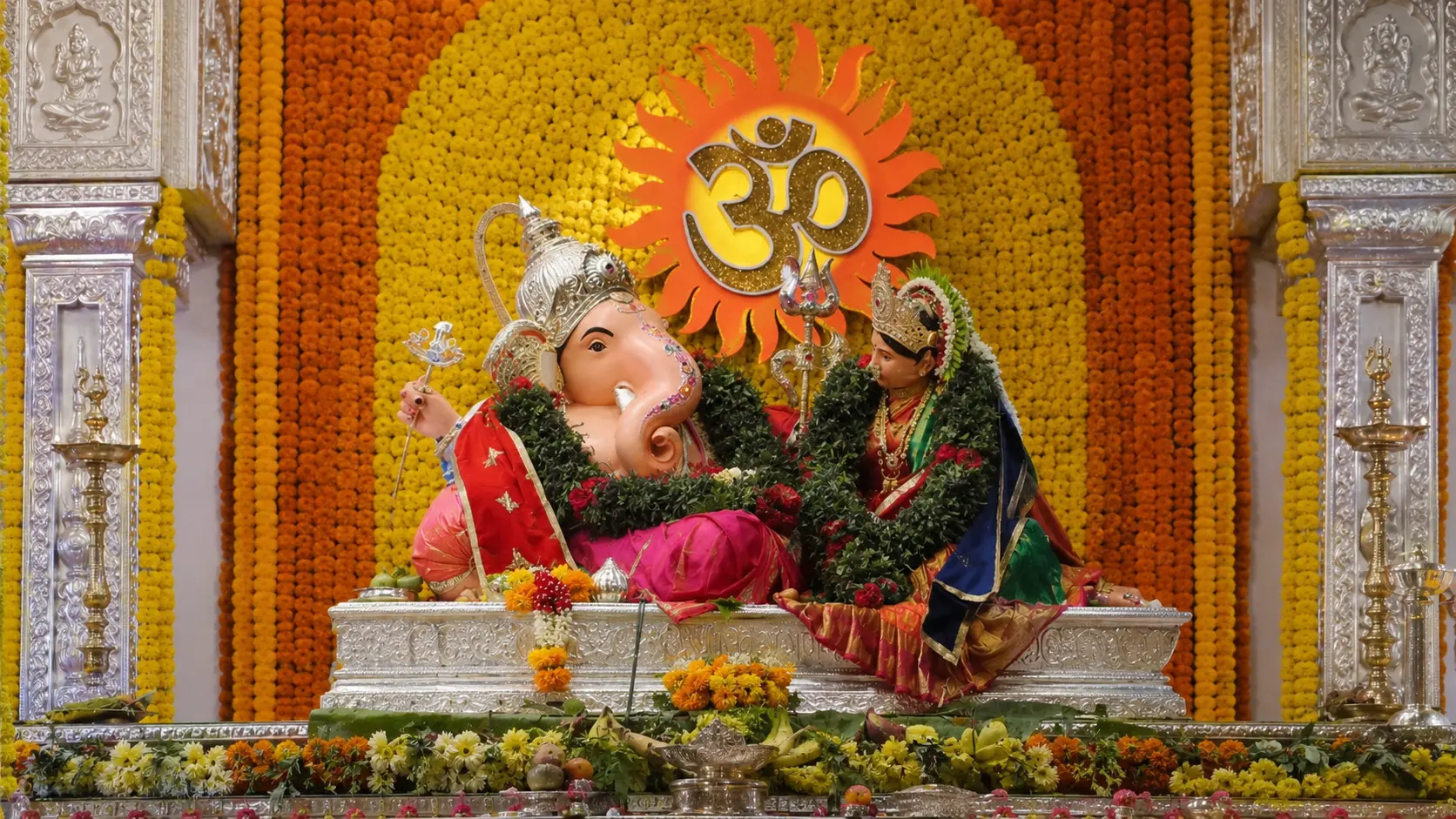
Guruji Talim’s story reaches back to 1887. It was established through the involvement of Hindu and Muslim families, and its history is closely associated with communal harmony.
It is the third of Pune’s five Manache Ganpati. Reporting on its origins names Bhiku Pandurang Shinde, Nanasaheb Khasgiwale and Sheikh Lalabhai among its founders. Read The Indian Express account.
Its speciality is not something you can fully capture by pointing a camera at the decorations. It is the idea behind the celebration: people from different communities building and sustaining a shared tradition.
Knowing that history gives the visit a different weight. You are not just looking at another pandal, you are encountering a local example of what celebrating together can mean.
Include it if the human stories behind festivals interest you as much as their visual scale.
Hyderabad: A Celebration Known for Thinking Big
10. Khairatabad Ganesh: From a Local Beginning to a City Landmark
Where: Khairatabad, Hyderabad.
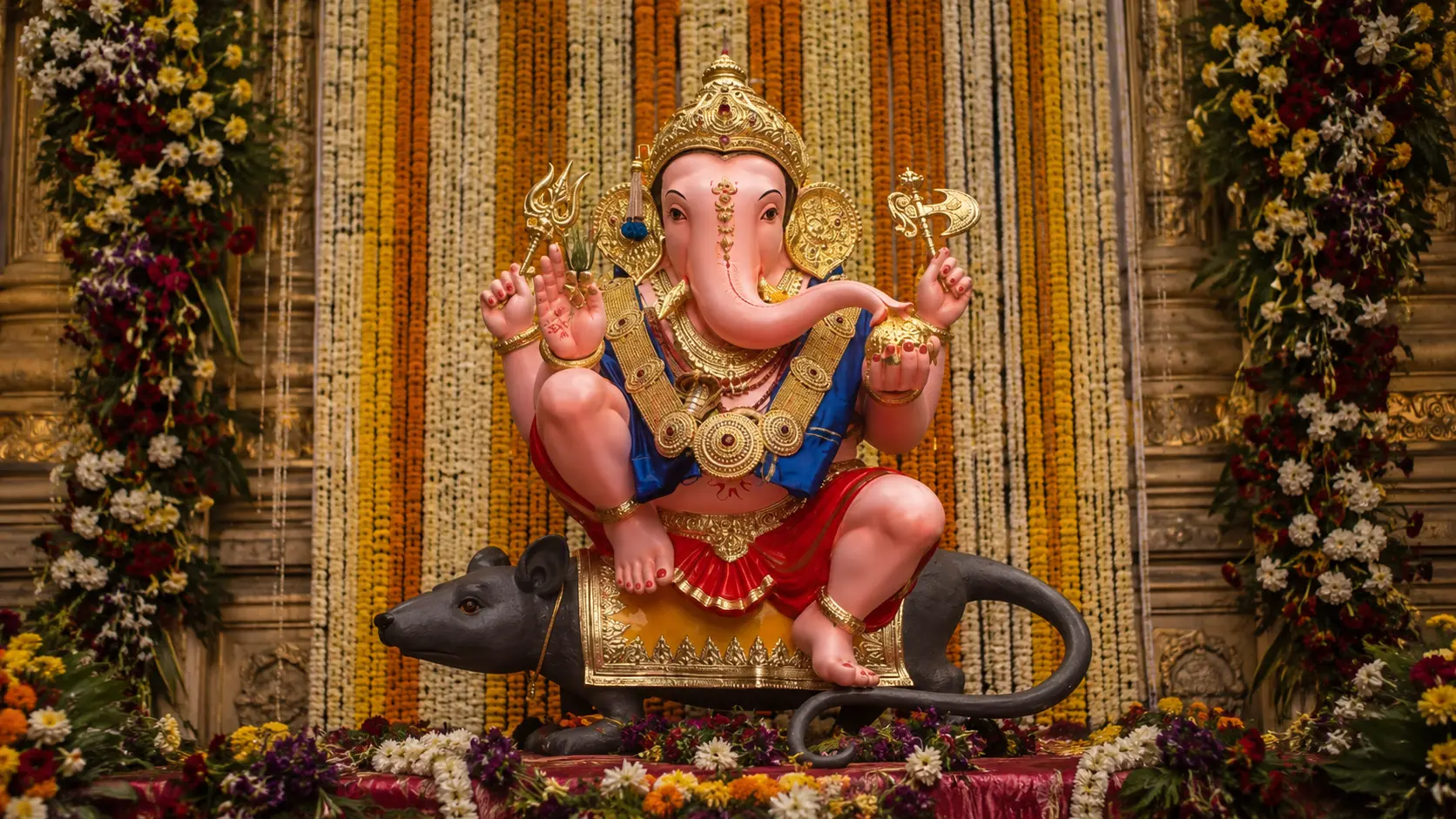
The Sri Ganesh Utsav Committee at Khairatabad was founded in 1954 by freedom fighter S. Sankarayya. The committee credits his family, friends and successive organisers with carrying the tradition forward. Explore the official committee account.
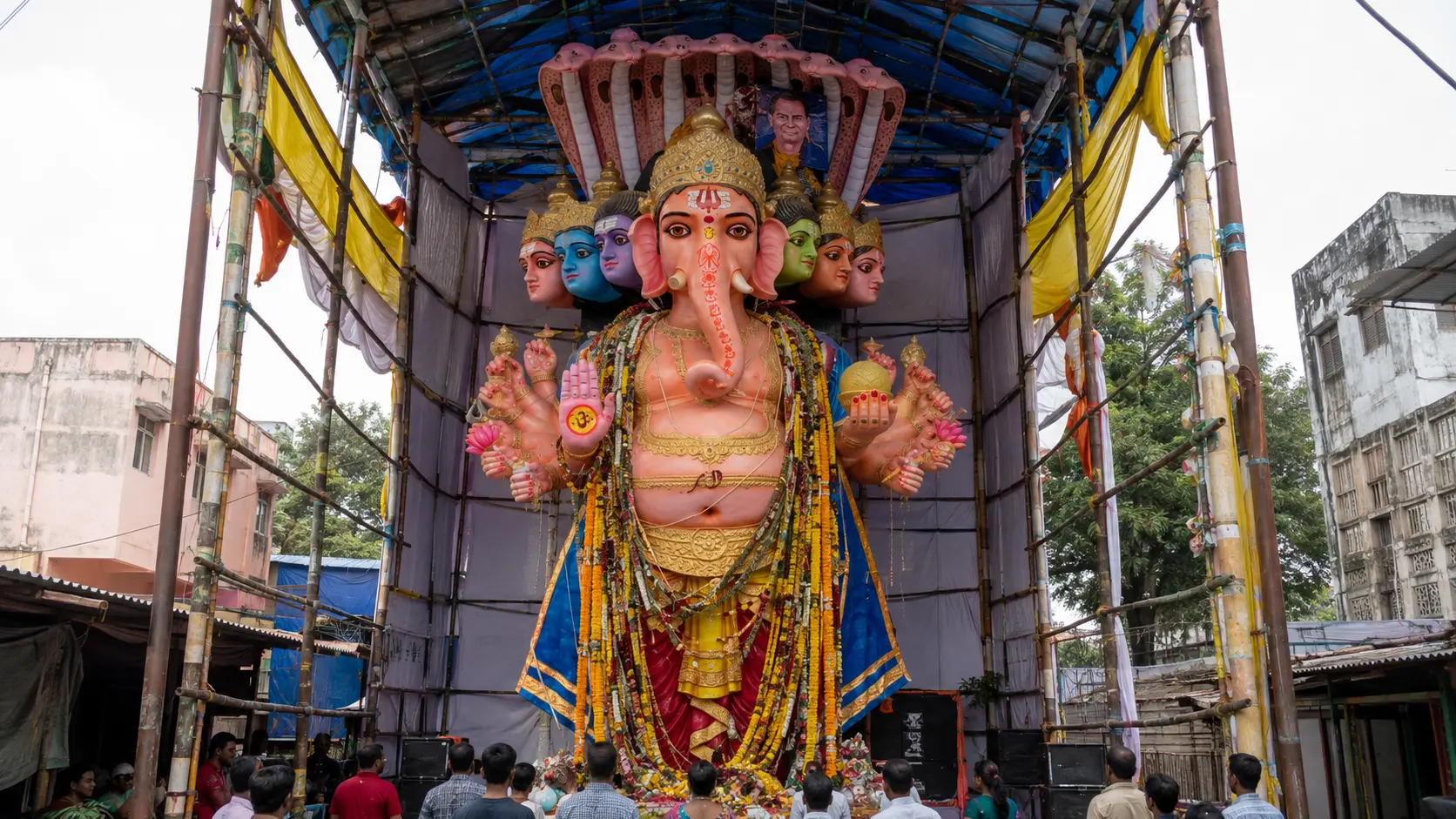
Today, its towering Ganesh installation is its defining visual feature. This is a stop for visitors interested in large-scale festival art and the collective work needed to create and manage it.
The design and dimensions are year-specific, so do not assume that an old photograph shows what you will find on your visit. The committee has announced its 2026 festival for 14–25 September. Check its official updates for the final presentation and visitor arrangements.
Allow this visit enough room in your day. With a celebration of this scale, getting into the area and moving through the designated viewing route are part of the outing, not small details to squeeze between lunch and another booking.
For immersion-day plans, follow official viewing arrangements and police instructions. Seeing the procession does not require getting close to the idol’s transport equipment.
How to Plan Without Turning the Day into an Endurance Test
Start with the celebration you most want to experience, then build a modest plan around it.
In Mumbai, Lalbaugcha Raja, Ganesh Galli and Chinchpoklicha Chintamani can form a neighbourhood-focused shortlist. That does not mean all three will fit comfortably into one outing. Let the queues decide what is realistic. Treat Andheri as a separate plan rather than an automatic final stop.
In Pune, choose a few old-city celebrations and leave time between them. In Hyderabad, give Khairatabad its own generous time window.
A few things help everywhere:
Check the organiser’s current dates and darshan notices before travelling. Not every pandal follows the same immersion day.
Read local police and transport advisories. Road access and entry points may change during processions.
Carry drinking water where permitted, a charged phone and suitable rain protection. Keep your bag light.
Stay with your companions and agree on a meeting point outside the busiest area.
Ask organisers about accessibility if anyone in your group cannot stand or walk for long periods.
Follow photography rules, avoid blocking passages and respect people who are there to pray.
Use official channels for any donation or booking. A forwarded “special access” message is not proof of authorisation.
If an area feels uncomfortably crowded, choose another time or use an official live darshan where available.
There is no prize for completing the most pandals while enjoying none of them.
Go for the Decorations. Remember the People Behind Them.
The huge idols and elaborate settings are what usually make us stop scrolling. But the histories are often smaller and more human: vendors needing a market, neighbours contributing what they could, a family finding comfort, communities choosing to celebrate together.
Those stories are worth carrying into your visit.
Choose a few pandals that genuinely interest you. Give yourself time, follow the volunteers’ guidance and notice the work around you, not only what is happening on the main stage.
And when you record the trip on Jyurniq, save a little more than the location and photograph. Add the story you learnt, the people you went with and the moment that stayed with you.
That is usually what makes the outing worth remembering.
Conversation
0 comments